


James Orengo, who represented opposition group CORD in the High Court, argued that amendments to the security laws violated the Bill of Rights. [Excerpt from People Daily]
Amendments to security laws pushed through during President Uhuru Kenyatta’s tenure have returned to haunt the very leaders who championed them, particularly those from the Mt Kenya region.
Despite fierce opposition from allies of then-opposition chief Raila Odinga, President Uhuru and his Deputy William Ruto (now President) combined their parliamentary majority to force through the controversial amendments.
Raila’s Coalition for Reforms and Democracy (CORD) warned that the Uhuru administration was undermining fundamental constitutional rights and freedoms.
In High Court proceedings, CORD’s legal team, led by then-Siaya Senator James Orengo, argued that the Security Laws Amendment Act violated the Bill of Rights, specifically targeting freedom of expression, media freedom, fair trial rights, privacy protections, and personal security guarantees.
CORD charged that the law would permit the National Intelligence Service to enter premises and violate privacy without proper High Court warrants.
Crisis unfolds
Today, as Kenya grapples with State killings, widespread abductions, and mounting international scrutiny over human rights violations, law enforcement appears to have abandoned all restraint.
The country’s security apparatus now wields the very tools critics warned against.
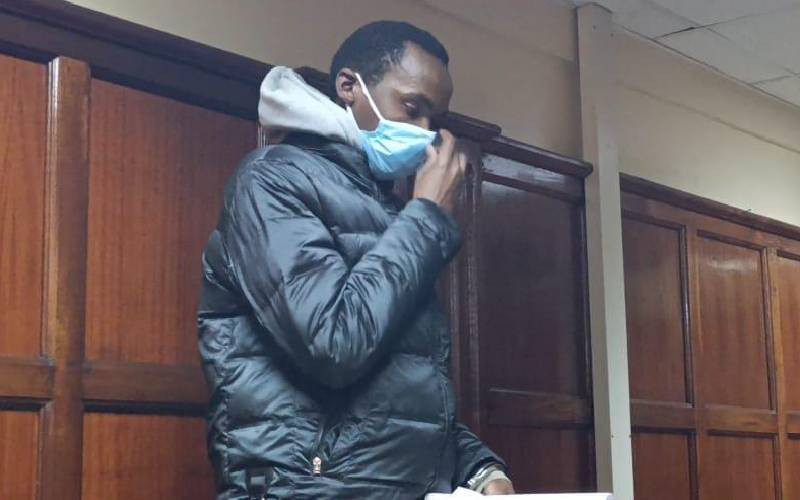
Prominent human rights activist Boniface Mwangi was recently charged with unlawful ammunition possession related to his alleged role in deadly June anti-government protests.
Police claimed they recovered evidence from his home, including an unused teargas canister, blank firearm round, two mobile phones, a laptop, and notebooks.
The Directorate of Criminal Investigations initially accused Mwangi of “offences related to facilitation of terrorist acts and unlawful possession of ammunition.”
‘Ridiculous’ charges
Siaya Governor James Orengo, now vindicated in his earlier opposition, called charging Mwangi and protesters with terrorism “ridiculous,” noting their demonstrated political consciousness.
“Revolutions eat their own children. This government is going to punish you more than it will punish me. I am telling you,” Orengo warned during the original Senate debates.
“Sometimes governments eat their own people. In another one year, you will be crying in my office to come and represent you. When power gets into your head, you will never remember that one day there is a bigger power Almighty, that will deal with you.”
Then-Senate Minority Leader Moses Wetangula (now National Assembly Speaker) accused Jubilee counterparts of frustrating motions on the Security Laws Amendment.
“I find this a narrow-minded attitude that will not help this country. You must live with the guilt that you carry on for many years to come,” Wetangula declared.
Former National Assembly Speaker Justin Muturi, who presided over the Security Laws Amendments, now condemns the government’s approach.
“The Prevention of Terrorism Act, No.30 of 2012, was not part of the Security Laws (Amendment) Act of 2014. What government is doing currently is political weaponization of its war on its citizens who dare to criticize it, especially in view of the current runaway corruption, which has reached monumental levels,” Muturi stated.
Widespread crackdown
The scope of current enforcement is staggering. At least 777 people were arrested over alleged involvement in crimes during the Saba Saba protests, facing charges ranging from terrorism and theft to burglary, arson, robbery with violence, unlawful entry with intent to commit felonies, and firearms possession.
Among those charged with terrorism were Democratic Citizen Party youth leaders Peter Kinyanjui and Serah Thiga, released on Ksh50,000 and Ksh200,000 bond, respectively.
Legal experts have criticised Director of Public Prosecutions Renson Igonga for applying terrorism charges to protest-related cases, viewing it as dissent suppression.
Judicial pushback
Former Chief Justice David Maraga condemned the terrorism charges against protesters as state overreach.
“A terrorist offence is a serious offence. Charging someone with terrorism just to deny them bond, traumatise them and keep them in custody. We are not going to allow this to continue. They cannot prove these charges,” Maraga asserted.
The Police Reform Working Group called on the Judiciary to adhere strictly to justice principles and constitutional tenets, warning against abuse for political persecution of rule-of-law advocates.
“We are deeply concerned by the continued misuse of the Prevention of Terrorism Act to manage public order in more than 100 other areas. This practice undermines Kenya’s criminal justice system and jeoparydises critical international partnerships aimed at safeguarding national security,” the group stated.
“These actions appear to be part of a broader effort to intimidate lawful dissent and those committed to upholding the rule of law.”
The Judicial Service Commission emphasized that bond and bail decisions follow constitutional guidelines, the Criminal Procedure Code, and judiciary policy frameworks rather than arbitrary determinations.
Full circle
The current crisis represents a stark vindication of opposition warnings from a decade ago.
The security apparatus, expanded under Uhuru’s presidency with Ruto’s support, now targets the very political traditions and leaders who helped create it.
What began as tools ostensibly meant to combat terrorism has evolved into instruments of political control, precisely as critics predicted.
Those who dismissed constitutional concerns while expanding State security powers now find themselves and their allies subject to the very mechanisms they championed.
As Orengo prophetically warned, revolutions – and security laws – indeed consume their own children.
Source: People Daily







Leave a Reply