
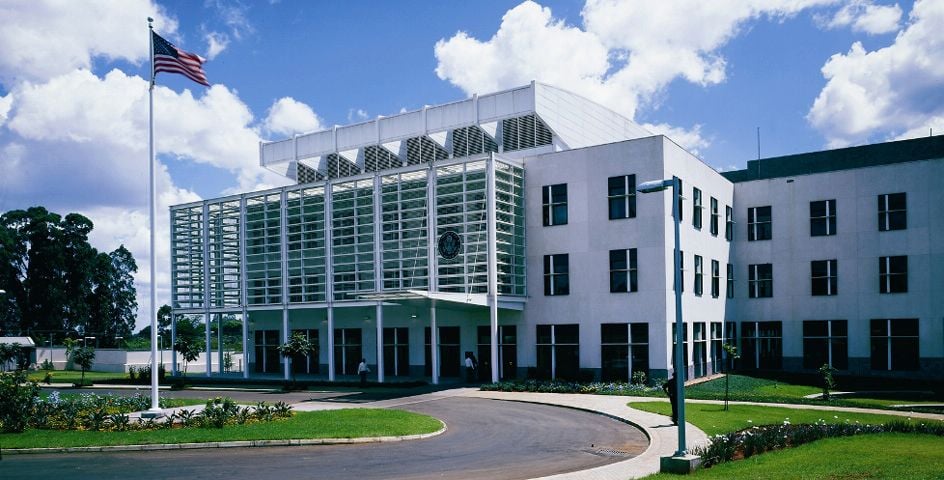
The United States (US) Embassy in Nairobi has announced that Kenyans applying for visas will now be required to disclose all social media usernames.
In a statement issued on Friday, July 25, the Embassy said applicants will have to list all the social media handles or usernames they have used in the past five years on the DS-160 visa application form.
The applicants must also certify that the information provided is true and accurate before signing and submitting the form.
“Visa applicants are required to list all social media usernames or handles of every platform they have used from the last 5 years on the DS-160 visa application form.
“Applicants must certify that the information in their visa application is true and correct before they sign and submit,” the US Embassy stated.
The embassy warned that omitting social media information during applications could lead to visa rejection.

“Omitting social media information on your application could lead to visa denial and ineligibility for future U.S. visas,” the US Embassy added.
According to the US government, the new requirement is aimed at strengthening the nation’s security.
Meanwhile, the US government has also introduced a new $250 (Ksh32,280) Visa Integrity Fee.
The new fee, which takes effect on October 1, 2025, will be added on top of the existing visa fees.
The fee applies to nearly all non-immigrant visa categories, including tourist and business visas, student visas, temporary work, and exchange visitor visas.
Only visa applicants under diplomatic categories A and G, and travelers from Visa Waiver Program (VWP) countries, such as most EU states, Japan, and Canada, are exempt from the fee.
In addition the Trump administration The Trump administration has implemented several key changes to tighten immigration rules in the United States.
The administration has paused processing certain green card applications for refugees and asylum seekers who entered under Biden’s policies, citing the need for “maximum vetting” of immigrants from high-risk regions. This pause affects potentially thousands of applicants who have already undergone initial vetting processes.
The administration has also expanded the “public charge” rule, which evaluates green card applicants’ use of benefits like Medicaid and SNAP. Applicants who have used these benefits for over 12 months within a three-year period may be deemed ineligible for a green card.
All green card applications now require in-person interviews, increasing processing times up to 20 months and applicant scrutiny. This policy aims to prevent fraud but has resulted in prolonged waiting times for law-abiding applicants.
The administration has introduced a new “Gold Card” program, allowing wealthy foreign investors to gain permanent residency and eventual citizenship by making a $5 million direct investment to the U.S. Treasury.
Meanwhile, undocumented immigrants are no longer eligible for the Supplemental Nutrition Assistance Program (SNAP), commonly known as food stamps. The Trump administration aims to reduce fraud and abuse in the program and enforce stricter immigration policies.
The Trump administration has also implemented travel bans targeting citizens of specific countries and reduced refugee ceilings, emphasizing national security and economic priorities over humanitarian and family connections.


