


Nairobi, Kenya – President William Ruto’s administration is facing mounting criticism and scrutiny after revelations that the government signed a multi-million shilling lobbying contract with a Washington-based firm in a bid to secure political favor and enhance Kenya’s image abroad.
The deal, reportedly worth KSh 325 million, was inked with Continental Strategy LLC, a company owned by Carlos Trujillo, a close ally of former U.S. President Donald Trump and former U.S. ambassador to the Organization of American States (OAS).
The disclosure has sparked a storm of controversy, igniting debate over Kenya’s spending priorities at a time when the country faces crippling debt, surging inflation, and widespread food insecurity.
Lavish Expenditure Amid Economic Pain
For millions of Kenyans struggling to afford basic commodities amid the government’s austerity drive, news of the costly lobbying arrangement has landed like a thunderclap.
“Families can barely put food on the table, yet billions are being poured into lobbying in Washington. This is not diplomacy – it is extravagance,” said John Githongo, a governance activist, in an interview with KTN News.
Kenya’s national debt has ballooned to over KSh 11 trillion, with the government recently introducing controversial tax measures and cutting public spending under what officials term as “fiscal consolidation.” Critics argue that the lobbying contract starkly contradicts President Ruto’s repeated calls for sacrifice and prudent use of resources.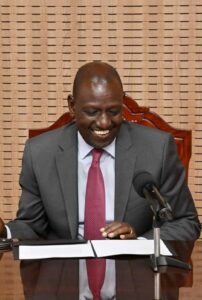
The Contract and the Players
Documents filed under the U.S. Foreign Agents Registration Act (FARA) reveal that Continental Strategy LLC was contracted to “enhance bilateral relations, promote investment, and secure high-level meetings for Kenyan officials” in Washington.
Carlos Trujillo, the firm’s principal, is a political heavyweight with deep ties to the Republican Party and Trump’s inner circle. His firm boasts of navigating complex U.S. political landscapes and securing access for foreign governments.
While State House has not publicly disclosed the contract details, U.S. lobbying disclosures indicate the deal involves strategic communication, political engagement, and organizing engagements with U.S. decision-makers.
Supporters Defend the Move
Government allies argue the contract is a strategic investment in Kenya’s foreign policy objectives.
“This is about positioning Kenya as a global player and attracting foreign direct investment,” said Foreign Affairs PS Korir Sing’oei in a recent TV interview. “International lobbying is standard practice for countries seeking stronger bilateral ties.”
They cite Kenya’s growing role as a regional security anchor and host of key global summits, asserting that strengthening Nairobi’s profile in Washington could unlock opportunities in trade, technology, and defense partnerships.
Critics Call It ‘Image Laundering’
However, opposition leaders and civil society groups see it differently, branding the deal as a wasteful bid to “sanitize” the administration’s image abroad.
“Governments that are confident about governance and rule of law don’t need to hire lobbyists. This reeks of desperation,” said ODM Secretary General Edwin Sifuna.
Activists from Transparency International – Kenya have demanded full disclosure of the contract, warning that such opaque spending could deepen public mistrust.
“What are the deliverables? How does this benefit Wanjiku? If this money was allocated to drought relief or healthcare, lives would be saved,” posed TI-Kenya Executive Director Sheila Masinde.
Timing Raises Eyebrows
The lobbying scandal comes at a politically sensitive time. Kenya is under pressure from the International Monetary Fund (IMF) to implement austerity measures, while protests over high taxes and unemployment continue to roil major cities.
Just weeks ago, the government scrapped fuel subsidies, triggering sharp price hikes that hit transport and food costs. Against this backdrop, the Sh325 million expenditure on lobbying appears tone-deaf, fueling anger among citizens who feel overburdened and unheard.
Political Implications and U.S. Angle
Analysts suggest the contract signals a calculated move by Ruto to strengthen ties with Washington ahead of the 2025 U.S. election cycle. “This is as much about Kenya as it is about domestic U.S. politics,” observed Dr. Macharia Munene, an international relations expert.
With Kenya keen to cement its position as a key security and economic partner, particularly after hosting major international conferences, access to U.S. corridors of power could have long-term payoffs. Yet, whether this justifies the staggering price tag remains hotly contested.
Calls for Accountability
Pressure is mounting for Parliament to summon Treasury and Foreign Affairs officials to explain the deal’s necessity and procurement process. Civil society organizations are pushing for a full audit, warning that without transparency, the arrangement could become another footnote in Kenya’s long list of financial scandals.
“This is public money. Every shilling must be accounted for,” said Kituo cha Sheria Director, Dr.






Leave a Reply