

 ADVERTISEMENT
 Nairobi, Kenya — Former Prime Minister Raila Odinga has reiterated his hardline stance on scrapping the National Government Constituency Development Fund (NG-CDF), insisting it undermines devolution and goes against the spirit of the 2010 Constitution.
Speaking during the Katiba@15 celebrations at the Kenyatta International Convention Centre (KICC) on Wednesday, the ODM leader argued that the fund, alongside similar initiatives, creates unnecessary overlaps with county functions and weakens devolved governance.
“Constituency is not a devolved unit. Devolution has two levels — national and county. It is not right for the national government to bypass counties and create another unit below them,” Raila said.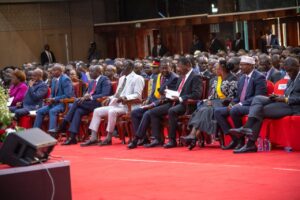
According to him, all development resources should be channeled through counties, which are constitutionally mandated to implement projects.
Raila further questioned the dual role played by Members of Parliament (MPs) in both oversight and project implementation under NG-CDF.
“Parliament is supposed to represent, legislate, and provide oversight — not implement projects,” he said. “If you yourself are a contractor and a Member of Parliament, who is oversighting you?”

He maintained that the practice erodes accountability and blurs the constitutional separation of roles.
‘I Know My Stand Is Unpopular’
Acknowledging that his proposal could face political resistance, Raila declared that he is prepared to take the matter to a referendum.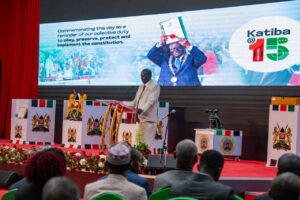
“I know my position is unpopular, but I don’t care. There can be no compromise on this issue. It should go to the people through a referendum,” he stated.
The former Prime Minister first made this call during the Devolution Conference in Homa Bay, where he proposed merging all constituency-based funds, including NG-CDF and the National Government Affirmative Action Fund (NGAAF), into county structures to enhance efficiency and strengthen devolution.
Raila traced the origin of CDF to an era when Kenyans sought equitable resource distribution under what he termed “an imperial presidency” that starved regions of development funds.
“Most of the work was left to harambees. If you needed a school, harambee; a dispensary, harambee,” he said.
“But things have changed. We adopted devolution, established constitutional commissions to allocate resources, and empowered Parliament on budgetary matters. In this new order, CDF is obsolete.”
He criticised MPs for being reduced to distributing bursaries and constructing classrooms instead of focusing on legislation and oversight.
Wetang’ula Defends NG-CDF
National Assembly Speaker Moses Wetang’ula dismissed claims that CDF undermines devolution, saying the fund is part of the national government’s allocation after the vertical division of revenue.
“CDF is a share of shared revenue on the side of the national government. Governors and the Council of Governors have no issue and no interest in CDF. It is not their money,” Wetang’ula said during an event in Mombasa last week.
According to him, the national government has a constitutional mandate to implement development projects at the constituency level, adding:
“It is not an affront to devolution, it is not in competition with devolution, and it does not undermine devolution. It is a national government activity.”
The debate over NG-CDF continues to polarize the political class, with proponents viewing it as a lifeline for grassroots development and opponents, like Raila, branding it unconstitutional and prone to abuse.
Whether the issue will culminate in a referendum — as Raila proposes — remains to be seen. For now, the battle over the future of NG-CDF appears far from over.


