


For three decades, Senior Assistant Inspector-General Rosemary Sipatan Kuraru has worn the blue uniform of the National Police Service (NPS). From her early days as a constable in the 1990s to her current role as Director of Forensic Services at the Directorate of Criminal Investigations (DCI), she has built a reputation for professionalism, discipline and reform-minded leadership.
Today, Kuraru stands on the cusp of history. If appointed, she could become the first woman ever to serve as Kenya’s Inspector-General of Police — the most powerful office in the country’s security hierarchy.
The One That Got Away
Earlier this year, Kuraru appeared on the shortlist for Deputy Inspector-General (DIG) in charge of the Kenya Police Service. Her inclusion sent ripples across the security establishment: a woman with a formidable résumé finally in contention for one of the two second-in-command positions.
But when the announcement came, the nod went to Eliud Lagat, a career officer whose name was not on some earlier shortlists. Why Kuraru — widely seen as one of the strongest candidates — was overlooked remains a mystery. Some cite shifting political winds, others opaque vetting processes. Whatever the reason, she was overtaken, leaving her supporters with more questions than answers.
Building a Reformist Career
That disappointment did little to slow her career. In a subsequent shake-up by Inspector-General Douglas Kanja Kirocho, Kuraru was moved from her post as Director of Human Capital Development at NPS headquarters to lead the National Forensic Laboratory at the DCI. The swap with Dr. Simon Wanderi was significant: it placed Kuraru at the helm of one of the fastest-evolving arms of policing.
Her appointment was no accident. Forensics is becoming the beating heart of modern crime-fighting — from terror attacks to homicide to cybercrime. By steering the lab, Kuraru is now in charge of the science that underpins convictions.
A Philosophy Grounded in People and Science
Colleagues describe Kuraru’s leadership as people-centred, evidence-driven and reform-focused.
Armed with an MBA in International Relations and Diplomacy, a BSc in Counselling Psychology, and a diploma in psychological counselling, she has often approached policing through a human lens. As Director of Human Capital, she oversaw recruitment, training and career progression — pushing for professional standards, better officer welfare and modernised training curricula at the Police College in Kiganjo.
Her counselling background also informed her championing of trauma-informed policing, a reform that trains officers to handle victims and witnesses with empathy while protecting evidence integrity. In a service long accused of brutality and harassment, this was a bold step.
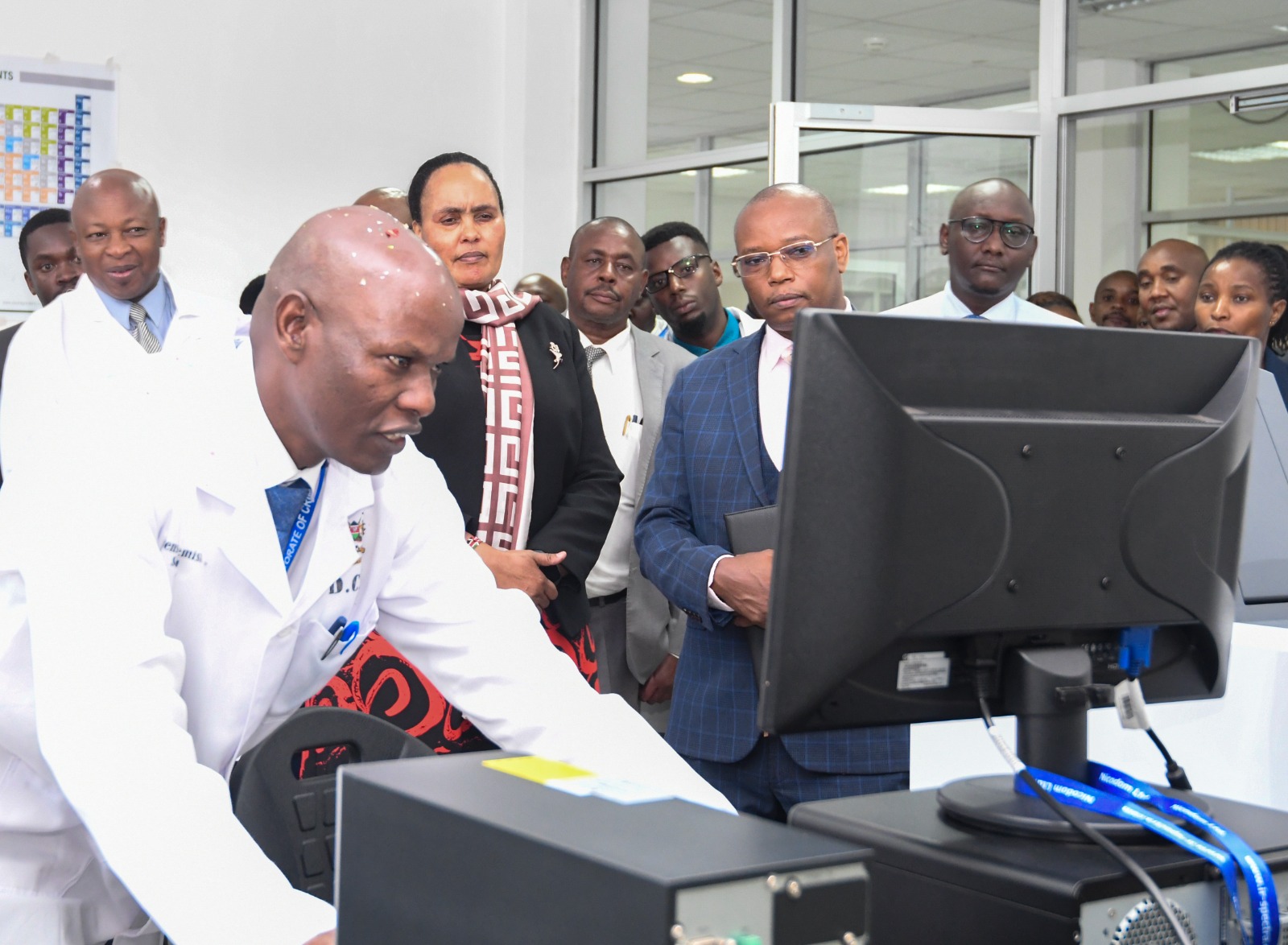
At the forensic lab, she has emphasised evidence-led investigations, hosting regional delegations and pushing for investment in DNA, ballistics and cybercrime units. To Kuraru, science is not peripheral — it is central to building public trust in policing.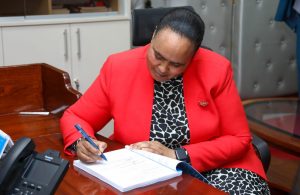
The “Brass Ceiling” Question
Kuraru’s rise is not just personal. It is symbolic of the “brass ceiling” that has for decades kept women from the top ranks of Kenya’s police service. Since the NPS was created in 2011, four men — David Kimaiyo, Joseph Boinnet, Hillary Mutyambai and Douglas Kanja — have held the Inspector-General’s office.
Kuraru is one of only two women at the level of Senior Assistant Inspector-General, making her eligible for the top post. Her supporters argue that her appointment would not only mark gender progress but also inject reformist energy into a service still grappling with issues of accountability and public trust.
Still, hurdles remain. Police promotions at the highest level are rarely about competence alone. Politics, patronage and timing play decisive roles. The DIG race that slipped from her hands is proof enough.
Yet Kuraru’s record — from modernising training and championing trauma-informed reforms to steering forensic modernization — has positioned her as a serious contender for the future.
As one senior officer told this writer off the record: “If there is anyone who can break that glass ceiling, it is Kuraru. The question is not whether she deserves it, but whether the system is ready for her.”
For now, Kuraru remains at the DCI, quietly working to strengthen the forensic backbone of the police service. But her name lingers in the succession conversations, her trajectory unmistakably pointing upward.
And perhaps, when the time comes for Kenya to choose its next police chief, the country may finally witness a historic first: Rosemary Kuraru — Inspector-General of Police.








Leave a Reply