


Nairobi’s housing crisis has reached breaking point, and Governor Johnson Sakaja’s administration is pushing ahead with a controversial yet ambitious urban renewal programme.
At the heart of the plan is Lydia Mathia, the County’s Chief Officer for Housing and Urban Renewal, who insists that redeveloping Nairobi’s 13 colonial-era estates is no longer negotiable.
“When these estates were built, Nairobi had less than one million people. Today we host 7 million by day and 5 million at night. By 2050, the city will have 10 million. Where will all these people live?” Mathia posed.
From Colonial Cottages to Modern High-Rises
The estates in question—Woodley, Bahati, Jericho, Maringo, Ziwani, Kariobangi, Lumumba, Bondeni, Embakasi, among others—were designed for a city that no longer exists. Built with single-family units spread across acres of prime land, they are now surrounded by mushrooming informal settlements where the poor are squeezed into shacks with no running water or sanitation.
Governor Sakaja’s plan is to tear down the outdated low-density units and replace them with high-rise apartments that can house thousands of families.
Woodley Estate is the flagship project. On land that once hosted just 43 old houses with fewer than 100 residents, 1,975 modern apartments are being erected. Each original tenant was compensated with KSh 900,000 for relocation and issued with allotment letters guaranteeing them a new home once the construction dust settles.
“A Sacred Calling”
Mathia describes the urban renewal as both a necessity and a moral duty.
“We can’t ignore the dignity gap. Slums are expanding because our estates no longer serve Nairobi’s needs. This renewal is a moral obligation and a sacred calling. Anyone resisting it is standing in the way of the city’s future,” she declared.
Yet resistance is real. Many families, some who have lived in county houses for three generations, view the demolition of their homes as an assault on their heritage. To them, the promise of future apartments is less reassuring than the permanence of the structures they grew up in.
Mathia, however, is unyielding.
“If your generation has benefited, is it not fair to think of the future too? From one single house, thousands of families can now live in dignity.”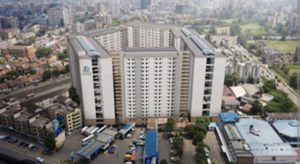
Balancing Vision with Trust
Critics worry about displacement, gentrification, and whether developers will honour the promise of reallocation once the projects are complete. Previous housing initiatives in Nairobi have been marred by corruption, mismanagement, and broken promises.
Mathia insists safeguards have been built into this project. “The original tenants will be the first to move back in. Governor Sakaja’s vision is to dignify as many informal settlements as possible and give Nairobians a chance to live better,” she said.
A City at a Crossroads
Nairobi’s population continues to outpace infrastructure, and the renewal of its estates may decide whether the city becomes a modern, inclusive metropolis or sinks deeper into a sprawl of slums.
For Mathia, the stakes could not be higher.
“Seeing these 13 estates reborn will be my greatest joy.”
If successful, the Nairobi Urban Renewal Project could turn scarcity into opportunity—rewriting the housing story of East Africa’s biggest city.









Leave a Reply