


When the Siaya County Public Service Board (CPSB) called for a headcount and staff audit in March, it was meant to be routine — a simple exercise to reconcile payroll figures in the health department. Instead, it unearthed one of the most brazen employment scams ever seen in the county’s history . Out of 502 individuals claiming to be legitimate employees, only 120 were found to have been genuinely hired. The remaining 382 had been lured into service with cleverly forged appointment letters that lacked official watermarks, bore fraudulent signatures, and in some cases, carried dates that defied logic.
Caught in the storm is Wilfred Ouma Nyagudi, the soft-spoken but firm CEO of the CPSB. Unlike in many cases where boards are accused of being the architects of rot, this time the Board itself had blown the whistle. Assisted by detectives from the Directorate of Criminal Investigations (DCI), Nyagudi’s team scrutinised the avalanche of complaints from people who said they had worked for nine months without pay. What followed was a forensic audit that confirmed the worst suspicions: many “employees” had been victims of an elaborate con job, duped into believing they were county workers when they were nothing of the sort.
“Any letter we issue, such as deployments, must be signed by the chief officer for health. Yet we had cases where a deployment letter was dated earlier than the appointment itself. The sequence made no sense,” Nyagudi told reporters, laying bare the absurdity of the forged paperwork.
A Board Under Siege — But Standing Tall
The CPSB’s role in this saga has been contentious. Critics of county governance are quick to point fingers at boards for irregular hiring, payroll bloat, and political patronage. Yet in Siaya, the very existence of forged letters bearing counterfeit CPSB signatures shows the Board was more victim than perpetrator.
The forgeries were not just amateur scribbles; they mimicked formats, referenced real positions, and preyed on the desperation of job seekers in a county where opportunities are scarce. That they lacked watermarked stationery and bore signatures that Nyagudi himself calls “obvious fabrications” only highlights how the fraudsters relied on the trust the public has in the CPSB’s name.
In fact, far from being complicit, the Board acted as the first line of defence. By roping in the DCI and conducting a two-day verification marathon in August, it saved taxpayers millions that could have been siphoned off through a phantom payroll.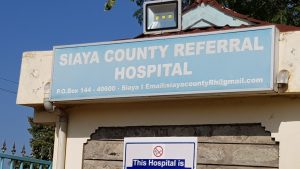
Workers or Willing Victims?
But if the Board is blameless, what of the 382 who now claim to have been “employees” for nine months? Their testimonies tug at the heartstrings.
“We reported in January and have been diligent. We were told verification would happen after probation,” said Emily Nabwala Anyango, one of those sent home.
Yet even in her account, red flags abound. How does a prospective employee sign an appointment letter that is not embossed with county watermarks? How does one accept a deployment notice predating their hiring? How does anyone clock in for nine months without a pay slip, a staff number, or entry in the county’s Integrated Payroll and Personnel Database?
These are not minor oversights; they are monumental lapses in prudence. At best, the affected individuals were gullible; at worst, they were complicit in short-circuiting the legitimate recruitment process. In a county where thousands apply for a handful of advertised health jobs, it strains credulity that hundreds could stroll into hospitals and clinics on the strength of phantom letters without asking the hard questions.
A Culture of Desperation, A Breeding Ground for Scams
Siaya’s ghost job scandal speaks less to the failure of the CPSB than to the desperation of job seekers and the shadowy networks that exploit them. For years, counties have been plagued by tales of brokers demanding “facilitation fees” for jobs. Unsuspecting youths, eager to escape unemployment, part with money and accept documents without verifying their authenticity.
The 382 may indeed have shown up to work. They may have worn uniforms, attended to patients, and taken orders from supervisors. But that labour, however genuine, was built on a foundation of fraud. The blame cannot be shifted to a Board that never signed their letters, never entered their names into payroll, and never sanctioned their deployment.
Lessons for Counties, Lessons for Workers
This saga leaves Siaya with bitter but vital lessons:
For the County: Recruitment processes must be fortified with digital verification, watermarked documentation, and public databases that allow instant confirmation of appointments.
For job seekers: Prudence is non-negotiable. No letter without a watermark, no job without a staff number, and no work without pay slips. Nine months of unpaid “service” should have rung alarm bells long before August.
For investigators: The masterminds behind the forged letters — whether rogue insiders or external fraudsters — must be unmasked and prosecuted, for they are the true architects of this scandal.
In the court of public opinion, it is tempting to see 382 dismissed individuals as victims of a cold bureaucracy. Yet the evidence suggests a more uncomfortable truth: they were victims, yes — but victims of their own unquestioning trust in a process that bore obvious signs of fraud.
CEO Wilfred Ouma Nyagudi and his Board, far from being villains, emerge here as the reluctant custodians of integrity, forced to clean up a mess they did not create. If Siaya is to move forward, the lesson must be etched deeply: vigilance is as much the duty of the job seeker as it is of the hiring authority.









Leave a Reply