


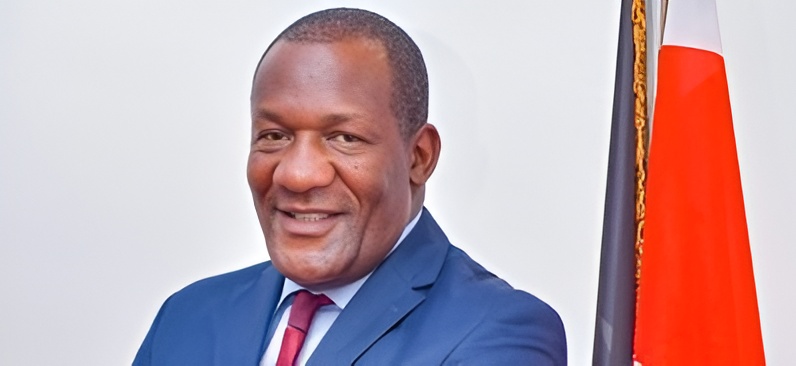
When the question of who should carry the Luhya mantle in Kenya’s shifting political landscape arises, one name has quietly but steadily risen above the usual suspects: Bungoma Governor Kenneth Makelo Lusaka. A veteran administrator and seasoned politician, Lusaka is increasingly being mentioned in conversations from Kawangware’s Mountain View estates to the leafy corridors of State House as the man best placed to unify the Mulembe nation.
Unlike his contemporaries, Lusaka has earned a reputation for sobriety, intellect, and political tact. He has avoided messy feuds, skirted scandal, and built an image of a leader in sync with the people. “You will rarely find any leader having political wars with Governor Lusaka. He knows how to mend and enter into working coalitions,” observed Mama Isaboke, a mandazi seller in Kawangware, capturing sentiments that echo widely among the grassroots.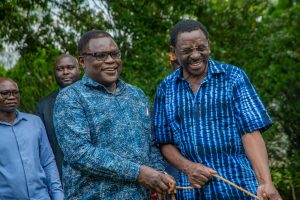
A Career of Consistency
Since the advent of multiparty politics, Lusaka has remained close to the levers of power, first as a technocrat in government service, then as Governor, and later as Senate Speaker. He has never suffered long spells in political cold, unlike ANC leader Musalia Mudavadi or National Assembly Speaker Moses Wetangula—both of whom have endured electoral losses and prolonged wilderness moments.
Mudavadi, despite once being Vice President under Daniel arap Moi, has often been accused of lacking the killer instinct. Wetangula, on the other hand, faces mounting internal pressure from a new generation of youthful leaders led by Trans Nzoia Governor George Natembeya. Lusaka, meanwhile, has managed to stay relevant and above the fray, a feat not many Western Kenya politicians can claim.
“Among all the hopefuls, Lusaka’s experience as an administrator gives him the edge. He is a down-to-earth hard worker with political goodwill,” said political commentator Sitati Barasa.
Chwele businessman and educationist Wasike Ndombi says if he was beaten by the presidential bug, Lusaka is one personality who could easily garner support from across Kenya.
Friend to All Sides
Lusaka’s political capital stems not only from his administrative record but also from his ability to build bridges across Kenya’s fractious political divides. He maintains cordial working relations with both President William Ruto and Azimio leader Raila Odinga—a balancing act few leaders can pull off without inviting suspicion or backlash.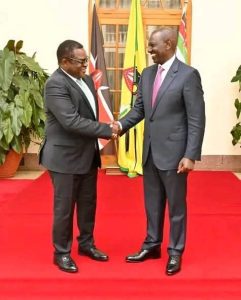
This rare positioning has not gone unnoticed by political analysts. One Nairobi-based pundit suggested that Lusaka could easily earn a cabinet appointment in Ruto’s second term, describing him as “the most neutral, untainted, and pragmatic Mulembe leader of his generation.” With such a profile, Lusaka could eventually emerge as the community’s natural spokesman, perhaps even positioning himself for a run at the presidency once Ruto exits the stage.
Farouk Kibet, a close aide of President Ruto, is reported to have recently hinted that Lusaka “fits the bill” of a leader with both administrative pedigree and grassroots acceptability.
Development Track Record
Lusaka’s supporters point to his tangible record in office. He is credited with pioneering ECD education frameworks in Bungoma, spearheading road expansion programs, investing in healthcare infrastructure, and initiating governance reforms that streamlined county operations. These achievements, while not always headline-grabbing, have earned him respect as a “results man” rather than a “slogan politician.”
His development-first approach resonates with ordinary voters, many of whom see him as a pragmatic leader focused on solving real problems rather than chasing political theatrics.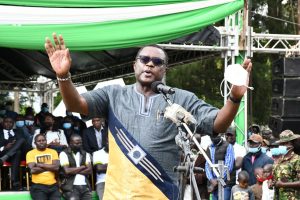
The Luhya Question
For decades, the Luhya community has grappled with the elusive search for a unifying political kingpin. The region, rich in numbers but fragmented in loyalty, has produced national figures but never a president. Whether in the Moi era or the Ruto dispensation, the community has often found itself courted but sidelined when it comes to ultimate power.
Could Lusaka finally shift that tide?
“He may just be the first Luhya to become the sixth president,” argued Nangolo, an aspirant for an MCA seat in Mountain View, echoing an increasingly popular sentiment.
Part of Lusaka’s appeal lies in his lack of political hangups. He carries no baggage of corruption scandals or electoral embarrassments. He is approachable, media-friendly, and as his critics admit, unusually “God-fearing” for a man in his position.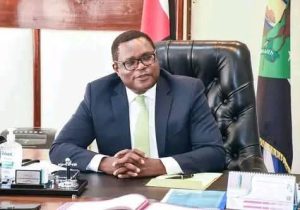
As his second gubernatorial term winds down, Lusaka’s options are clear: pursue a national office—possibly Deputy President, Cabinet Secretary, or even the presidency—or play the long game and consolidate influence as the Luhya community’s spokesman.
Either way, in a political season where sobriety is rare currency, Kenneth Makelo Lusaka may well be the safest bet for a community yearning for unity and national relevance.





Leave a Reply