


When Brenda Biya, daughter of Cameroon’s long-serving president Paul Biya, went live on TikTok this week and told her fellow citizens not to re-elect her father, she cracked open a political script no one in Africa had ever dared to write.
Her blunt attack on the man who has ruled Cameroon since 1982—accusing him of plunging the country into “poverty, unemployment, and economic stagnation”—was unprecedented not just for its content, but for its messenger. Brenda, 28, better known by her stage name “King Nasty,” has until now been better associated with music videos, Instagram fashion posts, and luxury living in Europe than with the dusty corridors of Yaoundé’s power.
Yet in one swoop, she went from a peripheral celebrity figure to the most disruptive voice in Cameroon’s political conversation.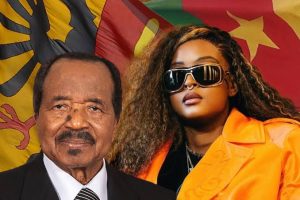
But behind the spectacle lies the big question: is Brenda Biya positioning herself as a political heir—not by defending her father’s legacy, but by torching it?
Breaking the Biya Myth
Paul Biya, now 92, has clung to power for 43 years, his presidency defined by authoritarianism, corruption allegations, and elections dismissed as fraudulent. He remains Africa’s oldest sitting head of state, and one of the world’s longest-serving.
Cameroonians, especially the youth who make up the majority of the population, have grown restless. Unemployment is rampant, infrastructure is decaying, and the political system feels frozen in time.
Brenda’s words tapped into that anger—yet in doing so, she broke a sacred code of Africa’s ruling dynasties: never air family disloyalty in public.
“This is the first time in African political history that a sitting president’s child has openly campaigned against their parent,” noted Dr. Clovis Mbanga, a political analyst based in Douala. “But is it conviction—or calculation?”
From Socialite to “Rebel Heir”?
Skeptics argue Brenda’s move may be less about conscience and more about carving out her own niche in the looming post-Biya era.
For years, whispers in Yaoundé’s political salons suggested the Biya family—particularly the president’s powerful wife, Chantal Biya—harbored ambitions of grooming a successor from within. Many pointed to Brenda’s younger brother, Franck Emmanuel Biya, who has quietly built influence in business and politics.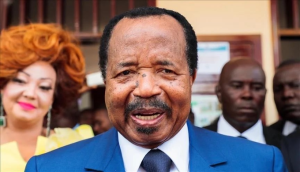
But Brenda’s bombshell intervention now shifts the calculus. By openly denouncing her father, she positions herself as the antithesis of Cameroon’s old order. In an electorate weary of the ruling party’s grip, that outsider posture could be her greatest political asset.
“Her criticism gives her a moral high ground,” says a diplomat in Yaoundé, speaking on condition of anonymity. “She can argue she stood with the people even before her father left the stage. That’s a potent card for future politics.”
The Problem of Privilege
Yet Brenda’s path to credibility is riddled with contradictions.
She has spent most of her adult life abroad, cultivating a flamboyant persona on social media. Photos of designer outfits, luxury cars, and Paris soirées have long overshadowed any hint of political seriousness. For many ordinary Cameroonians, struggling to buy food or find work, her sudden embrace of reformist rhetoric smacks of opportunism.
“She talks of poverty while flaunting champagne,” says Martine Ngono, a teacher in Yaoundé. “Does she even know what a Cameroonian family goes through each day?”
Others recall her tense relationship with her father, marked by episodes of public defiance and estrangement. Could her new political stance be less about Cameroon’s future and more about settling scores at home?
A Generational Gambit
Still, Brenda’s words have resonated with a generation of young Cameroonians disillusioned with old politics. TikTok, the platform she chose, is telling. It is where the country’s restless under-35 majority spends its time—and where slogans for change spread faster than official decrees.
By calling on citizens to “choose change over loyalty to a failing system,” she may have opened a door for a youth-centered political movement—whether or not she intends to lead it.
Succession or Self-Destruction?
The irony is stark: Paul Biya has spent decades suffocating opposition, yet the most potent challenge to his authority may have come from under his own roof.
But will Brenda’s defiance translate into political capital—or will it backfire, painting her as a privileged opportunist cashing in on her father’s bad press?
As October’s elections loom, the answers remain uncertain. What is clear, however, is that Cameroon’s carefully controlled political theater has been disrupted in a way few saw coming.
And the bigger question lingers: is Brenda Biya writing herself into the script of succession—or simply staging her own act of rebellion?






Leave a Reply