


Governor Johnson Sakaja, popularly referred to by his supporters as “Mbekse wa Nairobi”, is steadily consolidating his grip on Nairobi’s political landscape, with analysts suggesting that he could sail smoothly to re-election in 2027. Once dogged by sharp critics within his party and beyond, Sakaja appears to be facing little resistance, with key rivals either retreating from the Nairobi political arena or seeking new platforms outside the capital.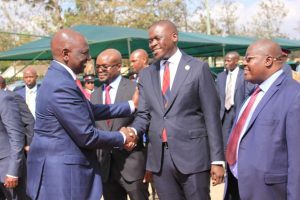
Rivals Retreating From the City Battlefield
Embakasi East MP Babu Owino, a longtime critic and rival of Sakaja, has publicly expressed disillusionment with the Orange Democratic Movement (ODM), alleging that the party cannot guarantee him a fair nomination process. Reports indicate that Babu has found a new political home in Kalonzo Musyoka’s Wiper Party, marking a significant shift in the city’s opposition landscape.
Similarly, Westlands MP Tim Wanyonyi—once touted as a formidable challenger to Sakaja—has shifted his political focus to his native Bungoma County, where he faces stiff competition from Kimilili MP Didmus Barasa and a growing field of local aspirants. His exit leaves a gaping hole in Nairobi’s succession debates, further strengthening Sakaja’s hand.


With these exits, Sakaja appears to be the lone giant standing in Nairobi politics, provided he secures the coveted ODM ticket—a possibility strengthened by his cultivated relations with both President William Ruto and ODM leader Raila Odinga.
The Development Card: Sakaja’s Performance Record
Sakaja’s resilience is not just a matter of political maneuvering. His administration has launched an aggressive urban renewal agenda that has become the cornerstone of his campaign narrative.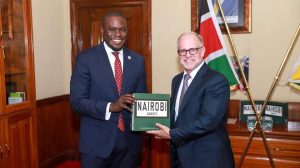
Among the headline achievements is the rehabilitation of the city’s road network, including repairs to culverts and tarmacked access roads across estates. His “Green City Revolution” has also earned him praise, with tree planting, landscaping, and beautification projects reshaping parts of Nairobi’s once neglected neighborhoods.
Perhaps his most visible initiative is the creation of the 3,000-strong Green Army, a workforce dedicated to cleaning, greening, and maintaining Nairobi. Within two years, Sakaja converted these workers into permanent and pensionable staff—a move hailed as both a political masterstroke and a long-term investment in city management.
During their inauguration at Uhuru Park, Sakaja declared:
“Since Nairobi started, this is the biggest intake for the workforce that will transform this great city into the sun.”
The governor has also made notable strides in education. By introducing free fortified porridge in all 215 public primary schools across Nairobi’s 17 sub-counties, his government has boosted enrolment in Early Childhood Education centers, providing both nutritional and educational support to thousands of children.
City employees, too, have lauded Sakaja for ensuring consistent salary payments since 2022, addressing one of the long-standing grievances of Nairobi County’s workforce.
The Incumbency Advantage
Analysts argue that Sakaja’s political and administrative achievements, coupled with incumbency, make it nearly impossible for rivals to unseat him in 2027.
“Don’t take it lightly—this man may rule until 2042,” joked Nairobi businessman Joe Kirori, pointing to Sakaja’s youth, financial muscle, and expansive political networks.
“He will finish his two terms as governor and could later make a stab at bigger political contests.”
Sakaja’s inner circle, including youthful Chief of Staff David Ndungu, has also been credited with building grassroots mobilization networks that keep the governor visible and accessible across Nairobi’s wards.

Analysis: A Smooth Road Ahead?
With Babu Owino and Tim Wanyonyi shifting battlegrounds, Sakaja’s path to the “Finish line” of 2027 appears remarkably clear. His blend of development achievements, grassroots rapport, and national political alliances makes him one of the most insulated incumbents heading into the next general election.
But politics is never without surprises. ODM’s internal dynamics, Nairobi’s ever-volatile voter base, and shifting alliances at the national level could yet reconfigure the race. For now, however, Sakaja stands tall as the undisputed “Mbekse of the City”, a governor riding a wave of both performance and political fortune.





Leave a Reply