


The County Government of Siaya has signaled renewed commitment to resolving the health sector stalemate that has paralyzed services in public hospitals for weeks, as CEC for Governance, ICT and Administration, Agunda Ochanda chairs a high-stakes committee seeking redress for health workers’ grievances.
The day-long consultative meeting, convened at the county headquarters, brought together senior officials from the executive and union representatives in what sources described as “the most candid and promising dialogue since the industrial action began.”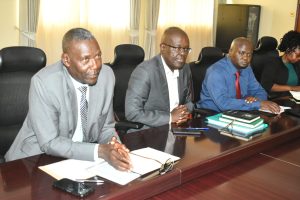
Present were Health CEC Dr. Martin Konyango, Chief Officer for Health Samuel Omondi, acting County Attorney Leonard Okanda, and Director of Human Resources Perez Ogonyo, alongside branch union officials led by Collins Ouma (Kenya Union of Clinical Officers – KUCO), Vincent Akelo, and Isaac Owuor representing laboratory professionals.
A Crisis Born of Delayed Promises
For weeks, Siaya County’s health facilities have operated at a fraction of their capacity, with patients bearing the brunt of a strike that has exposed deep-seated administrative and fiscal cracks.
At the heart of the dispute are salary delays, failure to remit third-party deductions, stalled promotions, and the contentious implementation of the Salaries and Remuneration Commission (SRC) guidelines — a thorny issue that has divided the county administration and union representatives.
Union leaders painted a grim picture of worker morale, citing months of inconsistent pay and delayed communication from county offices. “We have families to feed and responsibilities to meet. Health workers cannot continue serving when their welfare is neglected,” said KUCO branch chair Collins Ouma, calling for “honest timelines and verifiable action.”
The SRC Guidelines Stalemate
Perhaps the most divisive issue in the negotiations is the interpretation and implementation of SRC’s job evaluation guidelines, which determine pay structures across cadres.
The unions argue that the guidelines have been selectively applied and used to deny rightful benefits, while the county government insists that proper implementation requires formal approval and guidance from both the County Public Service Board and the National Treasury (exchequer).
“The county cannot act outside the financial and regulatory framework,” explained one senior county official who requested anonymity. “SRC guidelines must be implemented in consultation with the board to ensure correct job grouping and accurate budget allocations.”
However, the delay in finalizing these consultations has meant prolonged uncertainty for staff, further eroding trust between the workers and county leadership.
Key Agreements and Promises
Despite the tensions, the meeting yielded several concrete resolutions aimed at restoring normalcy:
Salary payments to be regularized, with all health workers expected to receive pay by the 5th of every month.
Outstanding third-party deductions (such as loan and insurance remittances) to be cleared in phases.
Implementation of SRC guidelines to be completed within three months, after consultations with relevant oversight bodies.
Promotion and appointment letters to be processed in line with existing county HR policies.
Universal Health Coverage (UHC) operational gaps to be reviewed to ensure equitable workload and remuneration.
CEC Agunda Ochanda, who chaired the session, underscored the administration’s resolve to address the crisis through structured dialogue rather than confrontation.
“This administration values its workforce and recognizes their indispensable role in delivering quality health services,” Ochanda said. “We are not here to apportion blame but to find sustainable solutions within the law and fiscal realities.”
The Budget Elephant in the Room
While the resolutions offer hope, financial constraints remain a formidable challenge. The county’s limited budget envelope, coupled with delayed national disbursements, has often disrupted payroll timelines and hindered implementation of agreed-upon benefits.
County Health CEC Dr. Martin Konyango admitted that while the executive is willing to comply with SRC directives, “there must be an honest conversation on what the county can afford within its fiscal space.”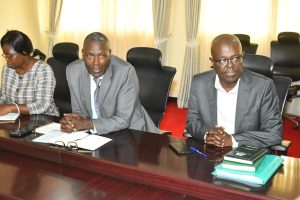
Union leaders, on their part, maintain that the county’s priorities—not its finances—are the problem. “Funds are always found for politics and projects, but never for the people keeping hospitals running,” said a laboratory union representative, expressing frustration over years of unmet promises.
Hope Amid Uncertainty
As the committee continues its deliberations, Siaya residents wait anxiously for normalcy to return to local health facilities. The commitment shown by both sides has rekindled cautious optimism that a long-term settlement is within reach.
However, analysts warn that without consistent follow-through, transparent communication, and political goodwill, the current détente could quickly unravel.
For now, Siaya’s health workers have placed their hopes in the committee chaired by Agunda Ochanda — a team whose success may well determine the future of healthcare delivery in the county.
In summary: Siaya County’s decision to empower a high-level committee to mediate the standoff signals a shift from denial to dialogue. Whether this momentum translates into lasting reform will depend on one test — whether promises made in the meeting room can survive the harsh arithmetic of the county’s budget.








Leave a Reply