

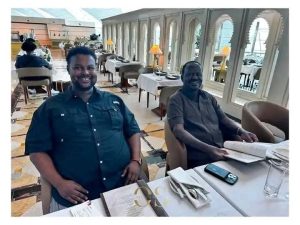
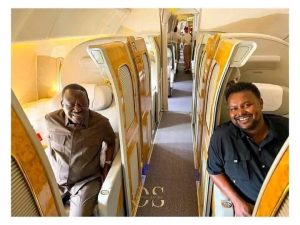
For nearly a week, social media and political circles have been awash with speculation about the health and whereabouts of ODM leader Raila Amolo Odinga. Rumours ranged from mild illness to more alarming conjectures, fueled by a conspicuous silence from his close allies and family members. Now, that cloud of uncertainty appears to have lifted — albeit partially — after his elder brother, Siaya Senator Dr. Oburu Oginga, confirmed that the veteran opposition leader is indeed recuperating in India following medical treatment.
A Confirmation That Ends Silence
Speaking through an official post on his verified Facebook account, Dr. Oburu Oginga acknowledged that Raila had undergone medical attention abroad but reassured Kenyans that “there is no cause for alarm.” He emphasized that doctors attending to the former Prime Minister were “satisfied with his recovery progress,” and that Raila is “in stable condition and expected to return home soon.”
This statement marked the first authoritative confirmation from within the Odinga family after days of conflicting messages. Raila’s wife, Mama Ida Odinga, had earlier dismissed reports of illness, insisting her husband was “in good health and attending to personal matters abroad.” ODM’s communications machinery, meanwhile, maintained a studied silence — a move that analysts say may have inadvertently fueled public anxiety.
Behind the Veil of Speculation
The swirl of rumours began earlier in the week when Raila, 80, missed two key political engagements — a high-profile Azimio strategy meeting in Nairobi and a grassroots consultative forum in Kisumu. Questions over his whereabouts gained traction online, with some bloggers alleging he had been flown to a foreign hospital in critical condition. The absence of timely clarification from ODM leadership allowed the speculation to spiral unchecked.
Political analyst Dr. Gabriel Mboya argues that the delay in communication reflects a persistent pattern within Kenya’s political elite.
“There’s a culture of secrecy around the health of senior politicians,” he says. “Unfortunately, this creates room for misinformation, which can quickly become a political weapon.”
Indeed, Raila’s health has often been a matter of public interest given his central role in Kenya’s political landscape and his age. His supporters, who affectionately call him Baba, view him as a resilient symbol of reform and national unity. Any hint of ill health, therefore, triggers both concern and speculation about the future of the opposition movement he anchors.
Private Medical Trip, Public Political Implications
Sources close to the Odinga family told Sunday Nation that Raila’s trip to India was a “scheduled medical check-up arranged weeks in advance,” dismissing claims of a medical emergency. According to one family insider who requested anonymity, “Baba has always been diligent about his health and follows up with specialists abroad from time to time. This visit was routine.”
Still, Raila’s temporary absence comes at a delicate political moment. The Azimio la Umoja coalition — which he leads — is navigating internal reorganization ahead of the 2027 general election. Several coalition partners, including Wiper leader Kalonzo Musyoka and Narc-Kenya’s Martha Karua, have intensified grassroots mobilization, sparking debates over succession and leadership structure within the alliance.
Political scientist Prof. Adams Oloo, a long-time observer of Odinga’s career, says the timing of Raila’s trip has wider implications:
“Even when Raila sneezes, the entire opposition catches a cold. His leadership presence is so deeply entrenched that his temporary absence naturally raises strategic questions about succession planning and political direction.”
ODM Rallies Behind Its Leader
Within ODM, reactions have been largely of relief and solidarity. Siaya Governor James Orengo, a close ally of Raila, urged party members to “focus on the cause rather than the chatter.” He added, “Our leader is recovering well and will be back soon. Let us remain united and continue with the mission to transform Kenya.”
Other party stalwarts, including MPs Junet Mohamed and Opiyo Wandayi, echoed similar sentiments, calling on supporters to “pray for Baba’s full recovery and stay focused on ODM’s reform agenda.”
Party insiders hint that preparations are quietly underway for a “grand welcome home event” upon Raila’s return. The celebration, expected to be held in Kisumu or Nairobi, will reportedly double as a show of political unity and strength amid renewed wrangles within the opposition camp.
A Legacy Under Watch
Raila Odinga’s political career spans over four decades — from his early activism during the one-party era, to his central role in Kenya’s democratic transition, and his tenure as Prime Minister in the Grand Coalition government (2008–2013). Even in semi-retirement, he continues to shape national discourse through his leadership of the Azimio coalition.
For many of his supporters, the latest revelation is a reminder of the human toll of a long and storied political journey. As one ODM youth leader in Kisumu put it, “Baba has carried Kenya’s hopes for years. We just pray he regains full strength. His presence alone steadies our movement.”
The Road Ahead
With the 2027 elections slowly taking shape, the health and availability of Raila Odinga remain pivotal to the opposition’s strategic calculations. Whether he returns to active politics or assumes a more advisory role will be watched keenly in the months ahead. For now, his family and allies insist that recovery — not politics — is the priority.
As Oburu Oginga put it succinctly:
“Raila is resting, recuperating, and regaining his energy. When he returns, Kenyans will see him stronger and ready to continue serving the nation.”
Editor’s Note:
As Raila recuperates abroad, his supporters back home find solace in one constant — the enduring resilience of a man who has for decades embodied Kenya’s democratic struggle. Yet his recovery also reignites an age-old question: What next for the movement he built?



Leave a Reply