


Prologue
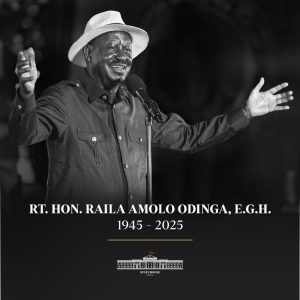
Kenya woke today to a truth many had avoided: the man known affectionately as Baba, Raila Amollo Odinga, is no longer. At 80 years old, he died in Kochi, Kerala, India, succumbing to cardiac arrest during a morning walk at an Ayurvedic hospital where he had been undergoing treatment.
The news has unleashed a storm of mourning—and of political calculation. For while Kenya is grieving the loss of a symbol, many are also, perhaps chiefly, mourning the loss of political careers that hinged on Odinga’s continued presence.
This article attempts an in-depth portrayal: who he was, what he left behind, and what this moment means for Kenya (and beyond).
I. Origins: The Man Behind the Myth
Birth and family lineage
Born in 1945, Raila was the son of Jaramogi Oginga Odinga, Kenya’s first vice-president. Growing up in a political household, he absorbed early the tensions of independence: the dreams, the betrayals, the unfulfilled promises. His Luo heritage, and the regional marginalization that many Kenyans from the “peripheries” felt, would become a vivid thread in his life.
Early activism, imprisonment, and exile
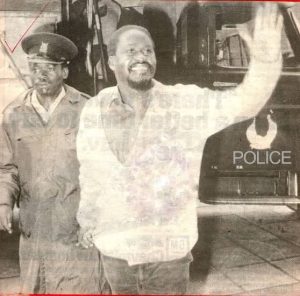
In 1982, under President Daniel arap Moi’s one‐party rule, Raila was charged with treason (in relation to a coup attempt), imprisoned without trial for nearly nine years (1982-1991). He accused the state of harsh conditions and torture; his detention would be a crucible, refining both his resolve and his political brand as oppositional, resilient, and unbowed. After his release, even in exile, he remained a voice for multiparty democracy.
Entry into electoral politics
After multiparty politics were re-legalized in 1991, Raila entered Parliament in 1992, representing Lang’ata, Nairobi. From there began a series of presidential runs (1997, 2007, 2013, 2017, 2022), none of which delivered him the presidency, though several were deeply contested.
II. Legend in Motion: Achievements, Controversies, and the Long Shadow
Champion of reform
Two of Kenya’s most important political transformations bear his fingerprints: the shift to multiparty democracy (1991) and the promulgation of the 2010 Constitution, which fundamentally restructured Kenyan governance—introducing devolution, codifying rights, strengthening oversight mechanisms.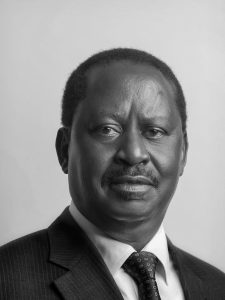
Prime Ministership and coalition dynamics
Following the violence after the disputed 2007 election (with over 1,300 killed, hundreds of thousands displaced), he entered a power-sharing agreement with President Mwai Kibaki and served as Prime Minister from 2008-2013. This period was complex—balancing reconciliation with accountability; attempting infrastructural and social reforms, while navigating the pull of tribal and regional expectations, internal party factions, and the difficult task of being both leader of the opposition and part of the government.
Electoral heartbreaks and claims of fraud
His defeats, especially in 2007, 2013, 2017, and 2022, were shadowed by allegations of vote-rigging, court battles, and street protests. In 2017, for example, the Supreme Court annulled the initial result but the rerun was boycotted by his camp. In 2022 he ran again, backed by former rival Uhuru Kenyatta, but still lost to William Ruto, and again alleged irregularities.
Reputation and paradoxes
Raila’s myth is immense. He was “father,” “glue,” “architect of constitutional democracy.” But also, over time, parts of Kenya grew frustrated: with what they saw as empty promises, the lack of clear transition to a younger generation; accusations that he sometimes compromised too much, or made political deals that undercut his opposition credentials. Some saw him as a unifier; others as someone who wrestled with contradictions.
III. The Final Act: Death, Mourning, Political Underpinnings
Circumstances of Death
Odinga had suffered a minor stroke in Kenya earlier in October 2025. He then traveled to India: first to Mumbai, then to Kochi (Kerala) to undergo Ayurvedic treatment at the Sreedhareeyam Ayurvedic Eye Hospital and Research Centre. On October 15, he collapsed during his routine morning walk at the facility, was rushed to Devamatha Hospital, but pronounced dead at approximately 9:52 AM.
Official Reactions and National Mood
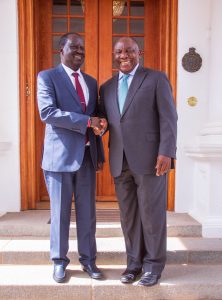
President William Ruto declared seven days of national mourning, with flags at half-mast, a state funeral forthcoming. Political figures from all sides—rivals, erstwhile allies, civil society—paid tribute to Odinga as a principled democrat, a symbol of resistance, and a giant of Kenyan politics. Among those mourning were not just sympathizers, but those whose own political futures had long been tethered to Raila’s presence.
IV. The Myth: Legend, Cult, Critique
There is the man, and there is the myth. And in Kenya, the myth looms large.
“Baba” and “glue”
The names by which people called him—Baba (“father”), “the glue”—reflect not just affection, but a sense that he held together diverse strands of Kenyan society: ethnic groups, regions, youthful idealism, older disappointment. Many believed his voice mattered uniquely.
Contradictions and compromises
Over time, myths must be weighed against actions. Critics point to times Raila allied with political rivals; to alleged failures to deliver on promised reforms; to the suffering following contested elections. Young Kenyans, especially, feel that he lost moral authority in some of his later political maneuvers.
Legacy vs career dependency
Many in Kenya’s political class built their identities—and their livelihoods—around Omar Raila. From parliamentary seats, cabinet posts, regional dominance: Alliance with or opposition to him shaped political trajectories. His death therefore threatens not just a symbolic vacuum, but realignment of power, repositioning of actors who until now counted on him as a kingmaker or bulwark.
V. After the Legend: Political Careers, Succession, the Vacuum
What happens now that Baba is gone? The immediate future in Kenyan politics is likely to be shaped by a number of interlocking questions.
1. Succession in ODM / Azimio / opposition blocs
The Orange Democratic Movement (ODM), which Raila led, and the larger Azimio la Umoja-One Kenya Coalition, will need to find a new face, new leader. Will it be someone loyal to his ideological bent, or someone who wants to break from the legacy and chart their own course? The danger: infighting, splitting, diminished influence.
2. The ruling party’s repositioning
President Ruto and his administration may find a shift: without Raila across the aisle, certain alliances (official or tacit) may be renegotiated. Some policies or rhetoric may shift to fill the vacuum left in terms of opposition critique or oversight.
3. Electoral implications
With national elections scheduled for 2027, Raila’s absence changes the calculations: both in terms of vote blocs (regional, ethnic, demographic) and momentum. Who captures the loyalty of Raila’s base? Who gains from old loyalties unmoored?
4. Youth disillusionment and generational change
Younger Kenyans, many born after the 2007/08 crisis or even after 2010, often spoke of unmet promises. For them, Raila was both hero and disappointment. His absence could accelerate calls for new leadership models; more issue-based politics; less personality-driven mobilization.
5. Narrative control and memory
How Raila is remembered—by textbooks, media, public spaces—will shape Kenya’s self-image. The “Man, Myth, Legend” theme is likely to dominate state-sanctioned commemoration, but counter-narratives will persist: of criticism, of frustration, of betrayal. The tug between mythologizing and critical historiography begins now.
VI. Political Mourning vs Genuine Loss
One of the more bittersweet dynamics today is that many who mourn are perhaps less mourning the loss of a legend than the expiry of their own political capital, relevance, or opportunity.
Politicians who rode his coat-tails
For decades, political figures in ODM or aligned with him rose, gained regional clout, or maintained national platforms in ways that depended on his popularity. With him gone, some may see diminished influence or have to reposition themselves.
Opposition – power brokers – dealmakers
Raila often functioned as the linchpin in deals: between communities; between opposition factions; between the state and dissidents. His absence may expose rifts that have long been papered over. Whether reconciliation or rivalry emerges is uncertain.
International dimension
Raila’s brand extended far beyond Kenya. Global actors who engaged with him—African Union, foreign governments, investors—now must recalculate who to partner with. Kenya’s external posture may shift depending on who fills his diplomatic and moral shoes.
VII. Looking Forward: The Path After the Legend
As Kenya stands at this inflection point, several paths lie ahead. None are guaranteed; each depends on choices by people who until today positioned themselves relative to Raila.
Honoring reform, not just ritual
Will Kenya use this moment to reinforce the constitutional gains, the judicial reforms, devolution—what Raila staked much on—or allow complacency and rollback?
Emergence of new leadership
Whether in ODM or among young activists, the void may give rise to unexpected voices. But legitimacy will rely less on nostalgia and more on performance, clarity, integrity.
Healing divisions, not exploiting them
Raila’s career often walked the harsh line between unity and tribalism. The risk now is that his absence becomes a pretext for polarizing politics — or the opportunity to transcend past divides.
Politics of memory
Monuments, state funerals, public speeches matter. But what matters more is what is taught, what is remembered, what is critiqued. The legend may be safe; the truth is more fragile.
Epilogue
Man, Myth, Legend. Raila Amollo Odinga embodied all three. He was a man of flesh, frailty, ambition. A myth—built by decades of struggle, hope, betrayal, triumph, defeat. A legend—etched deeply into Kenya’s political DNA.
But the end of an era is not always a turning point. It can be a reversal. Or an awakening. As Kenyans mourn today the end of a political icon, they must choose: to merely preserve the memory, or to build what he promised but, in many eyes, did not fully deliver.
If Kenya chooses the latter, Baba’s legend will have been more than myth. It will have been the foundation for something new.
Rest in peace, Raila Amollo Odinga. The man is gone; the legend only now begins to be contested.




Leave a Reply