
In an unprecedented move to safeguard the integrity of national examinations, the government has activated round-the-clock surveillance on social media platforms to track and neutralize digital fraud networks.
Interior Principal Secretary Dr. Raymond Omollo on Wednesday announced that a multi-agency team is now monitoring online activity 24 hours a day to counter the growing wave of fake exam leaks and con artists preying on anxious parents and students.
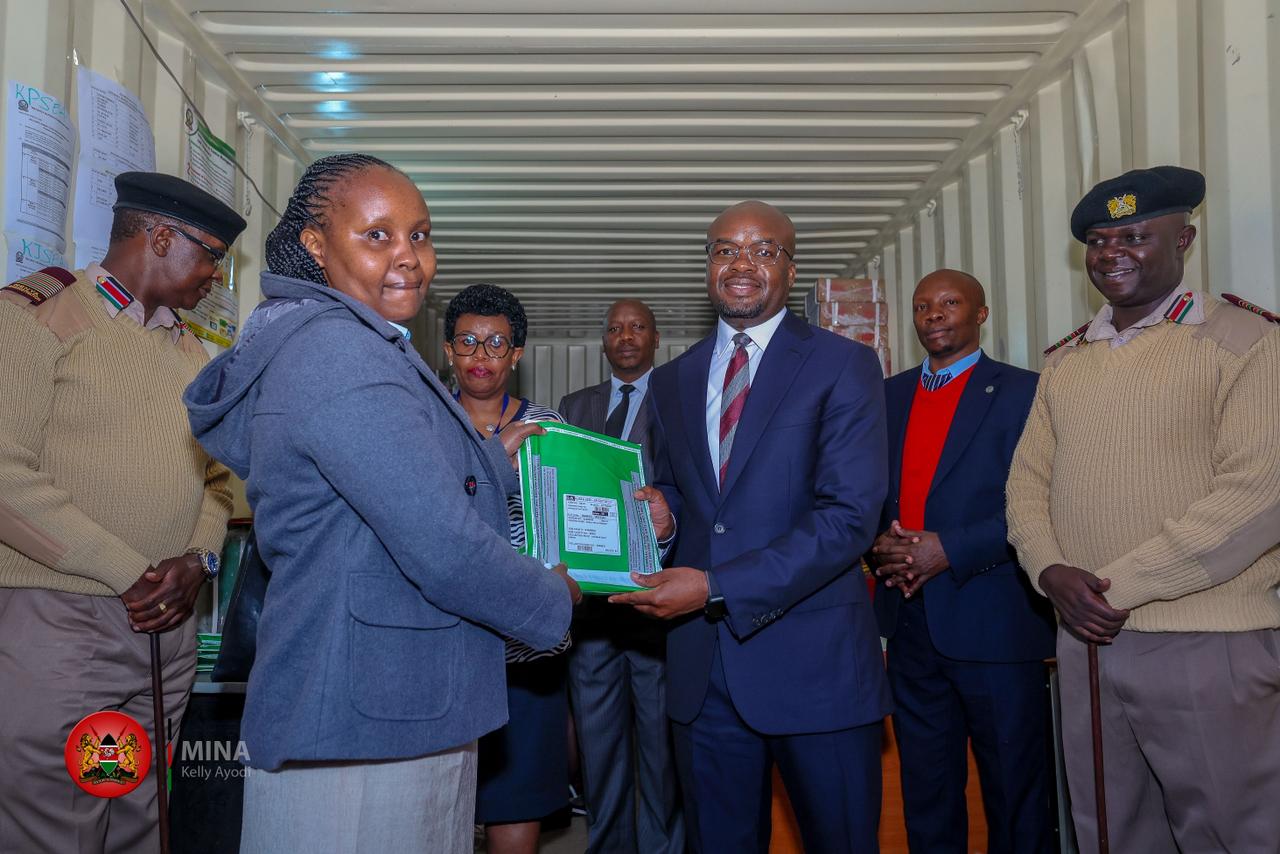
“We are tracking individuals and pages pretending to share examination information while defrauding unsuspecting parents, teachers, and students,” said Dr. Omollo during a visit to a national exam distribution center in Starehe Sub-county.
“Where breaches occur, we will act appropriately. The systems in place are robust enough to protect the credibility of the assessments.”
According to Omollo, the National Command Centre, domiciled within the Ministry of Interior, has been fully activated to facilitate real-time monitoring, response, and coordination among security, ICT, and education departments.
The crackdown targets fraudulent pages and individuals who have been circulating purported exam materials online — a trend that spikes annually during the national assessment season. Authorities say some of these schemes are sophisticated scams, duping parents into paying for non-existent “leaked papers.”
“Teams from the ICT and security departments are scrutinizing online platforms to ensure those exploiting social media for illegal gains are held accountable,” the PS said.

The Interior Ministry has deployed over 600 examination containers across all sub-counties, with Sub-County Directors of Education working closely with Security and Intelligence Committees to ensure seamless operations.
Despite challenges such as flooding in parts of Tana River and a few health-related emergencies among candidates, the government says the situation remains under control.
“We had a case in Tana River yesterday, which was resolved quickly. Backup airlifts are in place where necessary to ensure timely delivery,” Omollo assured.
Basic Education PS Julius Bitok echoed Omollo’s sentiments, confirming that the Ministry of Education has deployed a multisectoral anti-cheating team to reinforce exam integrity.
“We are working around the clock to ensure examinations are administered professionally and remain free from malpractice. Any irregularities should be reported immediately,” Bitok stated.
The Kenya Primary School Education Assessment (KPSEA) and Kenya Junior School Education Assessment (KJSEA) began on October 27, with the KPSEA concluding today and the KJSEA running until November 3.
The KCSE examinations, meanwhile, commenced on October 21 and are scheduled to end on November 21, 2025.
The government’s intensified surveillance underscores a growing recognition that examination malpractice has shifted from physical leaks to cyber-enabled fraud.
With social media now a major tool for misinformation and exploitation, authorities say 2025 could mark the beginning of a new digital enforcement era — one where technology is used not to cheat, but to protect fairness in education.
“Citizens must remain vigilant and avoid falling for online scams. Integrity is not just a government responsibility; it is a collective civic duty,” Omollo concluded.


