


From Policy to Progress: Unleashing the Power of Kenya’s Village Councils
Across Kenya, the heartbeat of national progress doesn’t throb in Nairobi’s corridors of power or county headquarters — it pulses in the villages. It’s in these vibrant rural communities where real transformation begins, where dreams take root, and where government policies must ultimately deliver impact. That’s why the establishment and empowerment of Village Development Councils (VDCs) has become not just a governance innovation, but a national priority — especially in devolved regions such as Siaya County.
A New Dawn in Grassroots Governance
The vision behind village councils is simple yet revolutionary: to place decision-making power where it matters most — in the hands of the people. These councils are not just administrative structures; they are mini-parliaments of progress, designed to translate national policies and global commitments like the Sustainable Development Goals (SDGs) and the Paris Agreement on Climate Change into visible, local action.
Imagine a village council that doubles as a convener, a planner, a watchdog, and a steward of nature — one that can mobilize its people to combat climate shocks, track service delivery, and uplift the most vulnerable. That’s the Kenya being built today — one village at a time.
The Village Council as a Multi-Tool for Change
Empowered village councils act as the nexus of community development. They bring everyone — elders, youth, women, faith leaders, and professionals — to a common table to plan their own destiny.
The Local Planner & Convener: They craft “living” village plans that mirror county and national development blueprints.
The Early Warning Hub: They operate simple systems for weather alerts, disease tracking, and rapid response.
The Nature Steward: They lead environmental restoration — from reforestation to wetland protection.
The Inclusion Catalyst: They guarantee every voice counts, especially women and youth, in shaping the local agenda.
The Service Watchdog: They track quality of water, education, and health services — ensuring accountability.
The Knowledge Promoter: They host learning forums on climate-smart agriculture, clean energy, and hygiene.
In essence, a well-supported VDC becomes the local government’s strongest partner — not a passive recipient of development, but a co-driver of transformation.
From Paper to Practice: Building a Governance Foundation
For these councils to thrive, they must rest on firm democratic and planning foundations. Each council develops a three to five-year costed village plan that links community priorities to the SDGs. These plans are not static reports; they are living documents — blueprints for action.
Through inclusive decision-making, the councils ensure that governance truly mirrors community diversity. Tools like community mapping identify hazards, assets, and opportunities, making development visible and actionable.
When such plans are linked to Ward and County systems, villages can tap into devolved funding, technical support, and national climate finance mechanisms.
Siaya County: Leading by Example
Siaya can emulate Makueni County which has rolled out the VDCs. Actually, Siaya County stands out as a model of how devolved governance can empower villages to take charge of their futures. With its strong community networks and visionary leadership under Governor James Orengo, Siaya is already nurturing vibrant grassroots structures that align with this VDC model.
From flood management in Yala and Usonga, to tree-planting initiatives along River Nzoia, and youth-led innovation hubs in Gem, Siaya’s local actions mirror the national vision — that development must begin where people live.
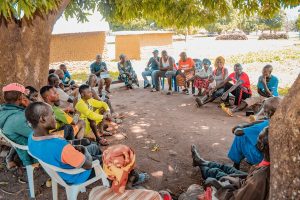
Village Development Councils in Siaya can further anchor this progress — ensuring that every ward, every sub-location, and every homestead becomes part of a collective movement towards resilience and prosperity.
Financing and Partnerships: Fueling the Engine of Change
To sustain impact, VDCs require more than goodwill — they need strategic financing and partnerships. The most successful councils adopt a blended funding model: pooling household contributions, local savings groups, county allocations, and NGO support.
Universities, development partners, and private firms can also join hands by offering technical expertise, training, and market linkages. Crucially, council members must be trained in financial management, climate adaptation, and governance — ensuring local capacity matches local ambition.
The 12-Month Roadmap: From Talk to Tangible Action
Kenya’s transformation doesn’t need to wait decades. A one-year roadmap can turn this policy vision into ground reality:
Months 1–2: Convene inclusive village assemblies and conduct hazard mapping.
Months 3–4: Draft 3-year development and resilience plans.
Months 5–6: Establish local bylaws and connect with county funding systems.
Months 7–9: Roll out quick wins like clean cookstove projects and tree planting.
Months 10–12: Review, scale, and integrate plans into county strategies.
Why It Matters Now
At a time when Kenya faces growing climate threats, inequality, and youth unemployment, Village Development Councils offer a people-driven solution. They embody the principle that development is strongest when communities design it, own it, and sustain it themselves.
From Siaya to Samburu, from Kisii to Kilifi, the future of Kenya’s governance lies not in bureaucracy but in empowered villages — where citizens chart their own path toward dignity, resilience, and shared prosperity.
The establishment of VDCs is not just another government program — it is the cornerstone of a new governance era where every village becomes a hub of progress and every Kenyan a participant in shaping the nation’s destiny.
The time to empower our villages is now. Because when the village rises, the nation thrives.
This article is adopted from content provided by Dr. David W.O. Oremo, CEO of the Acacia Community Foundation









Leave a Reply