


The launch of the School of Hospitality at the Morendat Institute of Oil & Gas (MIOG) by Energy and Petroleum Cabinet Secretary James Opiyo Wandayi and Tourism and Wildlife Cabinet Secretary Rebecca Miano—implemented in partnership with the Boma International Hospitality College—marks a strategic expansion of Kenya’s vocational training framework. Originally established in 2014 by the Kenya Pipeline Company (KPC) as a regional centre of excellence for the Northern Corridor Integration Projects, MIOG focused on oil and gas skills to support petroleum infrastructure across East Africa. Now, its Morendat campus broadens into hospitality, offering Swiss-accredited programs in hotel management, culinary arts, and service excellence, supported by practical training through a simulated five-star hotel environment and global internships.
This initiative directly equips Kenyan youth with competencies for a tourism sector projected to inject a record KSh 1.2 trillion into the economy in 2025—over 7% of GDP—while supporting 1.7 million jobs, or one in every twelve nationwide. Forecasts predict 500,000 additional roles by 2035, reflecting tourism’s continued role as an economic cornerstone. The expansion also addresses national priorities of diversifying vocational education and linking training with job-market realities.
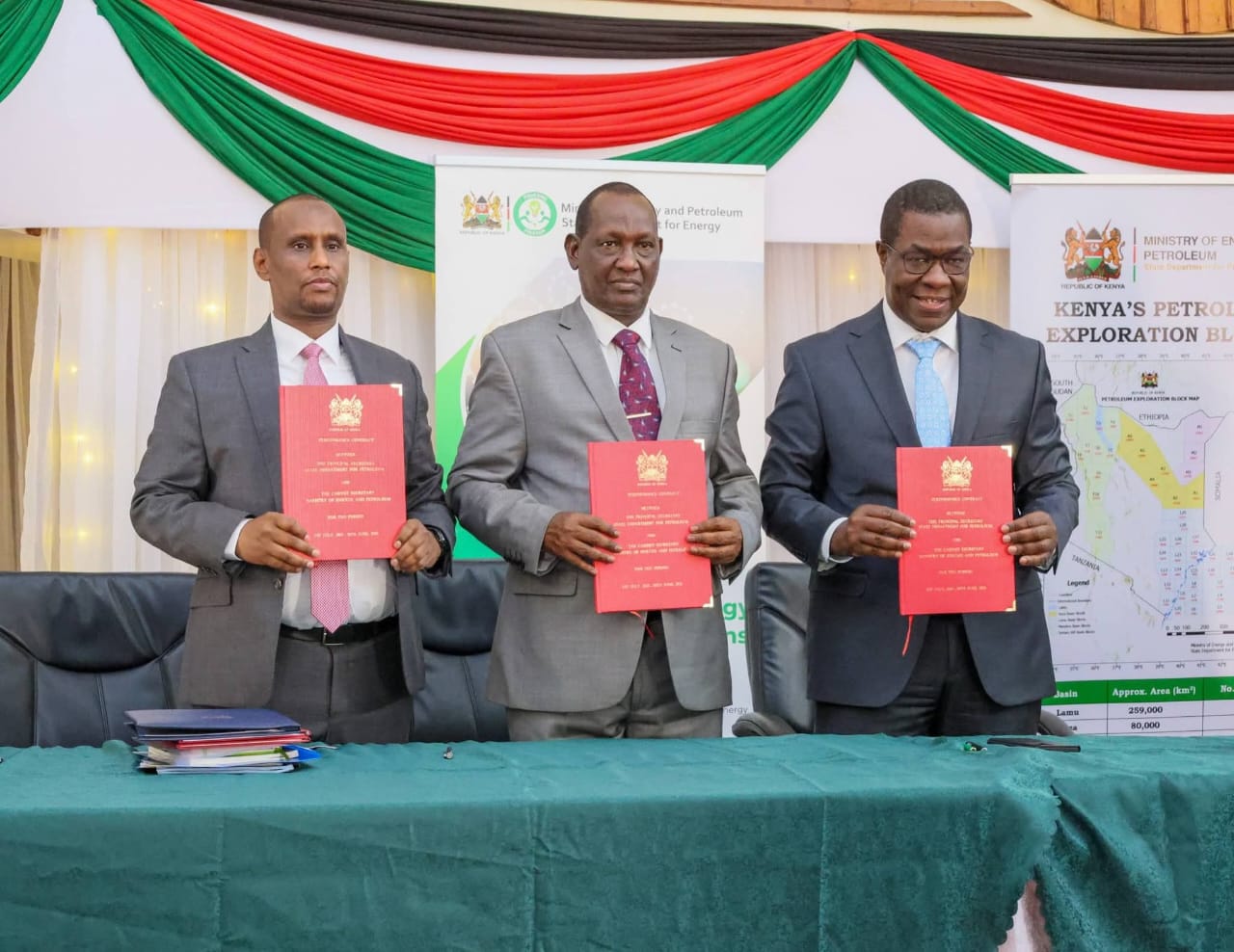
James Opiyo Wandayi, leading the Energy and Petroleum docket, brings deep ties to KPC’s regional pipeline integration efforts, where his advocacy has positioned Kenya as a hub for energy security. His participation underscores cross-ministry commitment to skills diversification, recognizing how energy infrastructure—such as pipelines fueling airports and resorts—intersects with tourism logistics. Rebecca Miano, appointed in 2024 by President William Ruto, heads Tourism and Wildlife with a mandate to sustain sectoral growth. Under her stewardship, inbound tourism revenue rose 19.79%, from Sh377.49 billion in 2023 to Sh452.20 billion in 2024, alongside domestic bed-night occupancy that climbed 12% to 5.17 million.
MIOG, as a subsidiary of KPC, leverages its Morendat facilities for this strategic pivot, while the Boma International Hospitality College infuses world-class curricula emphasizing hands-on operations, sustainability, and industry-aligned competencies. This collaboration aims to bridge Kenya’s persistent skills gap, which has left nearly 70% of TVET graduates unemployed due to outdated training and limited exposure to modern hospitality operations.
Kenya’s hospitality sector, despite a Q1 2025 slowdown to 4.1% growth from 38.1% the previous year—its weakest in five years excluding the COVID period—remains resilient. Hotel revenues are expected to reach US$311.27 million by year-end, with a projected 5.7% compound annual growth rate. International arrivals hit 751,692 in early 2025, boosted by the government’s visa-free entry policy. Domestic tourism spending now approaches KSh 560 billion, while international expenditure hovers near KSh 409 billion. Although challenges such as austerity-driven event cancellations and an oversupply of more than 2,000 new Nairobi hotel rooms persist, luxury segments continue to expand, driven by Meetings, Incentives, Conferences, and Exhibitions (MICE) investments worth Sh1.43 billion and an upswing in eco-tourism.
The School of Hospitality directly counters skills mismatches plaguing the TVET system by aligning MIOG with national targets of attracting 3 million tourists and generating KSh 560 billion in earnings in 2025. This diversification fortifies MIOG against volatility in global oil markets, mirroring hybrid TVET models worldwide that yield 20–30% higher employability outcomes. Energy trainees gain hospitality soft skills critical for multinational and customer-facing roles, while hospitality students acquire sustainable practices that prepare them for green certification pathways and Kenya’s broader climate commitments.
Wandayi’s energy pragmatism complements Miano’s forward-looking tourism vision. Together, they dismantle ministry silos to create synergy—acknowledging, for example, how KPC pipelines enable seamless fuel supply for tourism hubs from the coast in Mombasa to safari destinations like the Maasai Mara. Through Boma’s curriculum, students engage in digital revenue management, front-desk simulations, and modern kitchen brigade operations. This training also nurtures entrepreneurship, preparing alumni to launch boutique guesthouses and guest-experience ventures in underserved regions.
For Siaya County and other regions struggling with the decline of the sugar industry, this model provides a viable pathway to economic redemption. Youth facing unemployment-related unrest could pioneer agri-hospitality innovations: farm-to-table experiences rooted in Lake Victoria fisheries, eco-lodges blending Luo cultural heritage with modern service excellence, and conference retreats linked to booming sectors such as coffee auctions, which grew 39.3%, and milk deliveries, which rose 15% in early 2025. Local leaders should lobby for satellite MIOG campuses that integrate hospitality with agribusiness, potentially generating more than 1,000 new jobs per county through expanded value chains.
Community media groups—which play a transformative role in youth empowerment—can support this growth by driving enrollment campaigns and linking training opportunities to broader economic revitalization efforts, including retraining sugar-sector workers for agro-tourism estates. Nationally, this initiative reflects the Bottom-Up Economic Transformation Agenda championed by President Ruto. With hospitality currently accounting for 8% of national employment, the sector’s contribution could rise significantly with MIOG graduates supporting the National Tourism Strategy 2025–2030, which emphasizes authenticity, nature-based tourism, and MICE expansion.
However, success hinges on disciplined execution. The government should consider allocating 2–3% of the tourism levy to fund scholarships for 50,000 marginalized youth annually. Industry partners should commit to placing at least 70% of trainees into jobs, supported by tax incentives. A digital alumni-tracking system would ensure transparency and accountability. Without deliberate scale-up—such as extending this model to adventure tourism in the Rift Valley or agri-tourism in Western Kenya—the risk of elite capture and exclusion could undermine the model’s transformative potential.
Wandayi and Miano deserve recognition for charting this bold blueprint, but sustained accountability is essential. Parliament must track progress indicators: 500 graduates in Year 1, 80% placement by Year 2, and at least KSh 50 billion in new wages generated. Private-sector participation—through hiring quotas and internship commitments—will accelerate impact, particularly as Kenya navigates Q1 GDP stagnation partly driven by hospitality-sector slowdowns. Youth empowerment through such programs extends beyond employment; it strengthens social stability, reducing unrest in high-unemployment regions like Nyanza.
President Ruto’s inclusive economic agenda shines through innovations like the MIOG hospitality launch, yet long-term funding and national replication will determine its success. Kenya should establish hospitality-agri hubs in Western Kenya, adventure training programs across the Rift Valley, and community-based tourism academies nationwide. Citizens must track progress, enroll their youth, and advocate for equitable expansion.
This initiative transforms oil rigs into opportunity engines and pipelines into conduits of prosperity. With 9.99 million bed-nights recorded in 2024—a 16% increase—and rising room occupancy rates, MIOG positions Kenyan youth at the forefront of a dynamic, growing sector. The hospitality stars of tomorrow are being trained today—ensuring they lead Kenya’s projected KSh 1.8 trillion hospitality industry by 2035.
James’ Kilonzo Bwire is a Media and Communication Practitioner.




Leave a Reply