 ADVERT
 ADVERT
By James Bwire
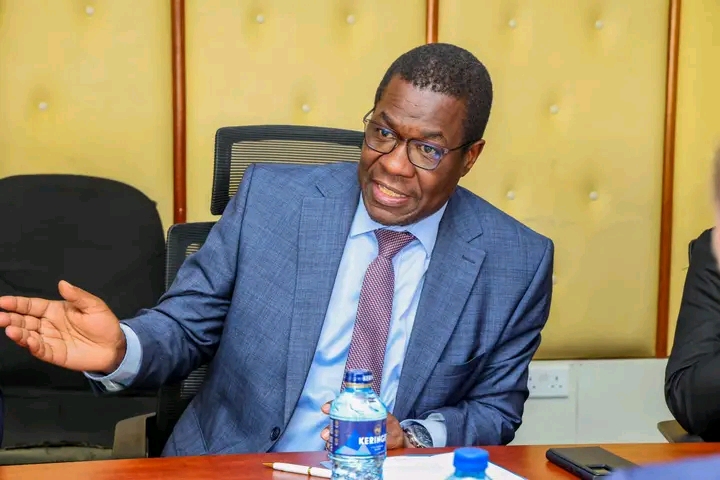
Cabinet Secretary for Energy and Petroleum James Wandayi has once again demonstrated visionary leadership by holding productive engagements with a high-level delegation from the International Finance Corporation (IFC) and the World Bank at the KASNEB offices. This strategic meeting underscores the Kenyan government’s unwavering commitment to transforming the energy sector into a powerhouse that propels the nation toward its economic aspirations. In a country where reliable power is the lifeblood of progress, Wandayi’s discussions signal a pivotal moment: Kenya is not just talking about growth but actively forging partnerships to supercharge its generation capacity to an ambitious 10,000 megawatts within the next seven years, while simultaneously upgrading transmission and distribution lines to match the demands of an expanding economy. This isn’t mere rhetoric; it’s a blueprint for #PoweringTheNewKenya, addressing chronic power deficits that have long stifled manufacturing, ICT, transport, and other high-potential sectors.
As Kenya stands at the cusp of middle-income status, these engagements with global financial giants like the IFC and World Bank are a masterstroke, blending local resolve with international expertise and capital to unlock sustainable development. At the heart of Wandayi’s agenda lies a recognition that Kenya’s current energy infrastructure, hovering around 3,000 megawatts of installed capacity, is woefully inadequate for a population exceeding 50 million and an economy growing at over 5% annually. Blackouts and load-shedding have plagued industries, from the bustling factories in Nairobi’s industrial area to the emerging electric vehicle assembly plants in Naivasha, costing the economy billions in lost productivity each year.
The Cabinet Secretary’s target of 10,000 megawatts—more than tripling current output—directly tackles this bottleneck. Imagine geothermal plants in the Rift Valley humming at full throttle, wind farms along the Lake Turkana corridor generating clean power around the clock, and solar arrays blanketing arid northern regions, all feeding into a robust national grid. These upgrades to transmission and distribution lines are equally critical; Kenya’s aging network, riddled with losses exceeding 20% in some areas, cannot handle the surge without massive reinvestment. Wandayi’s talks with the IFC and World Bank focus precisely here, leveraging their track record in financing mega-projects like the 310MW Lake Turkana Wind Power project, which has already proven the viability of public-private partnerships in renewable energy.
This push aligns seamlessly with President William Ruto’s Bottom-Up Economic Transformation Agenda (BETA), which prioritizes energy as the enabler for the five pillars of manufacturing, housing, health, agriculture, and digital superhighness. In manufacturing alone, sectors like textiles in Athi River and agro-processing in Kisumu stand to benefit immensely from uninterrupted power, potentially creating hundreds of thousands of jobs and boosting exports. The ICT sector, Kenya’s Silicon Savannah in Konza and Nairobi, relies on stable electricity for data centers and innovation hubs; scaling to 10,000 megawatts would attract giants like Google and Microsoft to invest further, positioning Kenya as East Africa’s digital gateway.
 ADVERT
Transport, too, gets a revolutionary lift—think electric buses charging reliably for the Nairobi Metropolitan Area’s green mobility plans or high-speed rail extensions powered without fossil fuel dependency. Wandayi’s diplomacy ensures these ambitions are funded sustainably; the World Bank’s concessional loans and IFC’s private-sector mobilization could inject billions, reducing reliance on costly emergency diesel generators that drain foreign reserves. Critics might point to past delays in projects like the Menengai geothermal field, but Wandayi’s proactive stance—engaging partners at KASNEB, a hub for professional discourse—signals a departure from red tape toward execution.
Yet, the true genius of these engagements lies in their holistic approach to energy security amid global shifts. Climate change imperatives demand a pivot from thermal plants, which still account for nearly 40% of Kenya’s mix despite abundant renewables. Kenya, with 90% of its geothermal potential untapped and world-leading wind speeds in Turkana, is primed for green dominance. The IFC and World Bank’s involvement brings not just money but technical know-how, from advanced grid stabilization tech to off-grid solar for underserved rural areas, empowering women and youth through micro-enterprises.
Consider the Last Mile Connectivity Project, already connecting 800,000 homes; scaling transmission lines will extend this to millions more, fostering community-owned solar cooperatives that align with devolved governance. Economically, this means lower tariffs—currently averaging 18 KSh per unit—dropping to levels competitive with neighbors like Ethiopia, attracting foreign direct investment (FDI) that hit $900 million last year but could double with reliable power. Wandayi understands that energy poverty perpetuates inequality; his vision bridges urban-rural divides, powering MSMEs in Kitui’s drylands or Mombasa’s ports, where efficient distribution will slash logistics costs by 15–20%.
Skeptics may question the seven-year timeline, citing fiscal constraints and transmission challenges like right-of-way disputes in densely populated areas. But history favors the bold: Kenya achieved universal electricity access goals ahead of schedule in some regions through similar partnerships. The World Bank’s $1.5 billion portfolio in Kenyan energy attests to confidence in our trajectory, while IFC’s de-risking tools mitigate investor hesitancy. Wandayi must now champion policy reforms—streamlining Kenya Power’s monopoly, enforcing feed-in tariffs for independents, and integrating AI for predictive maintenance—to ensure projects like the 1,000MW Gwasi geothermal and coastal wind farms stay on track. Public buy-in is crucial too; transparent communication via platforms like #PoweringTheNewKenya will counter misinformation and rally support, much like the successful Galana-Kulalu solar irrigation scheme.
In essence, Cabinet Secretary Wandayi’s KASNEB powwow is more than a meeting—it’s the ignition spark for Kenya’s energy renaissance. By tripling capacity and modernizing infrastructure, we unlock a virtuous cycle: cheaper power fuels manufacturing booms, ICT explosions, and transport innovations, creating jobs for our youth dividend of 75% under 35 and lifting GDP growth to 7–8%. This isn’t just about megawatts; it’s about megawatts of opportunity for every Kenyan hustler, from jua kali artisans to tech entrepreneurs.
As international partners align behind this vision, the message is clear: Kenya is open for green business, ready to power Africa’s next industrial powerhouse. The ball is in our court—let’s switch on the future.
James’ Bwire Kilonzo is a Media and Communication Practitioner.


