 ADVERT
 ADVERT
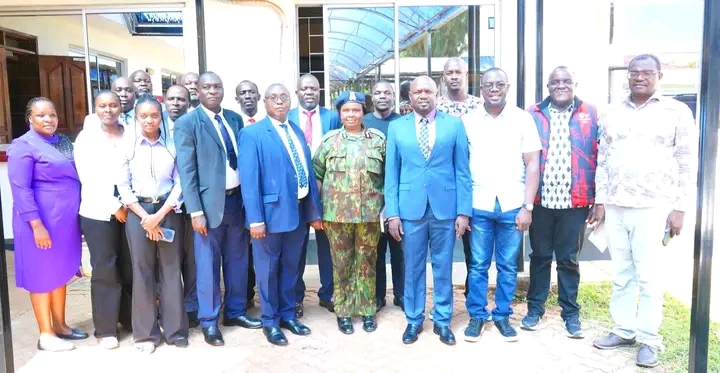
Siaya County Assembly Speaker George Okode hosted a pivotal courtesy call from the committee tasked with overseeing the implementation of the 10-point agenda and the National Dialogue Committee (NADCO) Report, marking a crucial step in Kenya’s ongoing quest to fortify devolution and refine its governance architecture. Led by Vice Chair Javas Bigambo, the team delivered a progress update on their mandate while actively soliciting insights from the County Assembly on translating these high-level commitments into tangible realities at the grassroots level.
This engagement, enriched by the presence of fellow County Assembly members, zeroed in on core pillars like bolstering devolution through anti-corruption measures, securing full financial autonomy for County Assemblies, ramping up county allocations, and realigning the financing of devolved functions with the letter and spirit of the Constitution of Kenya, 2010, and attendant statutes. As the team prepares to extend this dialogue to the public at Jaramogi Oginga Odinga University later today, this meeting underscores not just procedural courtesy but a clarion call for renewed vigor in addressing the fractures that have long undermined Kenya’s devolved system—a system birthed from the ashes of centralized tyranny to empower local communities, yet perpetually hobbled by national-level encroachments and fiscal manipulations.
At its heart, this Siaya convening spotlights the 10-point agenda and NADCO Report as more than mere policy checklists; they represent a hard-won consensus from Kenya’s fractious political landscape, forged amid widespread protests and pushback against fiscal overreach. The NADCO process, birthed from multipartite dialogues involving political parties, civil society, and faith leaders, promised reforms like electoral justice, governance overhauls, and enhanced devolution to prevent the recurrence of electioneering tensions and economic disenfranchisement.
Yet, implementation has been sluggish, with the 10-point agenda—encompassing public finance reforms, anti-corruption drives, and devolution strengthening—languishing under bureaucratic inertia and political maneuvering. In Siaya, a Nyanza heartland synonymous with progressive politics and the legacy of Jaramogi Oginga Odinga, Speaker Okode’s platform provided a microcosm for dissecting these delays. The discussions illuminated how counties like Siaya, rich in agricultural potential and human capital yet starved of resources, bear the brunt of unfulfilled promises.
Bigambo’s team, by sharing progress on key fronts like revenue-sharing formulas and digital tracking of graft, signaled accountability, but the real value lay in the two-way street: County Assembly members, drawing from on-the-ground realities, enriched the exchange with insights into stalled initiatives attributable to misaligned fiscal transfers that favor national priorities over constitutional mandates.
 ADVERT
Delving deeper, the fight against corruption emerged as the linchpin of these talks, a battlefront where devolution’s promise has been most brutally betrayed. Kenya’s devolved units were envisioned under the 2010 Constitution as bulwarks against the kleptocratic centralism of yesteryears, with Article 174 explicitly tasking them to foster equitable development and citizen participation.
Yet, as Speaker Okode’s forum highlighted, corruption has metastasized into county corridors, with patterns of inflated tenders, payroll irregularities, and vanishing local funds eroding public trust. The committee’s update referenced ongoing probes into devolved graft, but Siaya’s input pushed for more: robust whistleblower protections tailored to rural settings, where kinship ties often shield the corrupt, and mandatory lifestyle audits for county officials.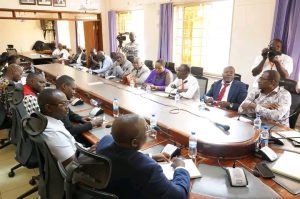
Granting County Assemblies full financial autonomy isn’t mere rhetoric; it’s about empowering oversight bodies like Siaya’s to approve budgets independently, ensuring assemblies control their recurrent expenditures. Currently, assemblies are often relegated to rubber stamps under existing frameworks like the County Governments Act, 2012. Okode’s advocacy here aligns with judicial precedents on equitable revenue sharing, urging a paradigm shift where assemblies aren’t beggars at the national trough but co-architects of fiscal destiny.
Financially, the clarion demand for increased allocations to counties and constitutional alignment of devolved functions strikes at the root of devolution’s existential crisis. The Constitution’s Fourth Schedule delineates clear functions—agriculture, health, roads, water—for counties, yet national government overreach persists, from clawing back key budgets to diverting funds from devolved priorities. In Siaya, this manifests in underfunded essential services and infrastructure, despite its agricultural richness and growth potential.
The committee’s insights, gleaned from Siaya, could catalyze advocacy for revising revenue allocation formulas that undervalue rural needs. Speaker Okode’s engagement hammered home the need for “full autonomy both on paper and in practice,” echoing calls for amending relevant acts to devolve management fully and better align shares with economic realities. This isn’t parochialism; it’s constitutional fidelity. Siaya’s assembly members, by enriching the discourse with thematic examples of funding mismatches, bridged policy abstraction with lived hardship, pressing Bigambo’s team to prioritize legislative tweaks in ongoing parliamentary sessions.
This Siaya dialogue extends beyond elite huddles, heralding a broader public imprimatur as the committee heads to Jaramogi Oginga Odinga University for open forums. JOO University, a crucible of intellectualism, symbolizes the very devolution ethos under discussion—community-driven progress fostering local leadership. Engaging the public here democratizes the 10-point agenda, allowing ordinary citizens to voice how corruption erodes local initiatives or how fiscal autonomy could unlock untapped potential.
Such inclusivity counters critiques of top-down processes, injecting grassroots urgency into national reforms. Yet, challenges loom: political sabotage where coalitions dilute devolution to consolidate power, and capacity gaps in counties navigating autonomous finance. Siaya offers a template—its assembly’s spirited input proves legislative maturity when empowered. Nationally, this must inspire a domino effect, with other counties amplifying demands for governance equity and senatorial oversight as devolution’s guardian.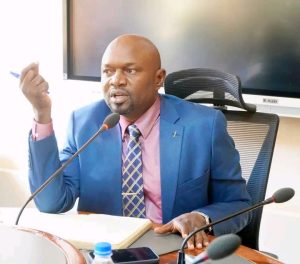
Ultimately, Speaker Okode’s courtesy call transcends courtesy; it’s a manifesto for devolution’s renaissance, urging Kenya to honor the 2010 social contract before disillusionment breeds unrest. With corruption’s tentacles demanding surgical excision via tech-driven procurement and independent audits, financial autonomy requiring bold amendments to entrench assembly prerogatives, and allocations recalibrated to mirror constitutional equity, the path is clear yet arduous.
The JOO University parley amplifies this, transforming Siaya from peripheral player to vanguard. As Bigambo’s committee absorbs these insights, the onus shifts to Parliament and the Executive: legislate swiftly, fund generously, and devolve genuinely. Failure invites echoes of past unrest; success births a Kenya where counties like Siaya thrive, proving devolution as the engine of inclusive prosperity. In this Nyanza crucible, the 10-point agenda finds its soul—let it propel the nation forward.
James’ Kilonzo Bwire is a Media and Communication Practitioner


