
By James Bwire
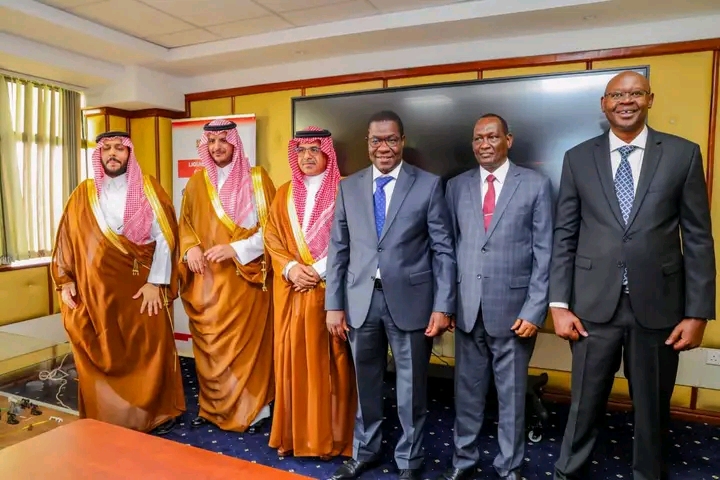
Cabinet Secretary of Energy and Petroleum James Wandayi held discussions with a delegation from the Kingdom of Saudi Arabia comprising key officials from Saudi state agencies and accompanied by officers from the Kenya National Chamber of Commerce and Industry, with deliberations centered on investment opportunities in the petroleum sector in Kenya. This engagement represents a significant moment in Kenya’s ongoing efforts to reposition its energy sector as a driver of economic growth and regional influence. At a time when energy security, affordability, and sustainability dominate national discourse, such high-level talks signal a deliberate and strategic attempt by the Kenyan government to attract long-term, value-driven foreign direct investment. The involvement of Saudi Arabia, a global powerhouse in oil and gas, elevates the importance of these discussions beyond routine diplomacy and into the realm of transformative economic planning. Kenya’s petroleum ambitions, long constrained by capital limitations and infrastructure deficits, stand to gain from Saudi technical expertise, financial muscle, and global market reach, making this engagement a potential turning point for the sector.
Kenya’s petroleum industry has for years been characterized by promise tempered with delay. Discoveries in the Lokichar Basin ignited national optimism, yet commercialization has remained elusive due to high development costs, logistical challenges, and fluctuating global oil prices. Against this backdrop, Wandayi’s discussions with Saudi officials take on added significance, as they open the door to partnerships capable of overcoming these long-standing bottlenecks. Saudi Arabia’s experience in managing complex upstream and downstream projects, often in challenging environments, aligns well with Kenya’s needs as it seeks to transition from discovery to production. The presence of the Kenya National Chamber of Commerce and Industry further grounds these talks in practical economic realities, ensuring that potential investments are not isolated megaprojects but integrated ventures that stimulate local enterprise, job creation, and skills development. This convergence of government, foreign investors, and domestic private sector actors reflects a more holistic approach to energy development than Kenya has previously pursued.
Beyond upstream exploration, the discussions underscore broader opportunities across the petroleum value chain, including refining, storage, transportation, and petrochemical industries. Kenya’s strategic location along the Indian Ocean, coupled with its role as a gateway to East and Central Africa, positions it as an attractive hub for regional petroleum logistics and trade. A Saudi-backed refinery or storage facility at the coast could significantly reduce Kenya’s reliance on imported refined products, stabilize domestic fuel prices, and generate export revenues from neighboring markets. Such developments would not only strengthen Kenya’s balance of payments but also enhance energy security in a region frequently exposed to global supply shocks. Wandayi’s emphasis on investment opportunities therefore reflects a forward-looking vision in which petroleum development supports industrialization, infrastructure expansion, and regional integration rather than remaining an isolated extractive activity.
The potential social and economic impacts of a strengthened petroleum partnership are equally compelling. Counties such as Turkana, historically marginalized and economically underserved, stand to benefit from revenue-sharing arrangements, infrastructure development, and employment opportunities linked to oil projects. If managed transparently and inclusively, petroleum investments could become a catalyst for local development, reducing poverty and addressing long-standing grievances over resource distribution. The involvement of KNCCI suggests an awareness that local businesses, including small and medium enterprises, must be part of this growth story. By embedding local content requirements and prioritizing technology transfer, Kenya can ensure that foreign investment builds domestic capacity rather than fostering dependency. This approach aligns with broader national development goals and reinforces the idea that petroleum resources, when properly managed, can serve as a foundation for inclusive prosperity.
Nevertheless, the promise of Saudi investment also invites careful scrutiny. Kenya’s history with large-scale resource projects has been marred by concerns over transparency, environmental protection, and governance. Any future agreements emerging from these discussions must therefore be anchored in strong regulatory frameworks, clear fiscal terms, and robust environmental and social safeguards. Saudi Arabia’s own evolving approach to sustainability and economic diversification presents an opportunity for Kenya to insist on responsible extraction practices, including emissions management and community engagement. Wandayi’s leadership will be tested in balancing the urgency of attracting investment with the necessity of protecting national interests and public trust. Transparent negotiation processes and parliamentary oversight will be essential in ensuring that petroleum deals serve the long-term good of the country rather than short-term gains for a few.

In the broader context of Kenya’s energy transition, these discussions highlight a pragmatic recognition that petroleum will continue to play a critical role in the economy even as the country expands its renewable energy portfolio. Transport, manufacturing, and heavy industry remain heavily dependent on petroleum products, and securing reliable, affordable supply is vital for economic stability. By engaging Saudi Arabia while continuing to invest in geothermal, wind, and solar energy, Kenya can pursue a balanced energy strategy that supports growth while preparing for a lower-carbon future. This dual approach positions the country as both an energy innovator and a realist, capable of navigating the complexities of global energy markets.
Ultimately, the discussions led by Cabinet Secretary James Wandayi with the Saudi delegation reflect a broader vision of Kenya as an active participant in shaping its economic destiny through strategic international partnerships. If translated into concrete, well-governed investments, these talks could unlock significant value for the petroleum sector and the wider economy, from job creation and infrastructure development to enhanced regional influence. The challenge now lies in execution—ensuring that policy coherence, institutional capacity, and public accountability keep pace with ambition. In doing so, Kenya can transform petroleum from a long-debated potential into a tangible pillar of national development, anchored in partnerships that respect sovereignty, promote sustainability, and deliver shared prosperity.
James’ Bwire Kilonzo is a Media and Communication Practitioner.


