
By James Bwire
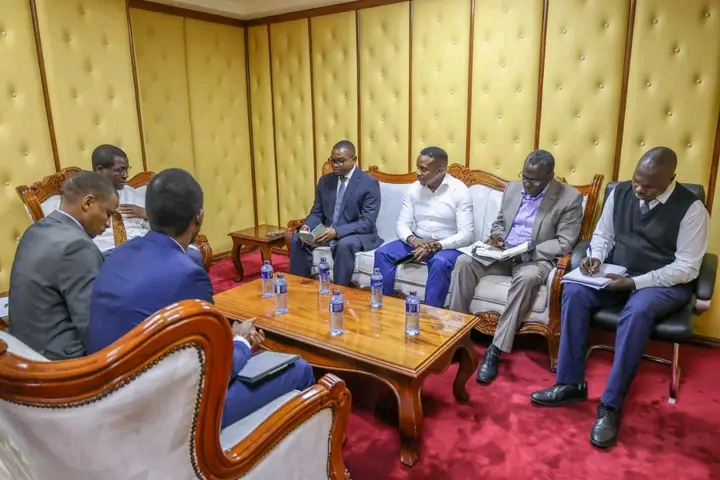
Cabinet Secretary for Energy and Petroleum James Wandayi’s consultations with Meru County Governor H.E. Rev. Mutuma M’Ethingia marked more than a routine intergovernmental meeting; they represented a deliberate and strategic alignment between national energy policy and devolved development ambitions. At the heart of the engagement was a detailed review of Meru’s long-term energy plans and an unequivocal assurance from Wandayi that the Ministry of Energy would stand firmly behind the county as it courts private investors to establish Independent Power Producers (IPPs). This collaboration reflects a growing recognition that Kenya’s energy challenges—characterized by an installed capacity of roughly 3,200 MW against peak demand that frequently exceeds 2,300 MW—cannot be solved by centralized action alone, but rather through a cooperative model that leverages county-level resources and innovation.
For Meru County, the urgency of this agenda is deeply practical. As a major agricultural hub, the county’s economy depends heavily on reliable and affordable electricity to power tea factories, miraa processing and export chains, dairy cooling plants, and emerging agro-processing enterprises. Persistent load-shedding and voltage fluctuations have increased production costs, forced reliance on expensive diesel generators, and reduced competitiveness for farmers and cooperatives already grappling with rising input prices. By embracing IPPs, Meru seeks to stabilize its power supply while contributing surplus energy to the national grid, turning a local challenge into a national opportunity.
The county’s natural endowments make this ambition realistic. Rivers such as Thagana and Kathita offer dependable flows suitable for run-of-river mini-hydro projects that minimize environmental disruption while delivering steady power. The expansive Igembe plateaus receive abundant sunlight—averaging over 2,200 sunshine hours annually—making them ideal for large-scale solar installations, while the county’s agricultural output generates vast quantities of biomass from maize stalks, banana residues, and miraa prunings that can be converted into electricity and organic fertilizer through biogas technologies. Harnessing these resources promises not only clean energy but also new rural supply chains that create jobs for women and youth engaged in feedstock collection, processing, and maintenance.
Nationally, Kenya’s energy sector illustrates both impressive progress and persistent inequities. While rural electrification has reached approximately 75 percent, Meru still trails slightly behind, leaving many households dependent on kerosene and firewood. This dependence carries hidden costs in the form of respiratory illnesses, fire risks, and limited productive hours after sunset. At the same time, the country has demonstrated the effectiveness of IPPs, which now account for over 80 percent of electricity generation, largely from geothermal and hydropower sources. These private-led projects have consistently delivered electricity at costs far below diesel-based alternatives, underscoring why expanding IPPs remains central to lowering tariffs and improving reliability.
Wandayi’s pledge of support translates into concrete institutional backing. The Ministry of Energy is prioritizing streamlined licensing through the Energy and Petroleum Regulatory Authority to reduce approval timelines, strengthening Kenya Power’s offtake guarantees through standardized Power Purchase Agreements, and facilitating access to international climate finance mechanisms such as the Green Climate Fund and multilateral development banks. These measures significantly reduce investor risk while ensuring projects align with national sustainability goals. On the county side, Governor M’Ethingia’s administration has embedded energy development within Meru’s Integrated Development Plan, identifying bankable projects including a proposed 50 MW solar plant in Buuri Sub-County, 20 MW of mini-hydro along the Kathita River, and decentralized biomass facilities in Igembe. Collectively, these initiatives aim to push county electricity access toward 90 percent while supporting smart metering and mini-grids for hard-to-reach communities.
Devolution provides the legal and institutional framework that makes this partnership viable. Since the establishment of county governments in 2013, Article 186(4) of the Constitution has clarified counties’ roles in intra-county electricity distribution while preserving national oversight of generation and transmission. Meru has embraced this mandate with unusual vigor, mapping wind corridors in Imenti North where average speeds of 7 m/s could sustain medium-scale wind farms, promoting rooftop solar on tea estates, and exploring biogas opportunities along its borders with neighboring counties. These efforts align seamlessly with the National Electrification Strategy, which emphasizes distributed generation as a complement to large centralized plants.
Governor M’Ethingia’s leadership style has been instrumental in grounding these technical ambitions in community ownership. Drawing on his background as a reverend, he has convened public barazas, engaged over 50 savings and credit cooperatives, and mobilized youth and women’s groups to participate directly in energy projects. By negotiating local equity stakes of up to 30 percent in proposed IPPs, the county ensures that revenues flow back into scholarships, health facilities, market infrastructure, and social programs that uplift historically marginalized households. This inclusive approach strengthens social license for projects and reduces the conflicts that have derailed energy developments elsewhere.
Economic benefits from this strategy extend far beyond megawatts. A single 50 MW IPP can generate thousands of jobs during construction, hundreds of permanent skilled positions, and billions of shillings in savings for businesses freed from diesel dependence. Reliable electricity enables cold storage for horticulture, reducing post-harvest losses, supports vocational training centers that equip youth with renewable energy skills, and powers women-led enterprises that add value to local produce. At the national level, improved connectivity to the Kenya Electricity Transmission Company network helps address transmission losses that currently waste a significant share of generated power.
The path forward is not without risks. Kenya’s past experience with poorly structured thermal IPP contracts and delayed flagship projects like Lake Turkana Wind underscores the importance of transparency, grid readiness, and prudent financing. Meru’s plans respond to these lessons through a strong emphasis on renewables, competitive and transparent procurement mechanisms, hybrid systems with storage to ensure reliability, and early coordination with transmission authorities. These safeguards align with President William Ruto’s Bottom-Up Economic Transformation Agenda, which prioritizes affordable energy as a catalyst for enterprise growth and social mobility, supported by national incentives and subsidies to lower wheeling and connection costs.
Seen in this broader context, the Wandayi–M’Ethingia consultations exemplify how Kenya’s devolution framework can unlock transformative development when national vision and local initiative converge. Wandayi brings a grounded understanding of energy’s role in livelihoods and enterprise, while M’Ethingia channels Meru’s aspirations into implementable projects rooted in community participation. Together, they model a cooperative approach that transcends regional and political boundaries.
Ultimately, Meru’s energy push represents a compelling vision of energy democracy—one in which counties become active producers, private investors drive innovation and scale, and the national government provides the regulatory and infrastructural backbone. The result is a more resilient grid, thriving local economies, and empowered citizens, particularly women and youth, whose futures are illuminated by reliable, clean power. In lighting its own path, Meru is helping to light the way for Kenya’s sustainable and inclusive energy future.
James Bwire Kilonzo is a Media and Communication Practitioner.