
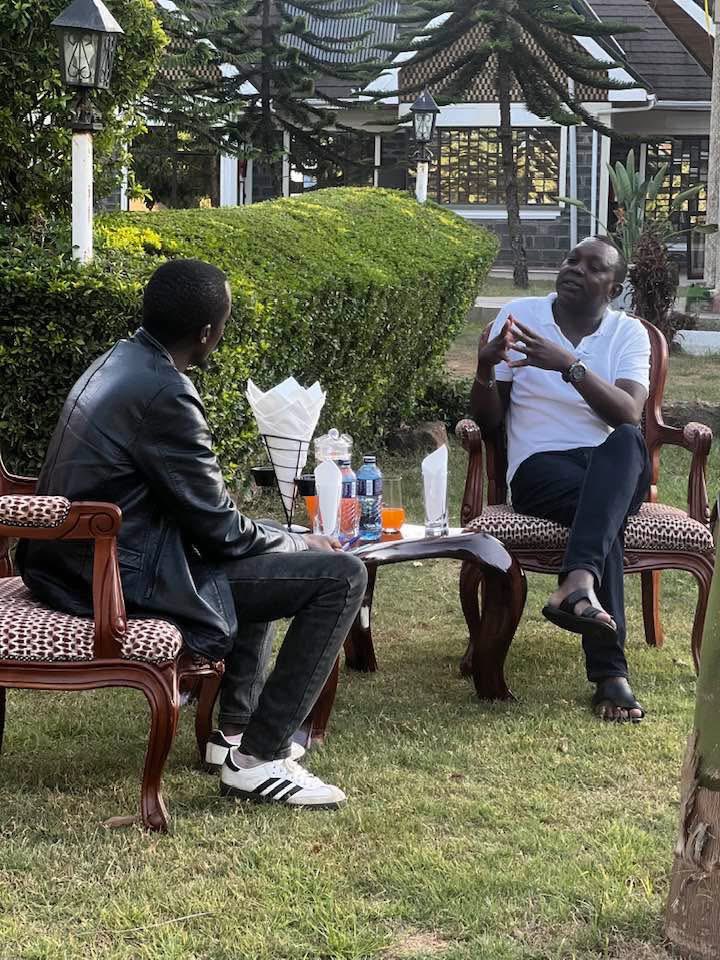
In a candid admission that’s sparking fresh debate on parliamentary accountability, Kapseret MP Oscar Sudi has openly confessed to rarely attending National Assembly sittings, insisting he only graces the chambers when there’s “serious business” on the agenda.
The outspoken legislator, serving his third term as MP since 2013, made the revelation during a recent interview with Propesa TV. “I always go, but I have a small weakness and it is not my mistake. I always go when there is serious business,” Sudi said, framing his selective attendance as a deliberate choice rather than negligence.
Sudi emphasized that routine parliamentary proceedings hold little appeal for him. He argued that his true focus lies in delivering tangible results for his Kapseret constituents, particularly in education. The MP highlighted his track record of using CDF funds to establish more than five new day secondary schools in recent years and fully subsidizing fees after partial support fell short for needy students.
“I rarely go. I have a small weakness, and it is not my making. But I would always go when there is serious business in the house,” he reiterated, defending his approach as a personalized style of leadership tailored to local priorities.
The comments come amid ongoing public scrutiny of MPs’ participation in the House. Reports from organizations like Mzalendo have previously ranked Sudi among the least active contributors, with critics pointing to low debate involvement and frequent absences that have even contributed to quorum issues in past sessions.
Yet Sudi pushed back against interpretations of absenteeism, stressing practical impact over symbolic presence. He noted support for broader free education initiatives through pending legislation and argued that MPs must address constituency-specific challenges differently.

Outside debates, Sudi is ranked by some authorities as among the best performing legislators in regard to being in sync with the Kapsaret electorate where he is serving a third term.
The admission revives longstanding controversies around Sudi’s parliamentary record, including earlier reports of minimal contributions in 2024 and beyond. However, the Kapseret lawmaker remains unapologetic, positioning his “serious business” filter as a no-nonsense strategy for effective representation.
As Kenyans demand greater accountability from their elected leaders, Sudi’s unfiltered take has ignited mixed reactions online—praise from supporters who value his grassroots focus, and sharp criticism from those who see regular attendance as a core duty of the office.
With Parliament’s performance under the microscope ahead of future sessions, questions linger: Is selective attendance a smart prioritization or a dereliction of duty? Only time—and voters—will decide.


