

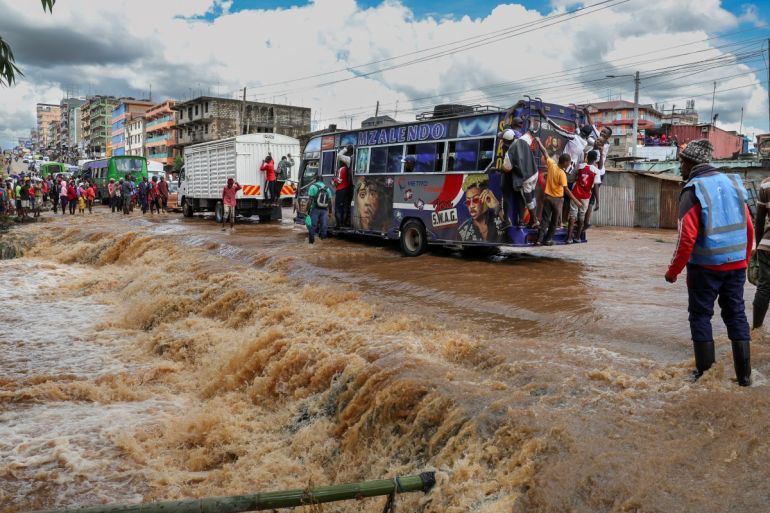
Nairobi is reeling after catastrophic flash floods triggered by relentless heavy rains overnight Friday, March 6, 2026, claiming at least 23 lives and plunging Kenya’s capital into chaos. With roads turned into raging rivers and entire neighbourhoods submerged, emergency teams — backed by the military — raced against time to pull survivors from the deluge.
The National Police Service confirmed the grim toll on Saturday afternoon, warning the number could still climb as search operations continue in submerged vehicles and debris-choked waterways. At least 71 vehicles were swept away, while some victims drowned and others were electrocuted when floodwaters hit live wires.
“We are pleased to report that 29 people were successfully rescued from various locations and are receiving the necessary support,” said NPS Director of Corporate Communication Muchiri Nyaga. Response teams remain on full alert, answering distress calls around the clock.
The hardest-hit areas include Mukuru, Kibra, Mathare, Huruma, South B and C, Pipeline/Embakasi, Roysambu, Kahawa West, Githurai, and parts of Westlands. Major arteries ground to a halt: Uhuru Highway, Mombasa Road, Thika Superhighway, Jogoo Road, Enterprise Road, Lang’ata Road, Waiyaki Way, Mbagathi Way, and Kirinyaga Road all became impassable. Flights at JKIA were diverted or cancelled, while power outages hit South B, South C, and surrounding estates after a substation flooded.
Kenya Defence Forces personnel joined police and Kenya Red Cross teams in dramatic overnight rescues, wading through knee-deep water and climbing atop stranded cars in Grogan and other hotspots. Nairobi Regional Police Commander George Seda said the early count stood at 10 deaths (eight swept away, two electrocuted) before rising sharply as more bodies were recovered from wreckage.
Authorities are pointing to the city’s chronic drainage failures and uncollected garbage as key culprits, even as the Kenya Meteorological Department had issued clear warnings of 30-70mm downpours. Heavy rains are forecast to persist through March 9, raising fresh fears of landslides and further flooding in low-lying zones.
Public Service Cabinet Secretary Geoffrey Ruku convened an emergency multi-agency meeting, directing every sub-county to set up rapid-response desks. City Hall has deployed thousands of workers to unblock drains and rivers, while Kenya Power and KeNHA scramble to restore services and clear silted highways.
The NPS is urging extreme caution. Motorists and pedestrians should avoid flooded roads, stay off low-lying bridges, and report emergencies immediately via 999, 911, or 112.
As Nairobi counts its losses and braces for more rain, the disaster has once again exposed the capital’s vulnerability to extreme weather. Residents are being urged to heed official advisories, clear their own drains where possible, and look out for neighbours in flood-prone zones.
The city that never sleeps is now fighting for its breath — but with rescuers still working round the clock, every life saved is a small victory in a very dark night. Stay safe, Nairobi.