
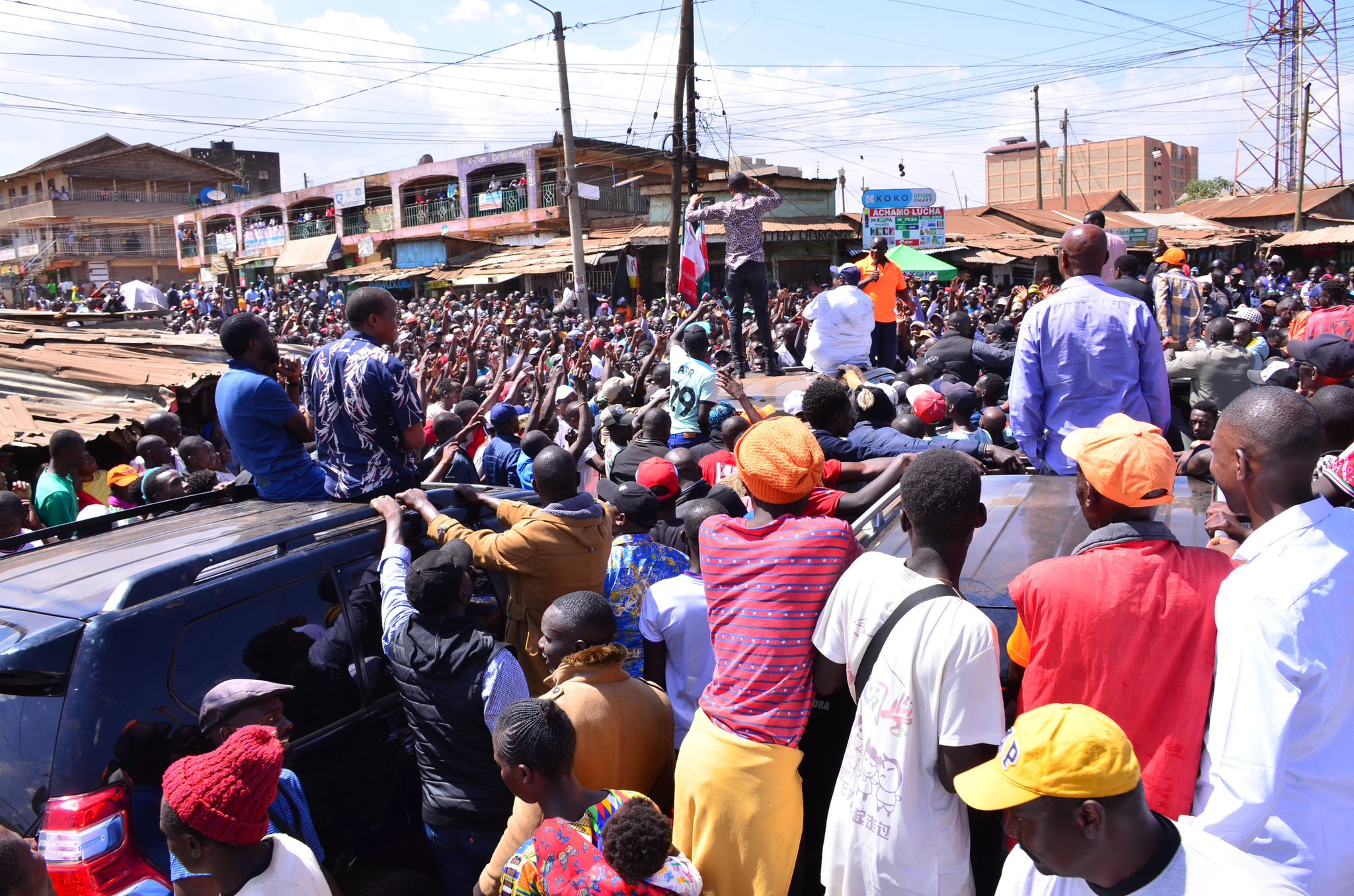
The Orange Democratic Movement (ODM) is facing its most serious internal crisis in years as competing factions publicly stake out opposing paths for the 2027 general election.
A hardline group led by Secretary General Edwin Sifuna has firmly committed to fielding an ODM presidential candidate in 2027, insisting this aligns with the late party leader Raila Odinga’s final instructions to preserve the party’s independence and opposition identity.
In sharp contrast, a faction aligned with party leader Oburu Oginga maintains that ODM should honor the broad-based government arrangement Raila established with President William Ruto before his passing in October 2025, potentially extending to formal coalition support for Ruto’s reelection.
The public standoff has exposed deep divisions within the party hierarchy. Sifuna, supported by prominent figures including Siaya Governor James Orengo and Vihiga Senator Godfrey Osotsi, has warned against any moves that would effectively dissolve ODM into the ruling United Democratic Alliance (UDA). The group argues that surrendering the party’s presidential ambitions would betray its grassroots base and Raila’s lifelong opposition legacy.
Meanwhile, Oburu Oginga and allies such as Homa Bay Governor Gladys Wanga, Kisii Governor Simba Arati, Mombasa Governor Abdulswamad Nassir, and National Assembly Minority Whip Junet Mohamed have advocated continuing close cooperation with the Kenya Kwanza administration. They describe 2026 as a critical year for negotiations to secure ODM’s influence and deliverables within government.
Recent attempts at reconciliation, including closed-door meetings, have yielded little progress, with notable absences underscoring persistent mistrust. Parallel party events and conflicting public statements have further fueled perceptions of a party split into pro-coalition and independence wings.

Some leaders have called for an early National Delegates Convention to settle the leadership and strategic questions democratically, while others caution against rushed decisions that could trigger defections or weaken ODM’s bargaining position.
The turmoil comes at a delicate moment for Kenyan politics, as opposition forces regroup and President Ruto consolidates alliances ahead of 2027. Analysts warn that prolonged disunity could fragment ODM’s traditional strongholds in Nyanza, Western, and Coast regions, potentially reshaping the electoral landscape.
As the orange party grapples with succession and ideology in Raila Odinga’s absence, the outcome of this internal battle will determine whether ODM emerges as a unified opposition force or a junior partner in government. For now, reconciliation appears distant, and the stakes for Kenya’s democracy could not be higher.


