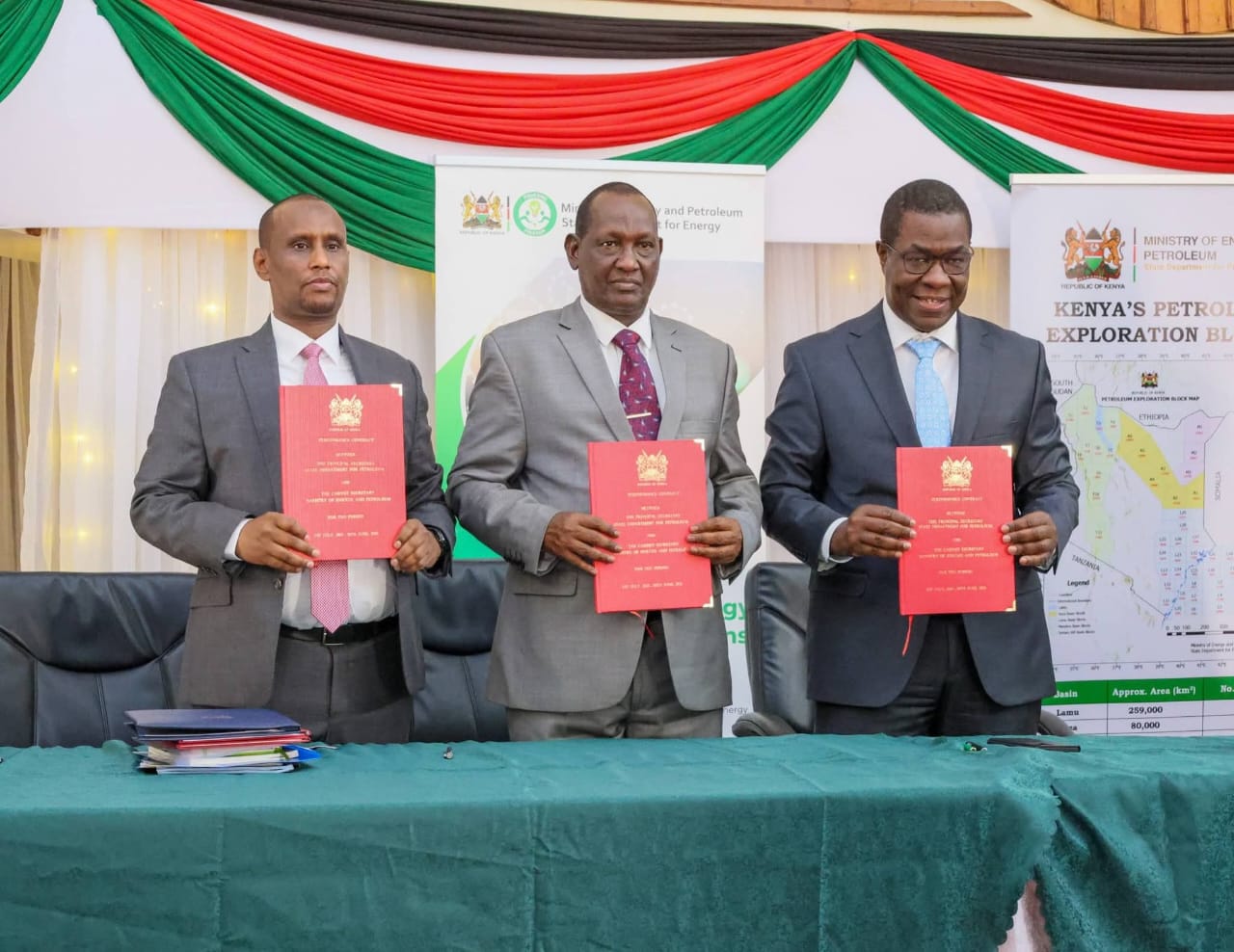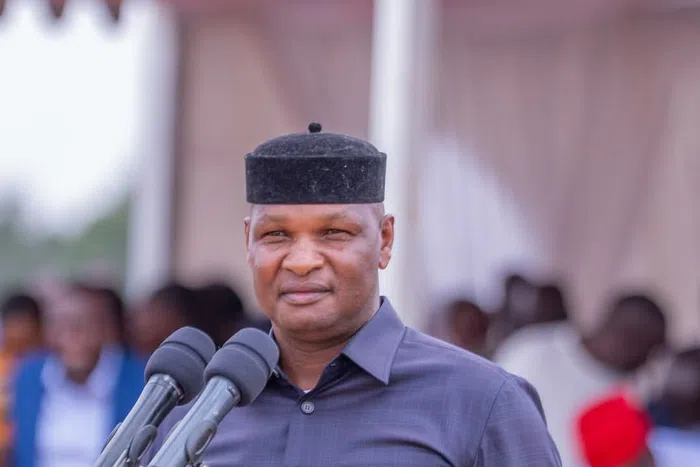


Cabinet Secretary of Energy and Petroleum James Wandayi joined H.E. President William Ruto during a meeting with Members of the Siaya County Assembly, led by their Speaker Hon. George Owino Okode, at the Eldoret State Lodge in Uasin Gishu County. This gathering was no mere courtesy call; it represented a pivotal moment in Kenya’s devolved governance architecture, where national leadership directly engages county stakeholders to bridge policy gaps and catalyse regional transformation. Discussions focused on aligning national development programmes with the priorities of Siaya County, while identifying strategic investments capable of unlocking the region’s full potential. In a nation still grappling with the uneven fruits of devolution, this initiative signalled a renewed commitment to bottom-up economic empowerment, particularly in Nyanza, a region long underserved despite its rich human and natural resource base.
Siaya County, nestled in the heart of Nyanza, embodies both promise and paradox. Endowed with a strong agricultural heritage, youthful demographics, and untapped renewable resources—including geothermal prospects along the Lake Victoria basin and vast solar potential across its open landscapes—the county continues to struggle with infrastructure deficits, limited energy access, and weak value addition in fisheries and rice farming. National programmes such as the Bottom-Up Economic Transformation Agenda (BETA) promise universal reach, yet their impact in devolved units like Siaya often diminishes without deliberate, localised alignment. It is within this context that CS Wandayi’s presence, as the steward of Kenya’s energy and petroleum docket, brought technical clarity and strategic intent to the engagement.
Energy remains the lifeblood of modern development. Affordable and reliable power unlocks agro-processing hubs, supports cold storage for fish exports, and enables irrigation schemes that could significantly raise rice yields. By convening at the Eldoret State Lodge, President Ruto and Speaker Okode’s delegation laid the groundwork for investments in off-grid solar mini-grids and extensions of petroleum infrastructure. These interventions directly respond to Siaya’s electricity connectivity rate—estimated at about 40 per cent—among the lowest in the country. This was not rhetorical posturing, but a clear articulation of actionable synergy, where national ambition meets county realities to foster sustainable, locally driven growth.
The implications of this engagement extend far beyond Siaya’s borders. They challenge the long-standing narrative of centre–periphery tensions that have often shaped Kenyan politics. Devolution, as envisioned in the 2010 Constitution, was designed precisely to enable such collaboration: counties identify priorities, while the national government scales solutions. Too often, however, political rivalries have undermined this mandate, leaving regions like Nyanza sidelined from major development projects. President Ruto’s direct engagement with Siaya leaders disrupts this pattern, reflecting his bottom-up economic philosophy by prioritising investments that empower local institutions rather than bypass them.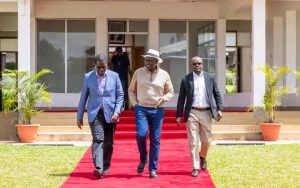
One can imagine a transformed Siaya emerging from such alignment. Youth cooperatives could power solar-dried mango exports for regional and international markets, while women-led enterprises manage biogas production from fish waste along Lake Victoria. County assembly members, supported by national frameworks, could oversee devolved energy funds without the inefficiencies of distant bureaucracies. CS Wandayi’s role in this process is catalytic. His ministry’s push for reforms such as the proposed Energy (Amendment) Bill 2025 could accelerate county-led renewable initiatives, ensuring Siaya secures a meaningful stake in Kenya’s ambition of achieving 100 per cent clean energy by 2030. Speaker Okode’s leadership in mobilising the assembly underscores the growing maturity of Siaya’s devolved institutions, increasingly prepared to co-create solutions rather than merely receive them.
Critics may dismiss the Eldoret meeting as political optics ahead of by-elections or the 2027 general election. Yet the substance of the discussions invites cautious optimism. Siaya’s priorities—youth skilling in green energy, expanded rural electrification, and the establishment of petroleum depots to reduce fuel costs in Nyanza—align seamlessly with national flagship initiatives, including infrastructure financing pipelines. The meeting sets an important precedent for functional multi-level governance: counties propose, national leaders invest, and citizens benefit.
For Nyanza, historically rich in intellectual capital yet economically constrained, such alignment could stem the steady migration of youth to urban informal settlements while strengthening local leadership pipelines. CS Wandayi’s involvement elevates energy as a powerful equaliser. Stable petroleum supply can reduce transport costs for farmers, while geothermal pilots in neighbouring counties such as Homa Bay could eventually extend into Siaya, creating thousands of direct and indirect jobs. President Ruto’s hands-on approach, far from Nairobi’s State House, humanises national policy and reinforces the principle that development thrives on dialogue rather than directives.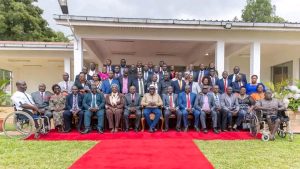
As Kenya advances toward Vision 2030 and deeper continental integration under the African Continental Free Trade Area (AfCFTA), Siaya stands at a critical crossroads. The Eldoret convergence serves as a clarion call for sustained action: fast-tracking memoranda of understanding on energy projects, empowering county assemblies with fiscal incentives, and monitoring outcomes through joint national–county mechanisms. Political communication must amplify these gains, framing them as part of a broader Nyanza renaissance rather than isolated gestures of goodwill.
CS Wandayi and President Ruto have ignited the spark. It now falls to Siaya’s leadership—from the Speaker to ward representatives—to fan the flames through accountability, implementation, and consistent engagement. In aligning national ambition with county priorities, the promise extends beyond infrastructure alone. It gestures toward a more united Kenya, where devolution delivers tangible dividends and shared prosperity becomes not an aspiration, but a lived reality.
James Kilonzo Bwire is a Media and Communication Practitioner.