

 ADVERTISEMENT
 On the evening of August 8, 2025, the Kisumu–Kakamega Highway became the scene of another mass tragedy. A bus carrying mourners from AIC Naki Secondary School, returning from a burial in Kisumu’s Nyahera area, overturned at the infamous Coptic Roundabout in Mamboleo.
According to Nyanza Regional Traffic Commander Peter Maina, the bus driver appeared to lose control, sending the vehicle hurtling off the road into a ditch. The wreckage left a grim toll — 21 dead, among them 10 women, 10 men, and a 10-year-old girl. Five survivors remained in critical condition at Jaramogi Oginga Odinga Teaching and Referral Hospital (JOOTRH), with latest reports indicating four have died while another 15 sustained injuries of varying severity. Kenya Red Cross teams and local medics worked frantically to pull victims from the twisted metal as anguished relatives gathered nearby.
An Unwelcome Spotlight on the Coptic Church
The crash site’s proximity to the Coptic Church has once again triggered a wave of suspicion and conspiracy theories. On social media, some have accused the church’s leader, Father John Pesa Owigo, of being linked — without any evidence — to the deadly pattern of accidents near the roundabout.
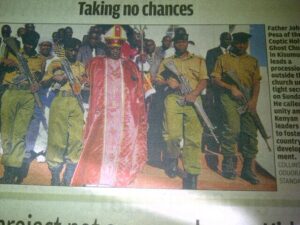
The speculation has taken a darker turn, dredging up decades-old whispers of occult practices and devil worship — rumours Father Pesa has strongly dismissed.
“Msiniharibie jina, nahitaji wafuasi, siezi ua watu,” he told journalists in Kisumu. “My work is to spread the gospel, heal souls, and build communities. Linking me to death is malicious.”
Old Wounds and Unanswered Questions
For some, the current accusations recall a shadowy chapter in Kenya’s political history. In the 1990s, amid rising public hysteria over alleged satanic cults, President Daniel arap Moi appointed a Commission of Inquiry into Devil Worship. The panel gathered testimonies and intelligence on alleged ritual killings, secret societies, and church infiltration. Yet, to this day, its report has never been made public — a silence that has only fueled suspicion and conspiracy theories.

The ‘Black Death Month’ Pattern
Adding to the unease is the fact that the tragedy occurred in August — a month many Kenyans regard with dread. Over the decades, August has claimed some of the country’s most prominent figures in tragic or mysterious circumstances: President Mzee Jomo Kenyatta in 1978, Vice President Prof. George Saitoti in 2012, former Rift Valley Provincial Commissioner Isaiah Mathenge, and Nakuru DC Jonah Anguka, among others — many through road or air disasters that still raise questions.
The Kisumu crash has become, for many, part of this haunting pattern — a bloody entry into an already cursed calendar page.
Folklore, Fear, and the Facts
Road safety experts insist the Coptic Roundabout’s accident record is more about poor road design, speeding, and driver error than any supernatural cause. But in a country where history, politics, and mystery often collide, facts don’t always blunt fear.
A Black Spot with a Bloody History
The Coptic Roundabout is no stranger to tragedy. Local records and media reports reveal a chilling catalogue of past crashes:
June 2024: A Kisumu-bound matatu collided with a lorry at the roundabout, killing 12 people on the spot.
August 2023: A school bus ferrying choir members overturned, leaving 9 dead and 18 injured.
December 2021: A petrol tanker lost control and exploded after hitting several vehicles, claiming 14 lives.
October 2019: A private car carrying four passengers veered off the bend and plunged into a drainage ditch, killing all occupants.
The consistent loss of life at this location has led to repeated calls for redesigning the junction and tightening traffic enforcement — calls that have yet to yield significant change.
August’s Grim Mid-Month Tally
With August 2025 barely half gone, Kenya has already lost at least 40 lives in road and air disasters. Aside from the Kisumu bus tragedy, the country is still reeling from the Amref light aircraft crash in a Nairobi residential area that killed its crew and two residents on the ground, as well as multiple fatal highway collisions in Kajiado, Naivasha, and Garissa.
As investigators probe the Kisumu crash, families continue to bury their dead — and for many Kenyans, the calendar’s most feared month has once again lived up to its morbid reputation.


