

 ADVERTISEMENT
 The political storm surrounding Nairobi Governor Johnson Sakaja appears to have calmed—at least for now—after President William Ruto and ODM leader Raila Odinga stepped in to quell growing tensions over his threatened impeachment.
The dramatic interventions came after weeks of quiet maneuvering in the Nairobi County Assembly, where a faction of Members of County Assembly (MCAs), mostly drawn from the ruling UDA party, had begun mobilizing signatures for a motion to remove Sakaja.
Ruto’s Personal Appeal at State House
On Monday morning, President Ruto hosted a closed-door meeting with more than 60 UDA MCAs at State House. In what insiders described as a “frank and tough-talking session,” the Head of State urged his party’s ward representatives to abandon the motion, warning that it would derail service delivery in the capital.
“I have been the most accused person, but I never allowed that to derail my work,” Ruto reminded them. “Leadership demands resilience, not retaliation. Nairobi needs stability, not endless politicking.”
The President is said to have invoked his own impeachment scares during his tenure as Deputy President, telling the ward reps that constant political wars undermine the very voters they represent.

Raila Rallies ODM to Withdraw Support
Almost simultaneously, Raila Odinga was in Westlands holding a strategy session with ODM MPs and MCAs, chaired by veteran politician Fred Gumo. The meeting, which Sakaja later joined, ended with ODM’s leadership signaling they would not back the ouster.
“Nairobi must not be held hostage by political brinkmanship,” Raila said after the session. “Leaders must rise above partisan agendas to deliver for the people.”
ODM, with its numerical advantage in the County Assembly, would have been pivotal in pushing any impeachment through. Its withdrawal effectively sealed the fate of the motion.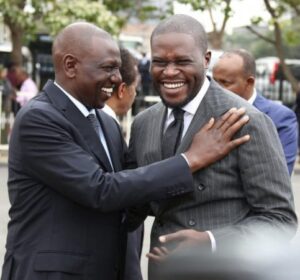
Sakaja’s Balancing Act
Governor Sakaja, elected on a UDA ticket but leaning heavily on ODM support in the Assembly, has walked a tightrope since assuming office. His inclusive governance style—one that embraces both government and opposition—has often put him at odds with hardliners in his own camp.
Last year, then–Deputy President Rigathi Gachagua accused him of “abandoning his community” and cozying up to the opposition. Sakaja dismissed those attacks, insisting that Nairobi’s cosmopolitan nature demanded a different kind of leadership.
“Nairobi cannot afford to be run on tribal or partisan lines,” he has repeatedly argued. “We must work with all leaders, regardless of affiliation, to deliver for our people.”
The Political Undercurrents
Sources familiar with the impeachment push say discontent among UDA MCAs stemmed less from policy disagreements and more from control of county resources and appointments. Some felt sidelined as Sakaja sought to distribute jobs and contracts across party and ethnic lines.
Analysts argue the attempt to oust him was also a proxy war within UDA, where competing factions are jostling for influence in the capital ahead of the 2027 elections.
“The impeachment was never really about service delivery,” political commentator Dr. Winnie Kamau told SIAYA TODAY. “It was about power, patronage, and positioning. What we are seeing is Ruto and Raila reminding their troops that Nairobi is too strategic to be destabilized by political theatrics.”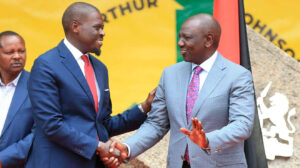
A Test for the Broad-Based Government
With the impeachment drive now effectively dead, the saga has become an early litmus test for Kenya’s experiment with a broad-based government—an arrangement forged in the aftermath of the 2022 elections to bridge political divides and ease tensions.
That both Ruto and Raila, once fierce rivals, moved in tandem to rescue Sakaja underscores the delicate balancing act required to sustain the coalition.
For Nairobi residents, the bigger question remains whether the truce will translate into better services—garbage collection, clean water, transport reform, and unclogged drainage—or whether it is simply another elite pact to protect political interests.
As one senior county official put it: “The governor has survived this round, but the knives are not fully sheathed. Nairobi politics is never short of drama.”


