

 ADVERTISEMENT
 The Siaya County Government has found itself on the receiving end of probing questions and strong objections from residents as it seeks to pass the Draft Finance Bill 2025, an ambitious revenue framework targeting KSh 3.1 billion in collections. The Nayalore Administration rolled out a three-day public participation exercise across all 30 wards in six sub-counties, but instead of quiet endorsement, residents challenged the legitimacy, fairness, and practicality of many of the proposed charges.
The Ambition: KSh 3.1 Billion or Bust
At the heart of the bill is a sweeping plan to shore up county revenue streams through 13 major parts, including licenses, fees, permits, cess, house rent, market charges, penalties, waivers, and designated revenue regulations. Covering nine key departments, the draft outlines a complex web of new or adjusted charges affecting virtually every sector—from transport and housing to health and education.
Yet, the KSh 3.1 billion target—if achieved—would represent a record-breaking leap in own-source revenue for the county, raising immediate concerns about whether residents, businesses, and farmers already grappling with high living costs can shoulder the burden.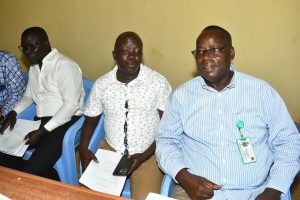
Where the Bill Pinches
1. Land and Planning: Heavy Burdens for Ordinary Citizens

The Department of Lands proposes fees such as KSh 40,000 for change-of-use resurvey applications, KSh 10,000 for boundary dispute resolutions, and KSh 10,000 for petrol station inspections.
Residents in hardship areas pushed back, demanding downward revisions, noting that in some zones the charges would be twice the average monthly household income.
2. Public Works and Transport: Parking and Building Approvals
Proposed building plan approvals range from KSh 7,000 for large maisonettes to KSh 4,000 for small units, a move seen as discouraging small-scale housing investments. Parking fees for matatus, taxis, and buses were pegged between KSh 25,000 and KSh 180,000 annually, depending on location—a rate operators warned could fuel fare hikes.
3. Education and ECD Centres: A Middle-Class Headache
Controversy erupted when the bill pegged ECD hall hire at KSh 50,000 per month, with PP1 and PP2 learners set to pay KSh 20,000 annually. Parents in Sakwa South dismissed the figures as “elitist” and argued they would lock out low-income families.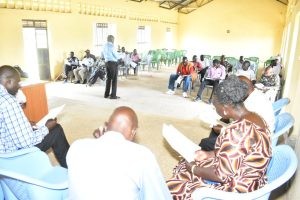
4. Health: Ambiguity Around SHA/SHIF
The Health Department promised moderate fees but tied many surgical and ambulance services to SHA/SHIF deductions. For instance:
Ambulance rides to Kisumu, Bungoma, or Kakamega: KSh 10,000.
Eldoret or Tenwek referrals: KSh 20,000.
Nairobi trips: KSh 30,000.
Though deductions would be made under health insurance, residents questioned the sustainability of relying on SHA/SHIF reimbursements, given nationwide concerns about the scheme’s financial viability.
The Concessions: Small Wins for Residents
Not all proposals stung. In what appeared to be deliberate sweeteners:
Mortuary fees were waived.
Ambulances within 10 km radius of health facilities would be free.
Farmers got discounted tractor hire rates—KSh 800 for ploughing and KSh 1,050 for harrowing.
Kiosk traders would pay as little as KSh 1,500 for licenses.
These measures earned muted praise, but many dismissed them as “token gestures” overshadowed by hefty levies in other sectors.
Public Participation: Democracy or Box-Ticking?
The Siaya administration insists that the 30-ward consultations will shape amendments before the bill is tabled at the County Assembly under Speaker George Okode. However, civil society actors and ward residents accused the government of merely ticking constitutional boxes.
“They are pretending to listen, but the charges are already fixed. This is a public relations exercise, not genuine consultation,” one Bondo resident told this writer.
The tension points to a deeper governance challenge: whether counties genuinely empower citizens in fiscal planning or simply use participation forums as rubber stamps.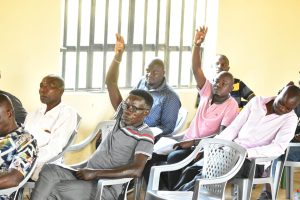
Political Undercurrents
The bill now lands squarely in the political court of Governor James Orengo, who must sign it into law once passed by the Assembly. Insiders say the Governor faces a delicate balancing act: defending revenue generation to sustain county operations while avoiding the political fallout of being seen as burdening the electorate.
Already, whispers in local politics suggest that the bill could become a 2027 election landmine, with rivals poised to weaponize unpopular charges against Orengo’s administration.
Siaya’s revenue debate mirrors a national dilemma: devolved units are under pressure to raise internal revenue, yet their main sources—traders, transporters, and small-scale farmers—are among the most economically vulnerable. Experts warn that without careful calibration, counties risk choking the very base they depend on for growth.
The Draft Finance Bill 2025 will be formally tabled in the County Assembly after the conclusion of ward consultations. Whether amendments from residents—especially around education and health charges—are incorporated will determine if the bill passes smoothly or sparks a political and legal storm.
For now, Siaya residents remain defiant: they want services, but not at the cost of punitive levies that could strangle livelihoods.


