


A social media post by digital strategist Philip Etale has stirred heated debate across East Africa after claiming that Tanzania’s Minister for Natural Resources and Tourism, Dr Pindi Chana, announced plans to erect a “huge curtain” on Mount Kilimanjaro to prevent tourists in Kenya from viewing the mountain from the Oloitokitok side.
According to Etale’s viral post on X (formerly Twitter), the minister is said to have argued that Kenya benefits unfairly from the scenic view of the mountain, even though Kilimanjaro lies entirely within Tanzanian territory. She is alleged to have stated that tourists wishing to enjoy the view must enter Tanzania, pay legal entry fees, obtain visas, and contribute to Tanzania’s tourism income before being allowed access.
The post has since triggered an avalanche of reactions, with thousands of East Africans expressing disbelief, humour, and outrage in equal measure. Many users questioned the practicality and legality of “blocking a mountain,” while others viewed the remarks as a sign of growing competition between Kenya and Tanzania in the lucrative tourism industry.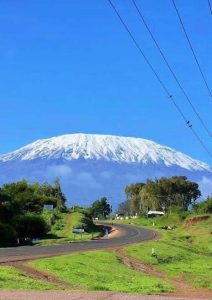
Mount Kilimanjaro, Africa’s highest peak, has long been an iconic attraction shared visually by both countries. Although the mountain itself sits within Tanzania, some of the best panoramic views are visible from the Kenyan side, particularly from Amboseli National Park and nearby Oloitokitok town — a fact that has occasionally caused tension between the two tourism sectors.
If true, the idea of physically obstructing views of the mountain raises complex environmental and diplomatic questions. Kilimanjaro is a UNESCO World Heritage Site and part of a fragile ecosystem protected by international conservation agreements. Any large-scale construction around the mountain would require extensive environmental clearance and could spark cross-border diplomatic concern.
Tourism analysts note that the story — whether factual or exaggerated — exposes a long-standing rivalry between Kenya and Tanzania over visitor numbers and park revenues. Both countries rely heavily on safari tourism, and Mount Kilimanjaro is a central symbol in global marketing campaigns for the region.
However, as of now, no official statement has been issued by the Tanzanian government to confirm or deny the alleged remarks attributed to Dr Chana.
Until then, East Africans are left to debate whether the so-called “curtain plan” is a genuine government proposal or simply a viral social-media exaggeration that shows how quickly rumours can reshape public perception in the digital age.
Either way, one thing is clear: when it comes to Mount Kilimanjaro — Africa’s roof and East Africa’s pride — even the clouds cannot hide its majesty, curtain or not.






Leave a Reply