


Residents of Ugingo Village in Usigu, Siaya County, were treated to an extraordinary sight on Friday, November 7, when an Osprey — a migratory bird of prey from Russia — made an unexpected landing after what experts describe as a “monumental transcontinental journey.”
The striking raptor, easily identified by its sharp talons and white underbelly, was discovered entangled in a fishing net by local fishermen early in the morning. The bird bore a metallic identification tag on its left leg, confirming its origins from Russia and linking it to an international avian tracking program designed to monitor migratory patterns for conservation research.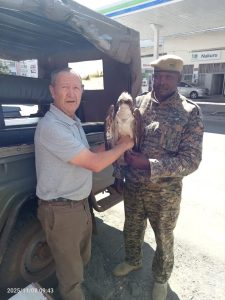
According to Village Elder Mr. Eric Omuok, the fishermen acted swiftly and carefully freed the bird before taking it to the home of Mr. Joanes Oraro, where word of the rare visitor quickly spread through the community.
The Kenya Wildlife Service (KWS) Siaya team, led by Deputy County Warden Mr. Byatt Shikanga, responded promptly to secure the Osprey. The exhausted traveler — known to migrate thousands of kilometers between Eurasia and sub-Saharan Africa — was gently rescued and placed under expert care.
Under the guidance of Dr. Isaac Lekolool, Head of the KWS Veterinary Department, and Dr. Simon Thomsett, a renowned raptor rehabilitator from the Kenya Bird of Prey Trust (KBPT), the Osprey was transferred to the Raptor Centre at Soysambu Conservancy for medical assessment and rehabilitation.
“This is a truly remarkable event,” said Dr. Thomsett. “Ospreys are incredible navigators, and sightings like this highlight how interconnected our ecosystems are across continents.”
The bird will remain under observation until it regains full strength, after which it will be released back into the wild to resume its natural migration.
KWS extended appreciation to the Siaya community for their vigilance and cooperation, noting that public awareness and prompt reporting of wildlife incidents remain critical to conservation success.
“The community’s swift response ensured the Osprey’s survival,” said KWS in a statement. “We encourage Kenyans to continue reporting injured or distressed wildlife through our toll-free number 0800 597 000 or WhatsApp line 0726 610509.”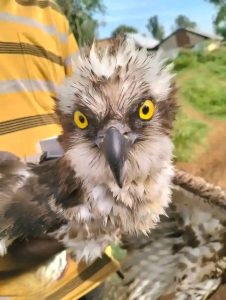
The incident not only underscores Kenya’s vital role in global migratory bird routes but also celebrates the country’s growing commitment to wildlife conservation through community partnerships and scientific collaboration with the National Museums of Kenya (NMK) and KBPT.
As this feathered voyager rests safely under the Kenyan sun, it reminds us of nature’s astonishing endurance — and the invisible threads that connect our world through wings and wind.









Leave a Reply