

 ADVERTISEMENT
 When Johnson Sakaja swept into County Hall as Nairobi’s fourth governor, many saw a youthful politician with ambition — but few expected the urban shake-up that would follow. Yet less than four years in, Sakaja has already redefined what leadership in Kenya’s capital can look like. Here’s why the so-called “Mbekse of the City” is far from fading — and might just be getting started.
Under Sakaja’s watch, the once-ad-hoc sanitation workforce has evolved into something far more permanent. Over 3,500 members of the city’s “Green Army” have been absorbed as permanent, pensionable county employees — the biggest recruitment in the environmental sector since 1987.
What started as cleaning crews in the central business district has grown into a full-blown campaign: now the Green Army is rolling out to estates and residential zones, restoring order across the city.
Sakaja has also unveiled plans to formalize city sanitation under a new body, the Green Nairobi Company — signaling a long-term vision for cleanliness, jobs, and dignity for Nairobi’s youth.
The once-messy sidewalks, pot-holed roads, and unreliable water supply are being replaced by tangible infrastructure upgrades. Sakaja recently announced improvements in informal settlements — roads, drainage and lighting — under a major slum-upgrade plan.
His water and sanitation pushes have already started to benefit thousands. For example, in underserved areas traditional for poor water supply, simplified sewer and water-networks are being rolled out — a big step forward for hygiene and public health.

In education too, feeding programmes in county schools have reportedly expanded — a move Sakaja links to rising enrolment and improved student welfare.
Under Sakaja’s leadership, Nairobi has posted record-breaking revenue collections while streamlining services. License applications that used to involve long queues can now be done online via “NairobiPay” — a small change with big impact for businesses across the city.
At the same time, his administration is investing in long-term systems: procurement of new garbage trucks, skip loaders, and infrastructure for waste-to-energy are all part of a broader plan to transform Nairobi’s cleanliness and environmental resilience.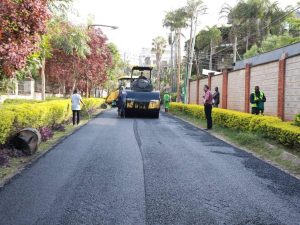
Sakaja is not just redeveloping roads and water — he’s re-imagining the kind of city Nairobi could become. From youth employment (through Green Army), to improved sanitation and water supply in informal settlements; from boosting business environment to education and public services — his agenda is broad, ambitious, and appears to be working.
Critics may still raise questions — but proponents argue that for too long Nairobians tolerated neglect and broken promises. Sakaja’s approach is different: systemic, wide-ranging, and visible.
When you combine the permanent jobs, improved city services, social-infrastructure upgrades, and the fresh momentum in revenue and governance, the result is a Nairobi slowly regenerating.
If Sakaja keeps delivering — and more importantly, delivering at scale — his political capital will only grow. As 2027 elections loom, one has to ask: who will stop Mbekse of the City?


