

 ADVERTISEMENT
 This morning in Ginga village, Wagai East Sub-location in West Gem Ward, Engineer Nicolas Gumbo joined the faithful of the Church of Christ in Africa (CCA) Masogo Diocese for a Sunday service led by the area Bishop, Rt. Reverend Noah Ocholla. What began as a routine spiritual gathering soon evolved into a moment of civic clarity and communal resolve, as Gumbo presided over a major Harambee aimed at church construction and critical infrastructure improvements. In a setting defined by prayer and praise, he delivered a pointed declaration: the immediate task before Siaya’s people is to fight a war for economic liberation and improved livelihoods.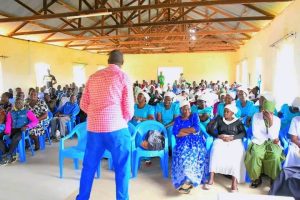
The unassuming church in Ginga became more than a place of worship. It transformed into a rallying point where faith intersected with practical action. Gumbo, a 2027 aspirant for the Siaya County governorship, used the moment not for grand political slogans but to articulate a grounded vision—one that recognizes the everyday struggles of ordinary households and insists that economic freedom must be actively pursued, not promised. His message resonated deeply with congregants who live daily with the consequences of joblessness, low farm returns, and underdeveloped local economies.
Gumbo’s full immersion in the CCA Masogo service underscored his authentic connection to the Wagai East community. He joined in hymns, listened attentively to Bishop Ocholla’s sermon on resilience and hope, and shared in the fellowship that binds the diocese together each week. In an area often affected by River Yala flooding and erratic rainfall, the church stands as a stabilizing force for hundreds seeking encouragement and unity. Gumbo’s presence felt less ceremonial and more participatory, reinforcing a sense of shared purpose.
When the service transitioned into the Harambee, Gumbo took on a guiding role with measured, engineer-like focus. The fundraiser targeted tangible improvements: a stronger church structure, enhanced lighting, proper sanitation facilities, and a multipurpose hall suitable for youth activities, health outreaches, and community meetings. By framing the Harambee as more than a church project, Gumbo illustrated how faith-based initiatives can model the kind of self-help and collective responsibility Siaya urgently needs—where unity of spirit translates into improved daily living conditions.
At the heart of Gumbo’s address was his framing of economic liberation as an active and ongoing war. He spoke candidly about Siaya’s paradox: a county rich in natural resources—fertile land, fisheries from Lake Victoria, and a youthful population—yet burdened by persistent poverty. He pointed to idle youth, exploited farmers, and strained households as evidence that the current economic model is failing ordinary people. His call was for a decisive shift toward self-reliance: local processing of crops, practical skills training, and deliberate investment in village-level productivity.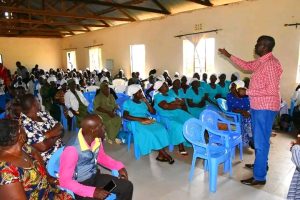
Drawing from his background as an engineer and his tenure as Rarieda MP, Gumbo outlined straightforward, actionable steps. Better roads to connect farmers to markets, small-scale processing units to add value locally, and skills training to turn idle hands into productive ones were central to his vision. The Harambee itself served as a living example—community members pooling resources to build something lasting—mirroring how focused leadership could redirect county resources from waste and inefficiency toward broad-based opportunity.

The significance of the Masogo Diocese event lies in its timeliness and sincerity. As Gumbo steadily builds his case ahead of 2027, his message stands apart in a political landscape often crowded with rhetoric but short on clarity. By invoking the discipline and unity of a shared battle, much like the congregation’s collective prayer under Bishop Ocholla, he framed economic transformation as a communal duty rather than a top-down promise. His hands-on leadership during the Harambee reinforced this point: results matter more than speeches.
The warm reception from attendees reflected a community that felt seen and understood. They heard not abstract pledges, but a plan rooted in their lived realities—one that acknowledges hardship while insisting on dignity through work and cooperation. Gumbo’s blend of moral grounding drawn from faith spaces and practical economic priorities struck a chord, suggesting a leadership style that values both conscience and competence.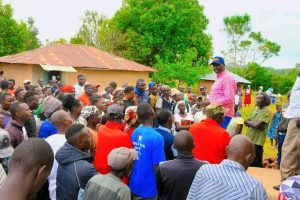
Today’s gathering in Ginga was a reminder that small moments can ignite meaningful change. Gumbo’s declared war on economic bondage did not begin in a boardroom or campaign rally, but in a church hall filled with faithful voices and shared hope. By merging Bishop Ocholla’s spiritual call with a development-driven agenda, the event offered more than inspiration—it presented a blueprint in motion. For the people of Siaya, this was not just another Sunday service; it was an invitation to a collective fight for better lives, anchored in unity, work, and purposeful leadership.
James Kilonzo Bwire is a Media and Communication Practitioner.


