

 ADVERTISEMENT
 Roads, power, markets—and a surprise Nilotic kinship pitch—as the President turns on the charm in Nyatike
President William Ruto’s Migori tour was not just another development stopover—it was a carefully choreographed charm offensive that mixed hard promises with soft power, sealing the moment at the 5th Edition of the Luo Cultural Festival with laughter, lineage and calls for unity.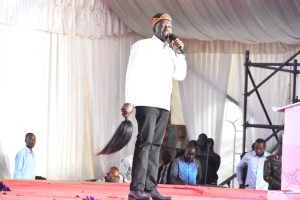
During a packed stopover in Nyatike Constituency, the President rolled out a basket of high-impact pledges designed to fast-track local growth and signal a deeper political thaw. Top of the list: the long-awaited Masara–Muhuru Bay road (allocated KES 1.3 billion), which Ruto said would receive priority funding to unlock trade and tourism along the Lake Victoria corridor. He also promised a fully operational pier at Muhuru Bay within eight months, a move expected to transform fishing, transport and cross-border commerce.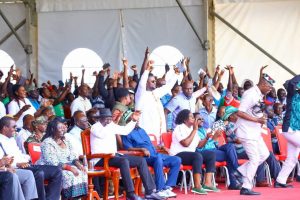
The headline grabber, however, was a KES 350 million allocation for immediate construction of a modern market in Muhuru Bay—an infrastructure boost aimed at formalizing trade, creating jobs and lifting incomes for traders and fishermen. To power it all, the President issued an on-the-spot directive to Energy Cabinet Secretary Opiyo Wandayi to roll out last-mile electrification across Nyatike, framing it as the precursor to lighting up the whole of Migori County.
But beyond the ledger of pledges, it was the tone that turned heads.
At the main festival event, a relaxed and visibly upbeat Ruto ditched the script and leaned into cultural diplomacy. In a light-hearted aside that drew cheers and chuckles from the VIP dais, he described the Kalenjin as plain Nilotes—close kin to the Lake Nilotes, a remark that landed as a warm overture to shared heritage. He was even crowned a ceremonial Luo elder. The moment underscored a broader message: unity over division, kinship over contestation.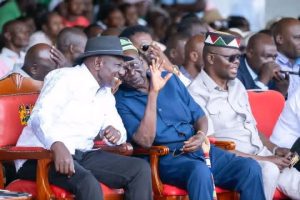

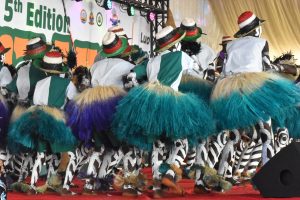
The President’s homely demeanor—joking, reminiscing and singing along to traditional tunes—set the stage for a festival atmosphere that blurred politics with people. Entertainment interludes included songs evoking memories of the Right Honourable Raila Odinga, punctuating repeated calls for unity of purpose within the community and across the nation.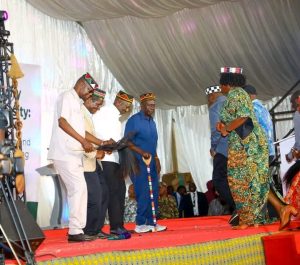
Apart from the prominent convenors, the guest list reflected the gravity of the moment. In attendance were Dr Ida Odinga; Governors James Orengo (Siaya), Gladys Wanga (Homa Bay) and Ochilo Ayacko (Migori); Migori Senator Eddy Oketch; several MPs including Atandi and Kajwang’; heads of government departments; and a strong Cabinet presence led by Energy CS Opiyo Wandayi and Finance and Economic Planning CS John Mbadi. Also present was Oburu Odinga, the ODM Party leader, adding political heft to a gathering heavy on cultural symbolism.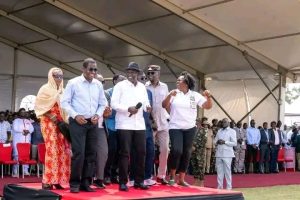
Speakers echoed the President’s development-first refrain, urging collaboration between national and county governments to translate pledges into projects. Governors welcomed the commitments, emphasizing that roads, power and markets are the backbone of regional competitiveness—especially for a county straddling agriculture, fishing and cross-border trade.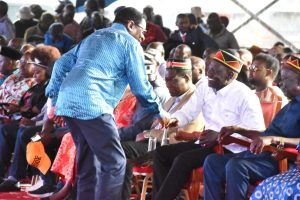
Analysts say the Migori appearance marks a strategic reset. By pairing concrete deliverables with cultural warmth, Ruto signaled an intent to broaden his coalition in Nyanza while easing long-standing political fault lines. The Nilotic kinship quip, though playful, carried subtext—an appeal to shared history as a bridge to shared futures.
For residents of Nyatike, the scorecard will ultimately be measured in asphalt laid, lights switched on and stalls opened. Yet for a day, Migori witnessed something rarer in Kenyan politics: a convergence of promises and poetry, policy and people.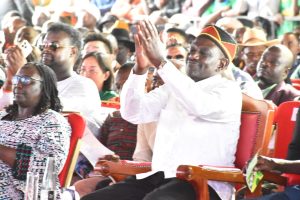
As the sun set over Lake Victoria and festival drums faded, the message lingered—development is the language, but unity is the melody. Whether the tune holds will depend on delivery. For now, Migori has the promises—and the spotlight.
Photos by Samson Wire https://siayatoday.com


