

 ADVERTISEMENT
 As 2026 approaches, ancient belief, political timing and a string of telling endorsements are converging around one man—fueling whispers that the Luo may already have their next kingpin.
For generations, Luo politics has followed an unwritten script—one that blends modern political contestation with ancient spiritual belief. Leadership among the Luo has never been merely about numbers, manifestos or boardroom strategy. It has also been about Ramogi, ancestry, destiny and the mystical approval of juogi—the unseen spiritual forces believed to guide the community’s collective fate.
From pre-independence Kenya to the present day, Luo kingpins have emerged not by declaration but by recognition. The people do not simply elect; they acknowledge. And once acknowledged, the kingpin is bound by a silent code: to speak boldly for Luo interests, confront power without fear, and in return enjoy near-unquestioned grassroots loyalty.
That burden was first carried by Jaramogi Oginga Odinga, whose towering stature made him both a national figure and the undisputed Luo patriarch. Crucially, Jaramogi never anointed a successor. Leadership was not hereditary. Yet fate—or history—intervened.
Following Jaramogi’s death, Raila Amollo Odinga rose organically, unexpectedly, and decisively. Over nearly three decades, Raila became the ideological, ceremonial and political embodiment of Luo aspirations. Not because he claimed it—but because the people placed it upon him.
Ironically, Raila himself appears to have died without clearly knowing who would inherit that mantle.

Today, signs are emerging—quietly but persistently—that Energy Cabinet Secretary James Opiyo Wandayi is being prepared for something bigger than elective office.
A careful reading of recent events paints the picture of a man being positioned not merely by political scheming, but by forces larger than ambition.
The Ugunja by-election was the turning point.
In a contest that demanded difficult—and deeply unpopular—choices, Wandayi stood firm. He compelled even his loudest critics, including powerful figures within Siaya County leadership, to fall in line. In Luo political culture, this matters. Kingpins are not consensus-builders first; they are direction-setters. They choose the path—and the people follow.
Equally telling is what Wandayi has not done.
Despite earlier interest in the Siaya gubernatorial race, his once-aggressive posture has noticeably cooled. Insiders whisper of distraction. Others speak of clarity. The governorship, it seems, may now be too small a prize.
The Elders Have Spoken—Quietly
Then came the visits.
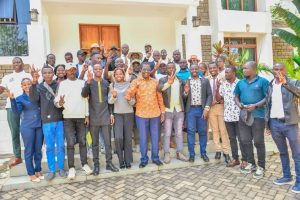
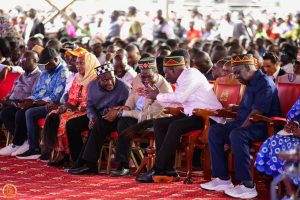
The Luo Council of Elders paid Wandayi a courtesy call at his Sidindi home. Soon after, a caucus of Nyanza clergy followed suit. These were not casual drop-ins. Each visit arrived with heavy symbolism—and heavyweight company.
Present were:
Prominent Luo political figures
A cross-section of MPs from across Nyanza
Senior ODM Party leadership
Representatives linked to the national government
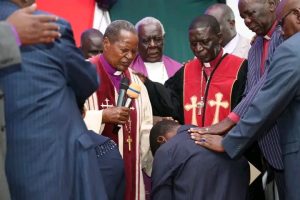
In Luo tradition, such gatherings are never accidental. Elders and clergy do not move in vain. They observe, they test, and when the time is right, they affirm.
Repeated affirmations form patterns. Patterns form destiny.
Unlike governors or MPs, a Luo kingpin does not campaign for the role. He is revealed.
He must demonstrate:
The courage to make hard choices
The ability to unify without pleading
Acceptance by elders, clergy and political peers
And an inexplicable pull—an aura the community recognizes instinctively
Wandayi’s rapid accumulation of these signals has not gone unnoticed.
As Kenya inches toward 2026, the search for the next Luo kingpin—long thought to be uncertain—may already be nearing its end.
Whether by strategy, circumstance or the whisper of juogi, one thing is becoming clear: James Opiyo Wandayi is no longer just another Luo leader. He is increasingly being treated like the next custodian of a sacred political mantle.
And in Luo politics, that recognition changes everything.


