

 ADVERTISEMENT
 Oketch Salah’s story begins far from the glare of national politics, in Migori County, where he was born and raised in a family known for hard work, discipline and quiet community service. His father, the late Abdi Salah, was a respected entrepreneur in Migori town, remembered for running a popular bakery and owning one of the early storey buildings in the area.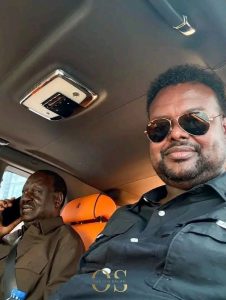
Through enterprise and integrity, Abdi Salah provided for his family while supporting the local community, instilling in his children values of responsibility, education and contribution to society.
Salah attended Ombo Primary School before proceeding to Kangeso Secondary School, spending his formative years entirely in Migori. Although his paternal lineage traces back to Somali roots, his upbringing was firmly local. He grew up speaking fluent Dholuo, playing with neighbourhood children, absorbing local customs and forging friendships that transcended ethnic lines.
That background shaped a man comfortable across cultures—grounded, adaptable and deeply connected to the community around him.
From this modest but stable foundation, Salah’s life took a decisive turn when he crossed paths with Raila Amollo Odinga. What began as admiration for a towering political figure gradually evolved into a deeply personal bond. Raila, known for embracing people beyond tribe, class or origin, is said to have seen sincerity, loyalty and a willingness to serve in the young man. Over time, he opened his home and heart to Salah, extending what many around him described as genuine fatherly warmth.
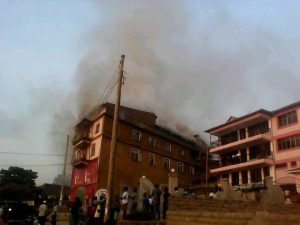
Salah was no longer treated as a visitor or distant associate. He became family. Within Raila’s inner circle, he was mentored, corrected and guided, sharing moments of reflection, humour and wisdom. Salah himself has repeatedly described Raila not merely as a political leader, but as a father figure who sheltered him, nurtured his dreams and shaped his outlook on life.
That bond became most visible during Raila Odinga’s final months. As the veteran opposition leader battled illness, Salah travelled with him, including on medical trips abroad. He kept vigil, offered companionship and stood by Raila with quiet but unwavering dedication. Though not a registered medical doctor, Salah was often described as assisting practically—helping coordinate care and support medical teams—while remaining physically present when access was tightly restricted. In doing so, he became a witness to Raila’s personal struggles, reflections, hopes for ODM, and enduring dreams for Kenya.

For some Kenyans, Salah seemed to appear suddenly in Raila’s final chapter. For those who knew Raila well, it was less surprising. Baba had a long history of adopting and mentoring loyal protégés, guided not by bloodlines but by character. He rewarded loyalty, nurtured humility and invested in potential wherever he found it. In that spirit, the father-son relationship between Raila and Salah flourished beyond politics.
However, it was after Raila’s death in October 2025 that Oketch Salah moved from quiet companion to controversial national figure. In public statements and interviews, Salah claimed that the late Raila had confided in him that he was prepared to support President William Samoei Ruto in the 2027 presidential election. The assertion sent shockwaves through ODM’s support base and reignited intense political debate across the country.
Even more incendiary was Salah’s claim that ODM Secretary General Edwin Sifuna was allegedly working for an unnamed external entity to undermine the party from within. Those remarks triggered a national uproar, splitting opinion sharply. Supporters argued that Salah, having been among the few allowed close access to Raila during his final days, may have heard private thoughts never meant for public rallies.
Critics, however, were scathing.
Across radio talk shows, social media and political commentary, Kenyans asked a blunt question: Can someone whose acknowledged role included assisting doctors be fully trusted with the deepest political confidences of a seasoned and highly guarded politician like Raila Amollo Odinga? To skeptics, Salah’s statements risked distorting Raila’s legacy and destabilising ODM at a delicate moment. To sympathisers, they reflected the uncomfortable truths of private conversations finally brought into the open.
Beyond politics, Salah is widely regarded as a wealthy businessman, with interests said to span trade, logistics, energy and extractives, though much of his commercial footprint remains discreet.
His rising stature has been mirrored socially, with high-profile events—such as his son’s lavish Nairobi wedding—drawing senior politicians and reinforcing the perception that he now operates comfortably within Kenya’s elite circles. In the post-Odinga era, he has also been seen engaging figures across political divides, fuelling speculation that he may be positioning himself as a broker in Kenya’s shifting power landscape.
To admirers, Oketch Salah is a loyal confidant whose life was transformed by mentorship and who repaid that generosity with steadfast devotion until the very end. To critics, he is an enigma whose sudden prominence raises troubling questions about influence without electoral mandate.
What is undeniable is this: Oketch Salah’s story is now inseparable from Raila Odinga’s final journey. It is a story of a young man from Migori shaped by community, lifted by mentorship, and thrust into the centre of national debate. Whether history will remember him as a trusted witness to Baba’s last chapter or a controversial figure who tested the boundaries of proximity and power remains to be seen.


