

 ADVERTISEMENT
 Cabinet Secretary James Wandayi hosted surviving veterans of Kenya’s Second Liberation struggle at his home in Sijimbo, Siaya County, in a poignant gathering that reignited the flames of our shared history. This was no ordinary event; it was a sacred reunion of comrades who endured the darkest chapters of our national reform journey—persecutions without trial, arbitrary detentions in the dead of night, extra-judicial killings that silenced voices of dissent, and injustices that scarred families across the land.
In the warmth of Sijimbo’s rural hospitality, these elders—battle-hardened by the fight against authoritarianism—reminisced about the long, treacherous path from the one-party state’s iron grip to the multiparty democracy we cherish today. Their stories, laced with pain and pride, served as a vivid reminder that the Second Liberation was not just a historical footnote, but the bedrock of Kenya’s fragile freedoms.
Reviewing current affairs and deliberating on the future, the group paid solemn tribute to their late patron, Rt. Hon. Raila Odinga, whose unyielding leadership steered the country through its most turbulent reform years. This assembly in Siaya was more than an exercise in nostalgia; it was a clarion call to safeguard the gains of that era against the creeping shadows of complacency and regression.
The Second Liberation stands as one of the toughest periods in Kenya’s post-independence history—a brutal crusade against the KANU regime’s stranglehold on power. Young activists, like the veterans gathered in Sijimbo, faced torture in the Nyayo House basements, their bodies broken but spirits unbowed, simply for demanding basic rights: freedom of speech, freedom of assembly, and fair elections.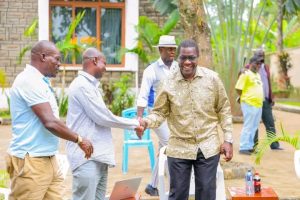
Extra-judicial killings cast a long and painful shadow, while detentions without charge devoured lives and livelihoods. In Siaya, a hotbed of reformist fervor, figures such as Raila Odinga mobilized the masses, transforming whispers of resistance into thunderous demands that echoed from the lakeshore to the streets of Nairobi.
The veterans, now graying and weathered, recounted smuggling banned Saba Saba leaflets, organizing underground meetings under the cover of funerals, and confronting state machinery armed with nothing but conviction. James Wandayi, himself shaped by the radical politics of that era, listened intently—his quiet attentiveness reflecting the debt the nation owes these pioneers.

Their recollections painted a Kenya perpetually on the brink, where the struggle for a new constitutional order often pitted brother against brother, yet forged an unbreakable bond among reformers. Today, as Cabinet Secretary, Wandayi’s gesture honored not just individuals, but an entire generation whose blood and sweat fertilized the seeds of devolution, human rights institutions, and judicial independence.
Yet the gathering did not dwell solely in memory. It confronted the present with unflinching honesty, exposing how the victories of the Second Liberation now teeter on the edge of erosion. The comrades reviewed ballooning public debt that strangles development, youth unemployment fueling unrest in Siaya and beyond, and governance lapses that mock the very reforms they once risked their lives to achieve.
Corruption scandals—once the signature of the old regime—persist like stubborn weeds, draining resources meant for roads, schools, and healthcare. The veterans decried the rise of political dynasties that betray the egalitarian spirit of the liberation struggle, warning that Kenya risks sliding back into authoritarianism disguised as progress.
James Wandayi steered the discussion with characteristic candor, highlighting how devolution—one of the Second Liberation’s crowning achievements—has empowered counties like Siaya, even as central-government overreach threatens its autonomy. Electoral integrity featured prominently, with veterans recalling rigged polls of the past and urging vigilance against new forms of manipulation.
Paying tribute to Rt. Hon. Raila Odinga infused the Sijimbo meeting with deep emotion. Raila was no armchair agitator; he endured detention, exile, and torture, yet emerged each time more resolute, rallying Kenyans from Kisumu’s docks to the corridors of power. His role in birthing a Constitution anchored on rights and devolution remains his enduring legacy.
In Siaya, his political home, Raila’s absence was palpable, yet his spirit animated every discussion. Wandayi shared anecdotes of Raila’s strategic brilliance during the multiparty struggle, reminding attendees how one man’s defiance galvanized millions. The tribute was not mournful, but mobilizing—urging the youth to embrace the unfinished business of reform, from land justice in the sugar belt to youth empowerment through agribusiness and innovation.
Looking ahead, the Sijimbo gathering crystallized a roadmap for Kenya’s next phase of struggle—one grounded in the veterans’ lived experiences. They envisioned Siaya County leading in sustainable development, leveraging Lake Victoria’s fisheries, and investing in youth-led technology hubs to combat poverty and joblessness.
Nationally, the call was clear: fidelity to the Constitution and resistance to shortcuts that weaken institutions. James Wandayi committed to championing these ideals within Cabinet, while the veterans implored leaders to choose service over self-enrichment, warning that history is unforgiving to those who betray the people’s trust.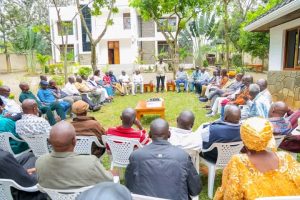
As the sun set over Sijimbo and the gathering dispersed with handshakes and solemn vows, the air hummed with optimism tempered by resolve. Kenya’s Second Liberation was won through collective grit; its preservation demands the same courage today.
This reunion reaffirmed that the embers of the reform struggle still glow, ready to reignite if freedoms falter. Let James Wandayi’s hospitality inspire a nationwide recommitment—honoring veterans not merely with speeches, but with actions worthy of their sacrifice. Siaya, the cradle of resistance, stands ready.


