

 ADVERTISEMENT
 Cabinet Secretary James Wandayi joined fellow leaders for a Women Empowerment Program at Jaramogi Oginga Odinga University of Science and Technology (JOOUST) in Bondo Constituency, marking a pivotal moment in the push for gender equity and community upliftment in Siaya County. This engagement was no mere ceremonial appearance; it represented a deliberate stride toward advancing women’s empowerment and fostering inclusive growth in communities where historical barriers have long stifled half the population’s potential.
In a region steeped in the legacy of Jaramogi Oginga Odinga—a champion of social justice—Wandayi’s presence at JOOUST underscored the urgency of translating national energy policies into grassroots action that prioritizes women. As Cabinet Secretary for Energy and Petroleum, Wandayi brings a distinctive perspective, recognizing that sustainable development depends not only on hydrocarbons and renewables, but also on human capital—particularly the untapped vigor of women who form the backbone of rural economies. His participation signals a refreshing alignment between federal leadership and local needs, challenging the familiar narrative of Kenyan politics where promises often fade after elections.
The event at JOOUST, a hub of innovation in Bondo, highlighted practical pathways for women’s advancement, including skills training in green energy technologies and entrepreneurial support in agribusiness and renewable projects. Wandayi’s involvement elevated the initiative beyond rhetoric, positioning opportunities within the energy sector as gateways for women to lead in solar installations, biofuel initiatives, and petroleum value chains—industries ripe for disruption by empowered local actors.
In Siaya, where youth unemployment hampers progress and women shoulder heavy domestic workloads amid economic uncertainty, such programs are lifelines. Wandayi’s message resonated clearly: inclusive growth demands that women—often sidelined in decision-making—take up leadership roles in the energy transition Kenya urgently needs. This vision aligns with national priorities such as the Bottom-Up Economic Transformation Agenda (BETA), which places women at the center of micro, small, and medium enterprises. Yet, the engagement also invites a critical question: will this momentum translate into lasting policy action, or remain a fleeting spotlight?
Skeptics may dismiss the event as political theater, especially in an election-conscious environment where leaders gravitate toward universities for visibility. However, Wandayi’s track record as Ugunja MP and now Cabinet Secretary offers counter-evidence. His legislative focus on energy reforms and oversight of initiatives like the Last Mile Connectivity Initiative demonstrate sustained commitment to underserved communities. In Siaya, women’s empowerment is not an abstract ideal—it is a practical response to poverty intensified by climate shocks and energy scarcity.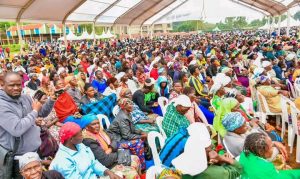
JOOUST’s program, strengthened by Wandayi’s endorsement, emphasized vocational training aligned with Kenya’s green energy ambitions, including biogas production from agricultural waste—a natural fit for Siaya’s agrarian economy. This dovetails with the government’s pledge to achieve 100 percent renewable energy by 2030, a goal that women can drive through community-level adoption. Importantly, Wandayi’s engagement challenges entrenched patriarchal norms, urging a shift where women move from support roles to strategic leadership in local governance and economic planning.

By convening with fellow leaders—likely including MPs, county officials, and civil society actors—the initiative emerged not as a solo effort but as a collaborative blueprint. It fostered networks capable of amplifying women’s voices in county assemblies, cooperatives, and energy enterprises. Wandayi’s role illuminated the often-overlooked intersection between energy policy and gender equity, a nexus with transformative potential for regions like Siaya.
Women in Siaya remain primary managers of household energy needs, often spending hours collecting firewood, exposing themselves to health risks and time poverty. Programs such as JOOUST’s introduce clean cooking technologies and financial literacy, directly aligning with Wandayi’s portfolio where LPG expansion and petroleum subsidies can be reimagined through women-led distribution models. His presence signals confidence to investors and development partners that Siaya is ready for gender-inclusive investment.
Critics may frame the engagement as partisan favoritism, but meaningful progress transcends political divides. Wandayi—a seasoned Azimio figure serving in a Kenya Kwanza cabinet—embodies the bipartisan cooperation required for national cohesion. For Bondo, long yearning for tangible development, the event rekindles hope reminiscent of Jaramogi’s vision of equity and inclusion. It challenges other leaders to match this commitment, ensuring women’s empowerment is embedded across sectors, from energy to agriculture.
Looking ahead, Wandayi’s initiative at JOOUST sets a precedent for scalable impact across Nyanza. Replicating such programs could see women trained as energy auditors, founders of electric mobility startups, or advocates for gender representation in regulatory bodies. However, sustainability will depend on deliberate investment—budget allocations, monitoring frameworks, and private-sector partnerships.
Wandayi must leverage his influence to fast-track scholarships and technical training for women in fields such as petroleum engineering and renewable energy, closing the skills gap that forces Kenya to import expertise. In Siaya, where youth frustration simmers amid unmet expectations, empowering women stabilizes households and fosters long-term social cohesion. This initiative counters narratives of neglect in minority regions, proving that devolution delivers when national leaders engage authentically.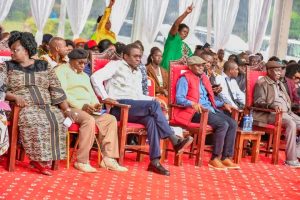
Ultimately, Wandayi’s stride at JOOUST transcends a single event; it is a call to reimagine Siaya’s future through women’s leadership. In a nation grappling with inequality—where women constitute half the population yet bear disproportionate burdens—such interventions are essential. For Bondo’s daughters now envisioning futures beyond tradition, this moment ignites possibility. Siaya thrives when its women rise—not as beneficiaries, but as architects of inclusive growth. Let this be the spark for a bolder, more equitable future.


