
 ADVERTISEMENT
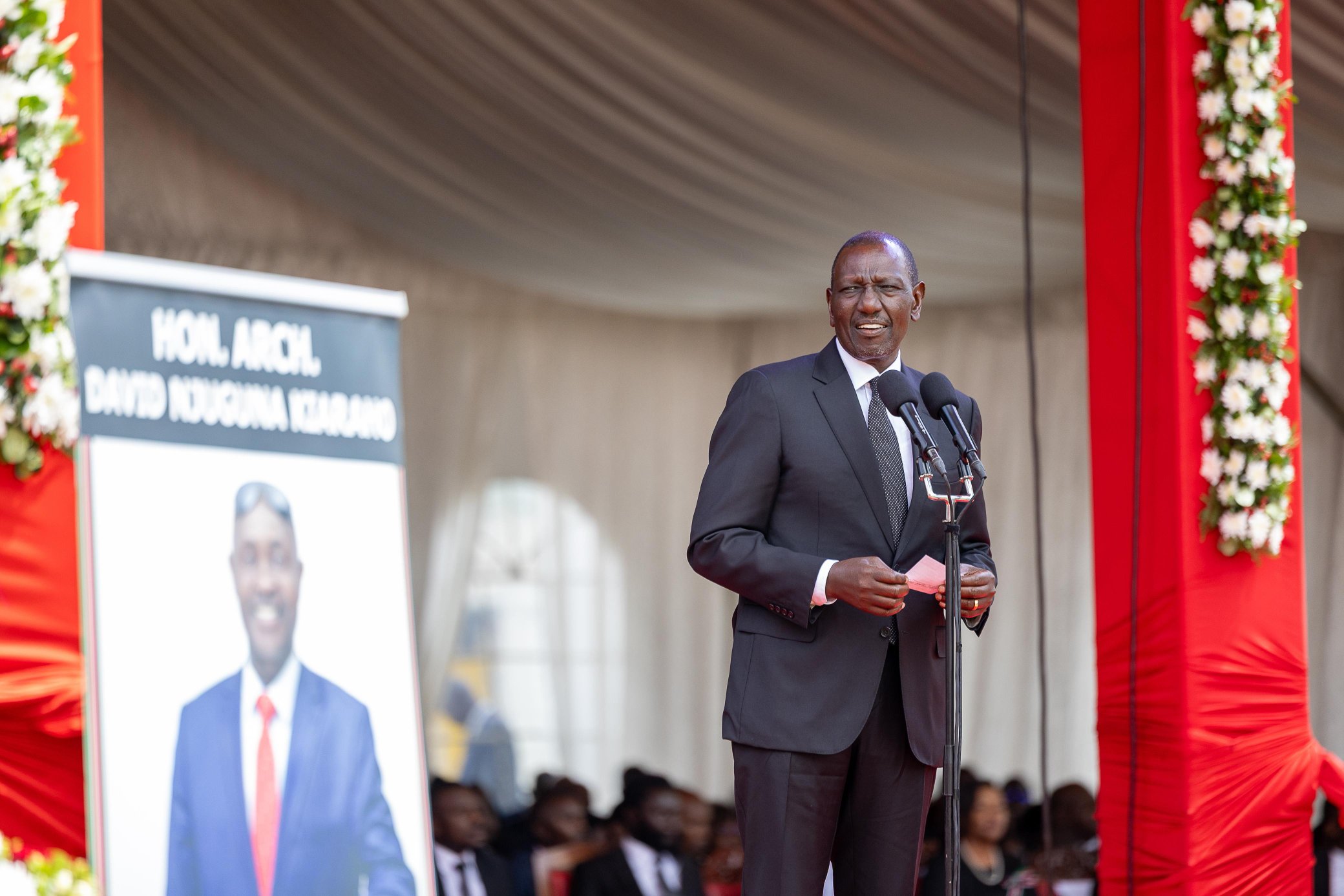
 What was meant to be a solemn farewell to Ol Kalou MP David Njuguna Kiaraho turned into a gripping display of political theatre, with President William Ruto delivering a commanding performance that left his estranged former deputy, Rigathi Gachagua, struggling to keep pace.
The two leaders, whose once-close alliance has publicly fractured, shared the same stage in Nyandarua on Wednesday in what observers described as a subtle but unmistakable contest of influence, style, and statesmanship.
Rigathi Gachagua took to the podium visibly tense, launching into a lengthy, combative address delivered almost entirely in the local vernacular. Intended to fire up his core supporters, the approach instead reinforced growing perceptions of a leader retreating into ethnic mobilisation rather than projecting broader national appeal.
His tone came across as insistent, pointed and bullish, as if determined to settle old scores. In the process, Gachagua risked narrowing his audience and cementing his image as a regional strongman rather than a unifying national figure. One wonders why he had to parade elected leaders allied to his DCP Party at a burial. Whatever he was trying to prove it backfired, miserably.
And, was it really necessary to address the Speaker of the National Assembly on a legislative misnomer at a burial?
In sharp contrast, President Ruto appeared relaxed, composed, and firmly in control.

“Mheshimiwa David Kiaraho was a brother and an outstanding leader,” the president said, adding “He was focussed, forthright, committed and development-oriented. Today, we join you in Captain, Nyandarua County, in celebrating the life and times of this great leader for his contribution in the transformation of our country, and especially in the service to the people of Ol Kalou Constituency.”
Whether guided by a teleprompter or sheer familiarity, Ruto demonstrated an impressive grasp of local affairs. He effortlessly rattled off the names of obscure feeder roads and remote trading centres across Nyandarua, ticking them off on his fingers with the ease and precision of a native son.
By the time he got to projects run by the national government such as the upgrading of Nyandarua County Hospital to a Level 5 facility and the construction of a university and stadium, one could tell he had the attention of the crowd.
It was political messaging at its finest — blending deep grassroots knowledge with presidential authority. While Gachagua seemed geared for confrontation, Ruto exuded the calm confidence of a leader unbothered by the tensions simmering beneath the surface.
The optics told their own story. Seated directly behind the president, digital strategist Dennis Itumbi oversaw proceedings with quiet assurance, a clear signal of the disciplined communications machinery still operating at the heart of Ruto’s inner circle.
The arrangement underscored a broader realignment and tightening of messaging within the president’s camp.
The burial of Kiaraho, who passed away in March 2026, was never going to be purely about mourning. In Kenya’s charged political environment, it became a platform for subtle signalling ahead of future battles.
On this stage, the difference was unmistakable.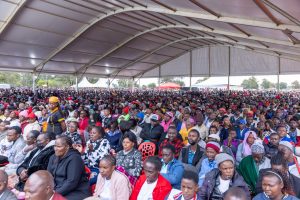
Gachagua played intensely to what appeared a shrinking base.
Ruto spoke with measured authority to the wider nation.
In the end, it wasn’t just about who spoke — it was about who truly connected.
As the dust settles on Kiaraho’s final send-off, one message rang loud and clear: President Ruto still knows how to own the moment.


