 ADVERT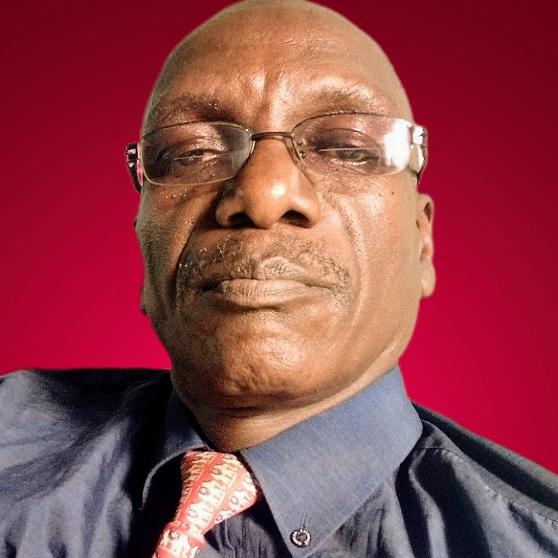

Cabinet Secretary for Energy and Petroleum James Wandayi cut a resolute figure before the joint Senate and National Assembly Energy Committees at Parliament Buildings, mounting a vigorous defense of the Government of Kenya’s Field Development Plan (FDP) for oil production in the South Lokichar Basin, Turkana County. With public participation set to begin the very next day across counties such as Turkana, West Pokot, Lamu, Mombasa, Trans Nzoia, and Uasin Gishu, Wandayi’s appearance was no mere formality—it was a high-stakes pivot in Kenya’s long-delayed quest to join the ranks of Africa’s oil-producing nations.
He argued that the plan, together with revised Production Sharing Contracts (PSCs) for Blocks T6 and T7, stands on firm legal ground under the Petroleum Act of 2019 and the Constitution, is economically viable through a joint development strategy, and strategically essential for unlocking the basin’s estimated 2.85 billion barrels of stock tank oil initially in place, with 429 million barrels recoverable. Yet, as co-chairs Senator William Kisang and MP David Gikaria emphasized the razor-thin timelines—60 days to gather public views and table a report by February 24—this moment transcends procedural theater. It tests whether Kenya’s Parliament will champion national transformation or succumb to parochial pressures, fiscal conservatism, and the ghosts of Turkana’s long-neglected marginalization.
Wandayi’s core pitch hinges on the pragmatic fusion of marginal fields—Ngamia, Ekales, Amosing, and Twiga—into a single joint development framework, a move that sidesteps the pitfalls of standalone exploitation. While commercially viable individually, these fields lack the scale to attract risk-averse investors in a world pivoting toward renewables and shunning high-cost hydrocarbons. By pooling resources into a shared central processing facility, the plan optimizes infrastructure, slashes redundancies, and mirrors global best practices seen in fields from the North Sea to Nigeria’s Niger Delta. This is economic realism, not bureaucratic sleight-of-hand.
Kenya’s upstream petroleum sector has languished since Tullow Oil’s 2012 discoveries, hampered by volatile oil prices, the 2014–2016 slump, COVID-19 disruptions, and investor flight amid global energy transition rhetoric. Wandayi rightly frames the FDP as a lifeline, with the cost recovery ceiling raised to 85% from 55–65% to make financing feasible. Comparable regimes in Angola, Cameroon, and Ghana demonstrate that this is industry norm, not Kenyan exceptionalism—essential for capital-intensive projects where upfront costs for drilling, pipelines, and facilities could exceed $5 billion. Without it, Kenya risks forfeiting its 20% carried interest, dooming the basin to another decade of untapped promise.
Critics, however, argue that the cost recovery increase is a giveaway to foreign operators such as Tullow and TotalEnergies, potentially starving the national treasury of royalties and profit oil. Yet this overlooks the math: Kenyan law imposes no statutory cap, granting Cabinet discretion precisely for such scenarios. The adjustment is not a blank check; it is calibrated to attract strategic partners who had balked at marginal economics. Recall the Final Investment Decision (FID) delays—stalled since 2019 due to fiscal unattractiveness amid global shifts. Wandayi’s approach positions the government as steward, retaining a 20% stake that demands proportional cost-sharing if exercised. Operators front the billions, and Kenya reaps the upside through production shares post-recovery.
Economically, the plan is promising. Projected peak output of 120,000 barrels per day could generate $4–6 billion annually at $70 per barrel, injecting Turkana with jobs, roads, power plants, and supply chains. Nationally, it diversifies exports beyond tea and horticulture, bolstering foreign reserves strained by debt servicing exceeding Sh1 trillion annually. Yet, viability demands unflinching analysis: at current Brent crude around $75, the internal rate of return clears 15%, but a sustained dip below $60 could strand assets, echoing Guyana’s disciplined hedging strategies that Kenya must emulate.
Turkana’s context sharpens this debate into a moral imperative. The arid north, home to nomadic pastoralists and chronic poverty rates above 80%, has borne exploration scars—flared gas, water contamination fears, and disrupted grazing lands—for zero tangible gains. Wandayi’s plan pledges mitigation: community trusts funded by 5–10% of operator expenditure, local content mandates for 40% procurement, and revenue-sharing via county allocations under the Oil Revenue Management Act. Public participation beginning tomorrow is constitutionally mandated, echoing the 2010 devolution ethos that empowers counties to veto or amend.
Yet history warns of elite capture—recall Lamu’s LNG protests that stalled projects since 2015 over environmental risks. Parliament’s joint committee must transcend rhetoric, channeling Nyanza’s devolution wins (where Siaya leverages fisheries and rice for equity) to ensure South Lokichar’s bounty funds boreholes, schools, and herder cooperatives, not just Nairobi’s coffers. Wandayi, a Siaya son with deep Nyanza roots, grasps this intuitively: his defense is a bridge from Turkana’s despair to national prosperity, demanding MPs prioritize long-term equity over short-term populism.
Parliament’s tight deadline amplifies the stakes, forcing a reckoning with Kenya’s governance DNA. Gikaria’s warning rings true—miss February 24, and the FDP auto-ratifies sans legislative input, a procedural guillotine rooted in PSC timelines. This is not anti-parliamentarianism; it is the Petroleum Act’s design to prevent indefinite dithering, as seen in stalled Ugandan projects. Kisang and Gikaria’s urgency underscores a deeper malaise: Kenya’s bicameral house, noble in theory, often fractures along ethnic and regional lines, stalling devolved gains. South Lokichar’s ratification could catalyze “Turkana 2.0,” mirroring Alberta’s oil sands social compact or Nigeria’s Niger Delta Amnesty, but Kenyan-flavored: youth skills hubs, women-led SMEs, and climate-resilient agro-pastoralism.
Opposition voices, from MPs to grassroots activists, must engage substantively—question cost models, demand audited reserves (certified at 585 million barrels probable), and probe abandonment funds for post-2040 decommissioning. Wandayi’s composure invites scrutiny, positioning him as enabler, not overlord.
Strategically, the FDP recalibrates Kenya’s energy matrix amid existential headwinds. Global net-zero pledges sideline oil, yet demand persists—IEA forecasts 103 million barrels/day by 2030. Kenya, with a 585 MW geothermal lead but fossil-dependent grids, needs South Lokichar’s gas for fertilizers and power, bridging to hydrogen ambitions. Wandayi’s joint strategy hedges risk: phased rollout minimizes sunk costs if electric vehicles eclipse internal combustion engines. Domestically, it aligns with Vision 2030’s Big Four (manufacturing via cheap energy) and the Bottom-Up Economic Transformation Agenda (universal healthcare via fiscal space). Risks abound—geopolitical flux, climate litigation, or fiscal leakages via opaque PSCs. Mitigation lies in transparency: publish full audits, enforce 30% local equity, and ring-fence revenues like Norway’s sovereign fund.
Yet politics looms large. South Lokichar becomes a test of political will and national unity. Wandayi, elevated from Nyanza’s political trenches to CS, embodies competence over cabal. Success could reshape alliances long starved of national projects; failure risks entrenching northern neglect and fueling secessionist murmurs. Public hearings must be robust: iterative forums with live translations, digital submissions, and independent facilitators. Counties like Mombasa (port logistics) and Lamu (export synergies) offer urban counterpoints to Turkana’s raw voices, ensuring holistic buy-in.
In the end, Wandayi’s defense is not mere technocracy—it is a clarion call for Kenya’s petroleum adolescence. South Lokichar is a disciplined marathon, not a jackpot fantasy: 429 million barrels over decades could yield Sh10 trillion+ if managed wisely. Parliament’s verdict will define the nation—vanguards of progress or vetoes of potential. With timelines ticking, lawmakers owe Turkana, Kenya, and posterity a ratification that marries viability, equity, and vision. Wandayi has laid the gauntlet; now it is time to seize it.
James’ Bwire Kilonzo is a Media and Communication Practitioner.


