 ADVERT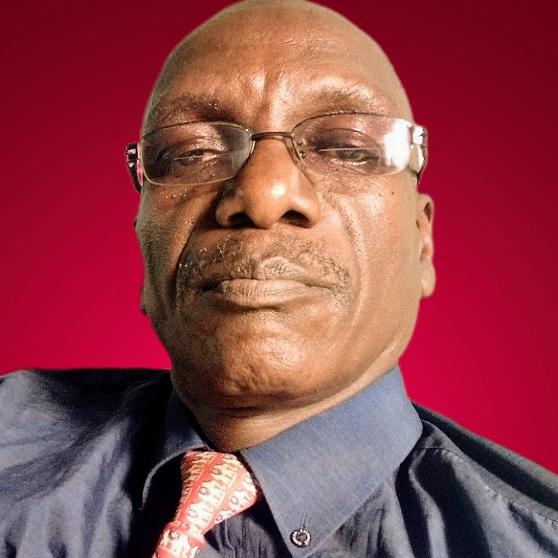

 ADVERT
In the pre-dawn hours of January 13, 2026, bulldozers and excavators escorted by armed police descended on a busy commercial site along Douglas Wakiihuri Road, opposite Nyayo National Stadium in Nairobi. By morning, a thriving car bazaar, car wash, and restaurant lay in ruins — vehicles crushed, semi-permanent structures flattened, and debris strewn across the road.
The businesses belong to Kiambu Governor Kimani Wamatangi. The operation marked the second time in seven years that structures on this prime parcel have been demolished by authorities.
Wamatangi has denounced the exercise as political persecution, calling it an “act of cowardice” meant to intimidate and silence him ahead of the 2027 elections. State officials, however, insist it was a lawful recovery of public land long encroached upon by illegal occupants.
The clash revives a three-decade dispute over railway reserve land, exposing fault lines between private business interests, public infrastructure needs, and the volatile intersection of commerce and politics in Kenya.
Governor Wamatangi presents his occupation of the site as a legitimate entrepreneurial journey. He says he first arrived on the parcel in 1994, starting with a small mandazi-selling venture that gradually grew into a car wash and eventually a large-scale used-car bazaar.
 ADVERT
Central to his defence is the claim of a valid 65-year leasehold agreement with the Kenya Railways Corporation (KRC). Through his company, Superclean Shine Enterprises, he maintains that rent has been paid consistently for over 30 years and acknowledged by KRC, establishing a lawful tenancy.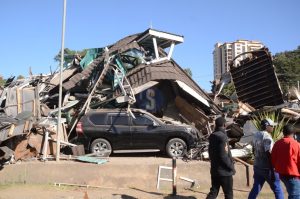
Days before the demolition, Wamatangi filed an urgent petition at the Milimani Commercial Magistrates’ Court seeking to halt any eviction. He argued that verbal threats issued in mid-December 2025 violated constitutional property rights and statutory eviction procedures under the Land Act. He further claimed no formal notice was served and pointed to existing court orders from a previous incident that protected the premises.
Addressing journalists amid the rubble, Wamatangi framed the demolition as targeted harassment: “Stop using government offices to ruin me… This is intended to silence me and intimidate me.” He described himself as a development-focused leader deliberately avoiding politics until March 2027, suggesting rivals are deploying state machinery to force him into confrontation and derail his reelection prospects.
Authorities offer a starkly different version. Nairobi Police Commander George Seda stated that officers were deployed to support Kenya Railways in repossessing the land after the occupants ignored vacation notices and showed resistance.
Official communications widely circulated after the operation assert that Wamatangi has no legal claim to the land and has never paid rent. The site is described as part of a critical railway reserve required for future infrastructure, possibly a new commuter railway station.
This is not the first demolition on the same parcel. In February 2019, when Wamatangi was Kiambu Senator, similar structures were razed amid accusations of land grabbing. The businesses were subsequently rebuilt, setting the stage for the current confrontation.
Kenya Railways has in recent years pursued an aggressive nationwide campaign to recover encroached reserves for SGR extensions, commuter rail upgrades, and government housing projects. While no detailed public statement from KRC specifically addressing Wamatangi’s lease claims has emerged, the coordinated involvement of police and contractors indicates firm institutional resolve.
The repeated demolitions — 2019 and 2026 — raise pointed questions. If a genuine 65-year lease with documented rent payments exists, why has it failed to prevent two major evictions? Critics highlight Kenya’s long history of irregular allocations of public land, including railway reserves, to well-connected individuals.
At the same time, the midnight timing of the operation — just before a scheduled court hearing — fuels procedural concerns, even if no active injunction was in force.
Politically, Wamatangi is a member of the ruling United Democratic Alliance (UDA) party, aligned with President William Ruto, making overt central-government persecution less straightforward. Yet intra-party rivalries in the Mt Kenya region are intensifying as 2027 approaches, with influence, succession, and resource control increasingly contested.
The saga encapsulates enduring tensions in Kenya: safeguarding public land for infrastructure versus protecting long-standing occupants who claim legitimate rights. Without public disclosure of lease documents, rent receipts, or an independent audit, the facts remain contested.
For now, Governor Wamatangi vows to press on undeterred, telling supporters that “kazi ndio itaongea” — work will speak for itself. As the debris is cleared and railway plans potentially advance, one question persists: was this a necessary reclamation of public land, or a heavy-handed move against a rising political figure?
The courts, and ultimately the voters of Kiambu in 2027, may yet deliver the final verdict.


