 ADVERT
 ADVERT
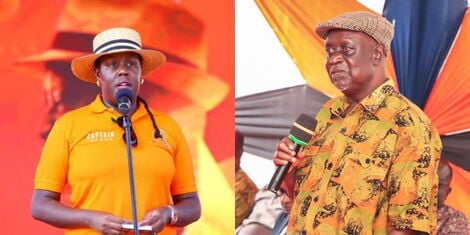
Three months after the death of Raila Odinga — Kenya’s towering opposition icon who passed away on October 15, 2025 — the Orange Democratic Movement (ODM) is fracturing in plain sight. Yesterday, January 18, the party staged two parallel rallies: one in Nairobi’s Kibra constituency led by Raila’s youngest daughter, Winnie Odinga, and another in Kakamega led by party leader Dr. Oburu Oginga, Raila’s elder brother.
The contrasting scenes — a raucous, spontaneous crowd in Kibra versus a structured delegates’ meeting in Kakamega — have ignited speculation of an internal “coup.” But whispers in political circles point to a more explosive question: Is retired President Uhuru Kenyatta quietly backing Winnie’s faction to destabilize ODM and reshape Kenya’s opposition landscape ahead of 2027?
At Kamkunji Grounds in Kibra — Raila Odinga’s longtime political bedrock — Winnie Odinga, the East African Legislative Assembly (EALA) MP, drew massive crowds without branded uniforms or apparent allowances. Accompanied by her brother Raila Odinga Junior, she delivered a blistering address that directly challenged the party’s current leadership.
“Nobody will be removed from the party,” Winnie declared, rejecting suggestions that dissenting voices should exit. “They talk too much, and when we ask questions, they tell us to leave. If we leave, who will they remain with? This is a people’s party.”
She accused some leaders of hastily “imitating” or “copy-pasting” her father, insisting “Raila was one in a million… You cannot copy-paste Raila.” Winnie called for dialogue, a National Delegates Convention (NDC), and unity, while emphasizing the family remains “team Raila” with no factional allegiance.
 ADVERT
The crowd erupted in cheers when she relayed greetings from Embakasi East MP Babu Owino and ODM Secretary General Edwin Sifuna — both seen as aligned with a more confrontational, youth-driven wing. She hinted at future joint rallies with them.
Critically, Winnie pushed back against claims that Raila had endorsed deeper cooperation with President William Ruto’s administration, calling such assertions “disrespectful.”
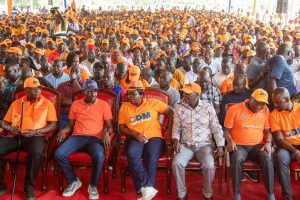
Simultaneously, hundreds of kilometres away in Kakamega Town, Oburu Oginga — who assumed interim party leadership after Raila’s death — chaired a delegates’ meeting as part of ODM’s “Linda Ground” grassroots mobilization tour.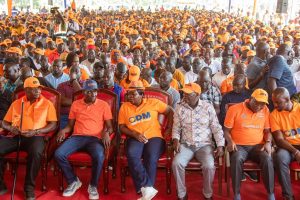
Flanked by governors like Fernandes Barasa and Homa Bay’s Gladys Wanga, Oburu focused on consolidating support in Western Kenya, discussing power-sharing ambitions for 2027 and party unity. Reports suggest the event emphasized structured engagement with members’ views on the party’s future, including its controversial cooperation with the Kenya Kwanza government.
The timing of the parallel events has fueled perceptions of a deepening rift: Winnie’s camp portraying itself as guardians of Raila’s “asili” (original) legacy, while Oburu’s appears more pragmatic, open to negotiated influence in the current regime.
As the dust settles, fingers are pointing at Uhuru Kenyatta. The former president, Raila’s longtime ally through the 2018 handshake and Azimio coalition, has faced repeated accusations of meddling in ODM’s affairs.
Kileleshwa MCA Robert Alai, a vocal commentator, claimed yesterday: “Uhuru Kenyatta is using Winnie Odinga and Raila Jnr to fight Oburu Oginga in an effort to keep Luos in the streets.” Alai suggests Uhuru wants to prevent ODM from fully integrating into government, preserving a strong opposition voice — or perhaps settling old scores.
Similar sentiments echo from analyst Abuga Makori, who alleged Winnie is “backed by Uhuru Kenyatta” in a bid to oust Oburu. Earlier in January, National Assembly Minority Leader Junet Mohamed accused Uhuru of attempting to “destabilize ODM,” claims the retired president dismissed late last year as baseless.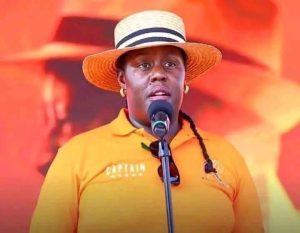
Uhuru has maintained public silence on yesterday’s events, but his absence from recent ODM functions — including a founder’s dinner — and past defenses of Raila’s legacy have fueled speculation.
Why would Uhuru intervene? Sources close to the Kenyatta camp argue he remains committed to Raila’s vision of inclusive governance and fears ODM’s full absorption into Ruto’s fold would erode opposition checks. Uhuru’s handshake with Raila transformed Kenyan politics; some believe he wants to protect that bipartisan spirit while preventing ODM from becoming a mere regional outfit.
Critics from Oburu’s side counter that Winnie’s actions amount to sabotage, exploiting family ties to undermine elected structures. They point to underlying Odinga family tensions — including reported disputes over Jaramogi Oginga Odinga’s estate — as the real driver, not external manipulation.
Public discourse on X (formerly Twitter) is polarized: Supporters hail Winnie as Raila’s natural heir, drawing organic crowds like her father, while detractors insist Oburu is the legitimate leader and accuse her of factionalism.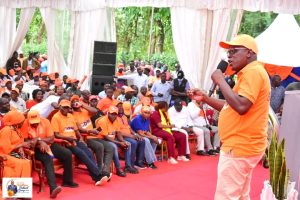
Available evidence for Uhuru’s direct involvement remains circumstantial — rooted in accusations from political rivals rather than documented funding, meetings, or communications. Uhuru has repeatedly denied meddling, and no whistleblowers or leaks have emerged.
Yet in Kenya’s opaque political game, absence of proof is rarely proof of absence. The rifts appear primarily internal: a generational clash between pragmatic elders and idealistic youth, compounded by debates over government cooperation versus pure opposition.
What is clear: ODM risks splintering without urgent dialogue. Winnie’s call for an NDC may force the issue, but with factions entrenched, the party’s future — and Kenya’s opposition — hangs in the balance.
As one Kibra attendee put it yesterday: “This is a people’s party.” The question now is whose people — and whose vision — will prevail.


