 ADVERT
 ADVERT
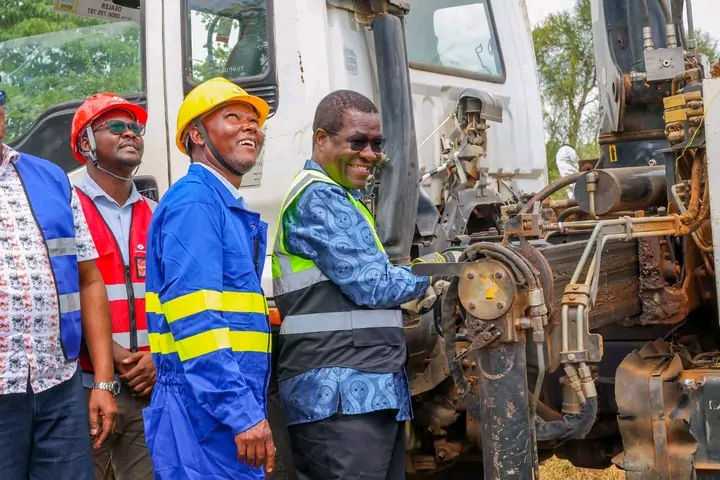
Cabinet Secretary of Energy and Petroleum James Wandayi commissioned KPLC Last Mile Connectivity Projects at Kalima Kilonzi in Yatta/Kwa Vonza Ward and at Musosya-Musenya in Kisasi Ward, Kitui Rural Constituency, Kitui County, accompanied by area Member of Parliament Hon. David Mwalika Mboni, with whom they also undertook public engagements at both venues. The commissioning, which involved the erection of a much-needed power transformer, will now bring more residents into the national grid and stands as a clear demonstration of the Ministry’s commitment to connecting rural households. Beyond the symbolism of switching on power, the exercise represented a deliberate and practical intervention in the long-standing challenge of energy exclusion that continues to define many rural communities across Kenya. In a country that has made impressive strides in power generation yet still grapples with unequal distribution, the events in Kitui were a reminder that development is most meaningful when it reaches the grassroots.
Kitui County, with its expansive semi-arid landscape and widely dispersed settlements, has for decades embodied the structural difficulties of rural electrification. Households here have historically depended on kerosene lamps, firewood, and charcoal, energy sources that are not only inefficient but also costly to health, the environment, and productivity. Children study under dim light, traders close shops early, and farmers are unable to add value to their produce. The Last Mile Connectivity Project directly confronts these realities by extending power from existing transformers to households that have long lived just beyond the reach of the grid. The commissioning at Kalima Kilonzi and Musosya-Musenya therefore marked more than the installation of infrastructure; it signaled an intentional effort to dismantle the invisible barriers that keep rural communities on the margins of national progress.
The presence of Cabinet Secretary Wandayi at the commissioning underscored a leadership approach that prioritizes visibility, accountability, and engagement with ordinary citizens. By walking the ground alongside Hon. David Mwalika Mboni and holding public engagements at both sites, the leadership affirmed that energy policy is not an abstract exercise confined to boardrooms in Nairobi but a lived reality that must respond to local needs. Residents were able to voice their expectations, frustrations, and hopes directly to decision-makers, reinforcing the principle that development works best when communities are treated as partners rather than passive recipients. This interaction also strengthened public confidence in government institutions, particularly in areas where residents often feel overlooked by national programs.
At a broader level, the commissioning aligned closely with the government’s Bottom-Up Economic Transformation Agenda, which places energy access at the center of rural economic revival. Electricity is a foundational input for nearly every productive activity, from irrigation and agro-processing to small manufacturing and digital services. By bringing more households in Kitui onto the national grid, the Ministry of Energy and Petroleum is effectively laying the groundwork for local enterprise, job creation, and improved household incomes. Small shops can now operate for longer hours, farmers can explore cold storage and processing, and young people can engage in technology-driven opportunities without the limitations imposed by energy poverty. In this sense, the transformer erected in Kitui is not just a piece of equipment but a catalyst for economic transformation.
The social implications of expanded electrification are equally profound. Access to reliable power has been shown to improve educational outcomes by enabling students to study at night and schools to use modern learning tools. Health centers benefit from refrigeration for vaccines and the ability to offer services after dark, while households enjoy improved safety and reduced exposure to harmful indoor pollution. For women, who often bear the burden of collecting firewood and managing household energy needs, electricity translates into time savings, better health, and new income-generating possibilities. The Last Mile Connectivity Project thus intersects with broader goals of gender equality, youth empowerment, and social inclusion, making it a cornerstone of sustainable development.
 ADVERT
Despite these gains, the journey toward universal electrification is not without challenges. Concerns around affordability, reliability of supply, and infrastructure vandalism continue to threaten progress, particularly in rural areas where incomes are low and distances are vast. The commissioning in Kitui therefore also serves as a call for complementary measures, including consumer education, flexible payment options, and stronger community ownership of energy infrastructure. When residents see power lines and transformers as shared assets rather than distant government property, they are more likely to protect and sustain them. The collaboration witnessed between the Ministry, Kenya Power, and local leadership in Kitui provides a workable model for addressing these challenges through cooperation rather than top-down enforcement.
Politically, such projects carry significant weight, especially in a context where development initiatives are often scrutinized for their timing and intent. However, the tangible nature of electrification makes it difficult to dismiss as mere rhetoric. A connected household experiences immediate and measurable change, and that reality speaks louder than promises. By focusing on underserved wards like Yatta/Kwa Vonza and Kisasi, the commissioning reinforced the idea that national development must be geographically balanced and socially just. Hon. David Mwalika Mboni’s role in advocating for his constituency further illustrated how effective representation can translate national policy into local benefit.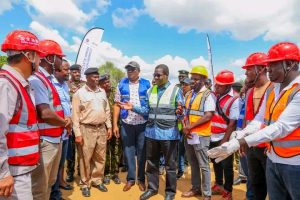
In the final analysis, the commissioning of the KPLC Last Mile Connectivity Projects in Kitui County stands as a powerful example of how targeted infrastructure investment can reshape rural life. It reflects a Ministry that understands energy not simply as a commodity but as a public good with transformative potential. As power flows into homes that have waited years for connection, it carries with it new possibilities for dignity, productivity, and hope. The task ahead is to sustain this momentum, replicate it across other underserved regions, and ensure that the promise of electricity is matched by affordability and reliability. If that commitment is maintained, the lights switched on in Kalima Kilonzi and Musosya-Musenya will illuminate far more than homes; they will light the path toward a more inclusive and equitable Kenya.
James’ Bwire Kilonzo is a Media and Communication Practitioner.


