 ADVERT

 ADVERT
Cabinet Secretary of Energy and Petroleum James Wandayi stood at the forefront in Kitui County, leading the Ministry of Energy and Petroleum in commemorating the International Day of Clean Energy, a moment that underscored Kenya’s unwavering commitment to transforming its energy landscape.
The gathering went beyond ceremonial observance and emerged as a strong declaration of alignment with His Excellency President William Ruto’s ambitious vision of delivering affordable, reliable, and sustainable power to every corner of the country. In a region that has long grappled with erratic electricity supply and dependence on costly and environmentally harmful energy sources, Wandayi’s presence carried deep symbolic and practical significance.
It signaled an acceleration of reforms aimed at empowering households, stimulating local industries, and promoting inclusive national growth. By situating the commemoration in Kitui County, the Ministry highlighted the lived realities of energy poverty and reaffirmed clean energy as a central pillar of President Ruto’s Bottom-Up Economic Transformation Agenda, demonstrating how national policy can translate into real benefits for communities at the grassroots.
The Kitui engagement further reflected the strategic foresight embedded in Kenya’s clean energy agenda, which is firmly rooted in President Ruto’s commitment to expanding renewable energy sources such as solar, wind, and geothermal. Wandayi articulated how Kenya’s approach aligns with global frameworks including the Paris Agreement and the United Nations Sustainable Development Goal Seven, while remaining firmly grounded in local realities. Kitui’s abundant sunshine represents untapped potential for off-grid solar solutions capable of transforming livelihoods and opening new economic opportunities. Kenya’s long-standing leadership in renewable energy, particularly geothermal power, has placed the country among continental pioneers, yet challenges such as infrastructure gaps, high initial investment costs, and climate pressures have slowed progress toward universal access.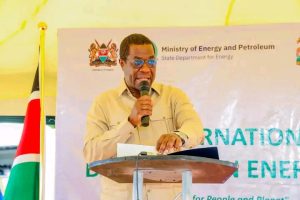
Through initiatives like the Last Mile Connectivity Project and the Kenya Off-Grid Solar Access Project, the government has continued to push electricity access into underserved regions. Wandayi’s message emphasized that clean energy is not a privilege but a necessity, reducing dependence on expensive diesel generators and enabling ordinary citizens to participate meaningfully in economic activity, from small-scale traders to rural farmers.
 ADVERT
The significance of Wandayi’s leadership in Kitui extends beyond energy provision and into the broader social and economic transformation of the country. Clean energy is increasingly positioned as a catalyst for youth employment, women’s empowerment, and rural industrialization. President Ruto’s vision recognizes that energy security underpins economic productivity and national self-reliance, while also easing the financial burden associated with fossil fuel imports. In Kitui County, where poverty levels remain high despite rich natural resources, clean energy initiatives such as solar-powered water systems and agro-processing facilities align closely with the government’s push for agricultural value addition. Wandayi acknowledged existing challenges, including financing constraints, global economic uncertainties, and the need for skilled manpower in marginalized regions. However, strong partnerships with development institutions continue to support Kenya’s clean energy journey, reinforcing the country’s position as a regional leader. This approach also speaks to climate justice, as Kenya demonstrates global leadership in environmental stewardship despite contributing minimally to global emissions.
Looking ahead, the momentum generated in Kitui points toward a resilient and sustainable energy future that will require sustained political commitment and policy coherence. The government’s efforts to strengthen regulatory frameworks and attract private investment signal intent, but achieving universal access will demand continued prioritization of renewable energy in national planning and skills development. Empowering young people with clean energy expertise and supporting community-driven energy models can deepen ownership and ensure long-term sustainability. While critics may highlight delays in previous large-scale projects, the renewed focus and hands-on leadership demonstrated by Wandayi reflect a decisive shift. As Kenya navigates global energy transitions and international climate commitments, the clean energy agenda articulated in Kitui reinforces a clear national direction. This is not merely an isolated event, but a reaffirmation of a long-term vision to power Kenya’s development sustainably, equitably, and inclusively, ensuring that no community is left behind as the nation moves toward a greener and more prosperous future.
James’ Bwire Kilonzo is a Media and Communication Practitioner.


