 ADVERT
 ADVERT
In a dramatic reset of strained relations, the United States and India have struck a high-stakes trade deal that slashes American duties on Indian goods while redrawing the global energy map. The agreement, announced Monday by US President Donald Trump, links tariff relief to a sweeping geopolitical concession: India will stop buying Russian oil and replace it with supplies from the United States and Venezuela.
The pact comes after months of tension triggered by Washington’s anger over New Delhi’s deepening economic ties with Moscow. Trump had imposed steep tariffs on Indian exports, arguing that India’s continued purchase of Russian crude undercut Western efforts to isolate the Kremlin. Now, with the ink barely dry, the White House is hailing the deal as a win for American workers, energy producers, and foreign policy leverage.
“India will stop buying Russian oil,” Trump declared, framing the move as a decisive shift away from Moscow and toward US-aligned energy sources. In exchange, Washington will roll back punitive tariffs that had begun to bite into India’s export-driven sectors, from pharmaceuticals to manufactured goods.
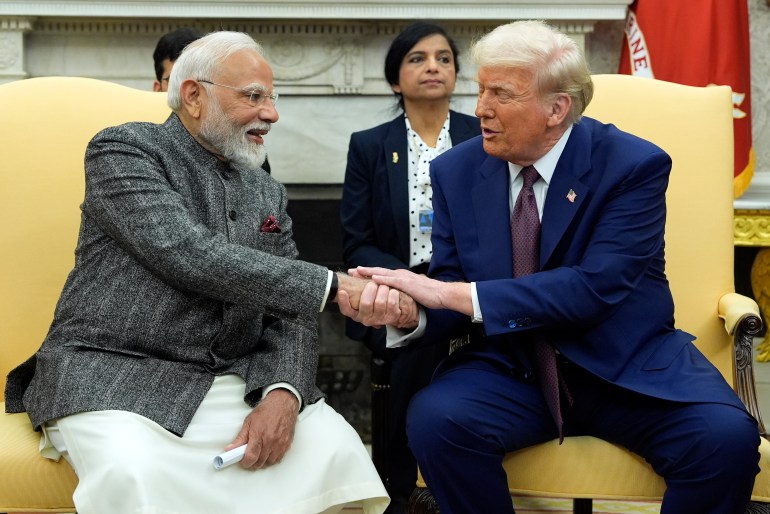
India’s leader welcomed the agreement, saying he was “delighted” by the breakthrough. Yet the announcement marks a notable pivot for New Delhi, which had previously resisted Trump’s pressure and defended its right to pursue energy security on its own terms. Until now, India has continued importing roughly 1.5 million barrels of Russian oil daily, taking advantage of discounted prices amid global sanctions.
The deal signals a broader recalibration of India’s trade and diplomacy. It lands just days after New Delhi signed a massive free trade agreement with the European Union, underscoring India’s push to diversify partners and lock in preferential access to major markets. At the same time, India has been quietly deepening economic ties with smaller but strategically important countries such as Oman, strengthening its footprint across the Middle East and beyond.
 ADVERT
For Washington, the agreement delivers both economic and symbolic victories. Lower tariffs promise to stabilize a crucial relationship with one of the world’s fastest-growing economies, while the oil shift strikes at Russia’s energy revenues. For India, the payoff is relief from US trade pressure and renewed momentum in its export strategy—though critics warn that replacing cheap Russian crude could raise energy costs at home.
Taken together, the US-India deal is more than a tariff tweak. It is a calculated trade-off that blends commerce, energy security, and geopolitics—one that could reshape alliances, markets, and the balance of power in an increasingly fragmented global economy.


