 ADVERT
 ADVERT
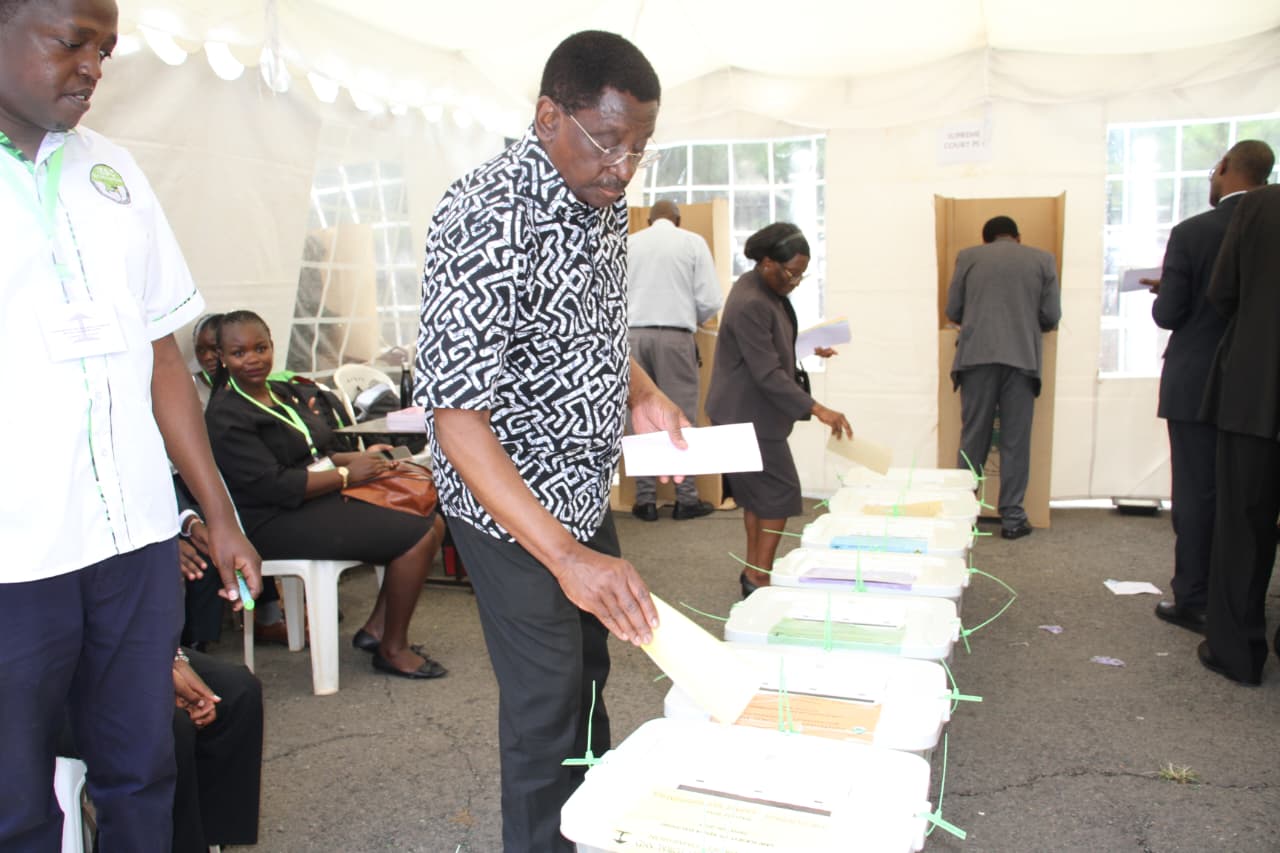
Thousands of Kenyan advocates converged at polling stations nationwide today to elect the new leadership of the Law Society of Kenya (LSK), marking a pivotal moment for the country’s premier bar association. Voting proceeded across major centers, including the Supreme Court in Nairobi, Milimani Law Courts, Kisumu Law Courts, and other regional venues, with polls set to close at 5:00 PM in most locations.
The elections, supervised by the Independent Electoral and Boundaries Commission (IEBC), involve more than 20,000 registered practicing advocates choosing the president, vice president, council members, and representatives for various regions and the Advocates Disciplinary Tribunal. The new leaders will serve a two-year term through 2028, a period that will encompass preparations for the 2027 general elections and ongoing debates over judicial independence, constitutionalism, and access to justice.
Among the prominent figures who turned out to vote were Siaya Governor James Orengo, who cast his ballot and expressed optimism about the incoming team. He wished the new leadership success in advancing justice, strengthening the rule of law, and safeguarding the public interest. Other notable participants included Nairobi Senator Edwin Sifuna, Makueni Governor Mutula Kilonzo Jr., Party of Liberation and Progress leader Martha Karua, Wiper leader Kalonzo Musyoka, Nandi Senator Kiprotich Arap Cherargei, and advocate Danstan Omari. Many emphasized the LSK’s critical role in defending democratic principles and public welfare.
The presidential race features a competitive three-way contest among Senior Counsel Charles Kanjama, outgoing Vice President Mwaura Kabata, and advocate Peter Wanyama. Each candidate brings a distinct vision to the role.
Charles Kanjama, a veteran litigator with extensive experience in high-profile cases and advisory work, has campaigned on a platform of mature, inclusive leadership. He stresses the need to address systemic challenges such as judicial corruption while bridging divides within the profession.
 ADVERT
Mwaura Kabata, positioning himself as a continuity candidate, aims to build on the achievements of outgoing President Faith Odhiambo. His focus includes member welfare, digital transformation of legal services, and closer collaboration with government institutions to enhance the society’s effectiveness.
Peter Wanyama, advocating for bold reforms, has emphasized transparency, greater youth involvement, and aggressive measures against corruption. His proposals, including changes to institutions handling tax disputes, have sparked debate—drawing criticism from bodies like the Institute of Certified Public Accountants of Kenya for potentially disrupting established processes—while appealing to younger advocates seeking fresh approaches.
The contest follows a High Court ruling that cleared all three candidates to run, ensuring a level playing field after nominations closed on January 6. Outgoing President Faith Odhiambo, who made history as only the second woman to lead the LSK, has been praised for her tenure’s emphasis on public interest litigation, constitutional advocacy, and professional reforms.
Early reports indicated solid turnout, particularly among senior lawyers and politically connected advocates, though some procedural issues surfaced. National Assembly Speaker Moses Wetang’ula was reportedly barred from voting due to eligibility concerns, underscoring ongoing discussions about voter verification and the society’s roll.
The elections unfold against a backdrop of heightened national scrutiny on the legal profession’s role in upholding the rule of law, especially with the 2027 polls approaching. Candidates and voters alike have highlighted priorities such as judicial reforms, better handling of electoral disputes, inclusivity for women and young lawyers, and the LSK’s influence on governance.
Results are expected later this evening or early tomorrow following tallying at LSK headquarters. Whoever emerges victorious will inherit the challenge of uniting the profession and steering it through Kenya’s evolving political and social landscape. As Governor Orengo noted, the focus must remain firmly on justice and the broader public good.


