 ADVERT
 ADVERT
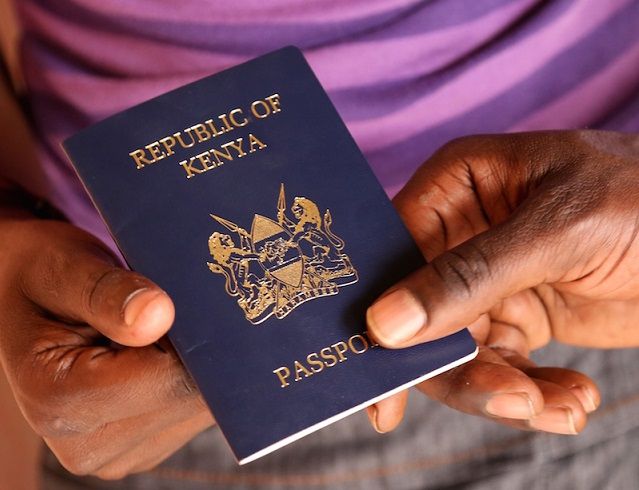
In a revelation that has sent shockwaves through Nairobi and Khartoum alike, Kenya’s Directorate of Immigration Services stands accused of one of the most brazen betrayals of national sovereignty in recent memory. On February 27, 2026, The Standard published a damning investigation detailing how rogue immigration officials — allegedly acting on direct instructions from senior government figures — fast-tracked Kenyan passports to Sudan’s most notorious warlord, Muhammad Hamdan Dagalo Musa (better known as Hemedti), his brothers, close allies, family members, and a network of controversial business figures. More passports, the report claims, are still in the pipeline.
The scandal exploded into public view after a quiet update to U.S. Treasury sanctions on February 19-20, 2026. The Office of Foreign Assets Control (OFAC) added a Kenyan passport — number AK1586127 — to the profile of Algoney Hamdan Dagalo Musa, Hemedti’s youngest brother (born August 7, 1990, in Nyala North, Sudan). Algoney, already sanctioned in October 2024 for “leading efforts to supply weapons to continue the war in Sudan,” now also carries an Emirati ID. He is described by the U.S. as the RSF’s key logistics and procurement operative — the man who buys the guns, vehicles, and spare parts that keep the Rapid Support Forces machine running amid accusations of genocide in Darfur and the siege of el-Fasher.
But The Standard goes further. It alleges the scheme was not limited to one sanctioned brother. Hemedti himself, his other brother Mohamed Hamdan Dagalo, multiple RSF allies, and family members received Kenyan passports through the same covert channel. The operation was so sophisticated that applicants sometimes filed under the details of Kenyan minors to throw off biometric checks. Digital footprints were systematically erased. Biometric safeguards — the very systems meant to prevent exactly this kind of fraud — were bypassed with apparent ease.
An anonymous immigration officer quoted in related reporting called it “a big deal at the registry department.” Translation: this was no low-level clerk taking a bribe. This required high-level cover.
All eyes are now on Evelyn Chelugui, Director General of Immigration Services. Radio and social media commentary this week has repeatedly asked how such a high-profile operation — involving internationally wanted figures — could occur without her knowledge or approval. The Standard’s piece frames the scandal as symptomatic of deep “rot” within the Directorate. Digital records wiped, protocols ignored, and a conveyor belt of passports for foreigners who would never qualify under normal rules.
 ADVERT
This is not an isolated incident. Just days before the exposé, the Directorate of Criminal Investigations arrested 26 suspects — including senior clerks from the National Registration Bureau and Immigration, local chiefs, and middlemen — in a sweeping operation targeting the illegal issuance of national IDs, passports, birth certificates, and alien cards to foreign nationals, many in Nairobi’s Eastleigh and Kamukunji areas. Fingerprint equipment, blank forms, and official stamps were seized. The pattern is clear: Kenya’s identity infrastructure has become a marketplace.
The motive is brutally pragmatic. Hemedti and his inner circle are under U.S., EU, and UN scrutiny for war crimes, arms trafficking, and gold smuggling that has fueled Sudan’s civil war since April 2023 — a conflict that has displaced over 13 million people and created the world’s largest humanitarian crisis. A Sudanese passport marks them as targets. A Kenyan passport lets them board planes in Dubai, bank in Nairobi, and move money and materiel with the credibility of East Africa’s most stable economy.
Kenya’s well-documented closeness to the United Arab Emirates — the RSF’s principal external backer — only deepens suspicions. President William Ruto hosted Hemedti in Nairobi last year to discuss a “parallel government,” a move that prompted Sudan to recall its ambassador and ban Kenyan tea imports. Ruto has repeatedly denied arming the RSF or profiting from its gold, insisting Kenya is a neutral IGAD mediator. Yet the passport trail tells a different story to critics.
Opposition figures have pounced. Former Chief Justice David Maraga, now eyeing the 2027 presidency, called the issuance “alarming” and demanded immediate revocation. “A passport is not just a travel document,” he said. “It is the State’s declaration that the bearer is one of us.” He urged the EACC and DCI to investigate “immigration officials and any high-level actors” involved, warning of a constitutional and diplomatic crisis.
Rigathi Gachagua, another opposition voice, claimed more RSF commanders are living comfortably in Kenya with Kenyan passports. Activist Boniface Mwangi went further, accusing the government of deliberately issuing documents to sanctioned individuals precisely so they can evade Western restrictions.
Kenya has long struggled with passport and ID fraud. In 2023, 15 suspects — including immigration staff and brokers — were arrested at Nyayo House for running a bribe-for-passport racket during system “downtime.” Individual officers have been sacked for taking millions in kickbacks. But the current scandal is qualitatively different: it involves state-level protection for internationally wanted war criminals and “business crooks” whose wealth is often stained with blood minerals or conflict gold.
The economic incentives are obvious. In a country where ordinary citizens wait months and pay official fees for passports, the black-market price for a clean Kenyan document to a desperate foreign client can reach tens of thousands of dollars. When the client is an RSF procurement chief who controls gold mines, the sums become life-changing — or regime-changing.
Beyond embarrassment, the damage is strategic. Every sanctioned RSF figure carrying a Kenyan passport weakens global confidence in Kenya’s travel documents. It exposes Kenyan banks and businesses to secondary sanctions risk. It turns Kenya into an unwitting (or witting) transit hub for arms, cash, and fugitives. And it shreds Kenya’s credibility as an honest broker in the Horn of Africa.
Most dangerously, it signals to the world that in Kenya, citizenship can be bought — not earned — if you have the right connections and the right cash.
The government’s silence so far is deafening. No denial of the Standard story has emerged. No immediate audit of recent passport issuances to foreign nationals. No suspension of implicated officers.
At minimum, the following steps are non-negotiable:
1. Immediate revocation of all passports issued to Hemedti, his brothers (Algoney and Mohamed), and any identified RSF affiliates.
2. A full, independent forensic audit of the Immigration Directorate’s systems, with international technical assistance to recover erased records.
3. Prosecution of every official involved, from the lowest clerk to any “senior government figures” who gave instructions.
4. Public disclosure of how many foreign nationals — especially from conflict zones — have received Kenyan passports since 2022.
5. Urgent parliamentary oversight, preferably through a joint select committee of the National Assembly and Senate.
Kenya’s passport is more than a booklet. It is a promise to the world that the bearer shares Kenya’s values of peace, rule of law, and good neighbourliness. When that promise is sold to warlords whose militias are raping and slaughtering their way across Sudan, the betrayal is not just to Kenya’s citizens — it is to every refugee, every peacekeeper, and every victim caught in the fires those same warlords stoke.
The rot must be cut out. The question is whether Kenya’s leadership has the courage — or the clean hands — to do it.


