 ADVERT

 ADVERT
Controversy has been simmering over who currently holds Kenya’s Public Seal.
Former Speaker of the National Assembly and ex-Attorney General, Justin Muturi revealed that the seal had been illegally transferred from the Attorney General’s chambers to the office of the Head of Public Service.
For whatever reason the seal was moved according to the Kenyan Constitution the legitimate custodian of the seal is the Attorney General.
This is outlined in the Second Schedule of the Constitution under national symbols. It also appears in Part Nine of Chapter Two, which covers national symbols and national days. Other national symbols include the national flag, national anthem, and coat of arms.
So what is the Public Seal of the Republic of Kenya?
 ADVERT
Set up in a traditional archaic mechanical contraption the seal consists of the Coat of Arms of Kenya set on a grayscale background featuring two lions, a symbol of protection while holding spears, and a traditional East African shield.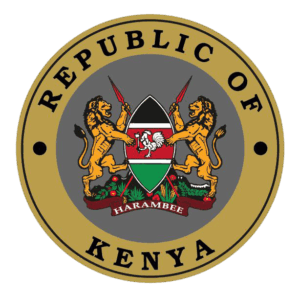
The Public Seal is an instrument of formalizing authority or approval in government documents, financial transactions, diplomatic agreements, and critical national deals.
Significantly the seal possesses the power to secure loans for Kenya, sign trade agreements on behalf of Kenya, and lease national assets.
So why was it transferred from it’s traditional abode at the AG office to the office of the Head of Public Service?
When the holder of the office of Attorney General Mr. Justin Muturi had irreconcilable issues with his boss the President a Bill was mooted proposing to amend the Office of the Attorney General Act, 2012 by curtailing the powers of the current office holder.
The National Assembly Administration Laws (Amendment) Bill, 2023, proposed that the President shall appoint a Head of Public Service who shall be the Chief of Staff in the Office of the President and the custodian of the Public Seal, as well as any other instruments of State.
The Chief of Staff shall further perform such other functions as may be assigned by the President from time to time using the public seal.
That’s how the seal of the Republic of Kenya left the office of the AG and was transferred to State House, Nairobi, where the offices of Chief of Staff and Head of Public Service are located.
Unlike the medieval seals which were the exclusive property of royalties, the seal of a democracy such as Kenya is the official national signature that authenticates agreements and decisions made by the government on behalf of the sovereign people of Kenya.
Thus grave concerns have been raised in the movement of the seal as it posses the danger of exposing the Republic into entering deals and very important agreements without the legal advice of the Attorney General (who is the official advisor to the president on legal matters).
“If documents can be signed and bear the public seal without the AG’s legal advice, that is a serious issue. I’m sure that they are avoiding accountability by transferring such matters to the HOPS office,” former AG Justin Muturi said during an interview with a national daily.
Shockingly after making a press briefing outlining the reason for movement of the seal, Government spokesperson Isaac Mwaura has eaten humble pie and issued another statement contradicting himself that the seal was never moved, in the first place.
Whatever the truth behind this matter, instruments of government can only retain their symbolic significance and credibility if they are held in reverence equally by citizens and those who hold public office.



