 ADVERT
 ADVERT
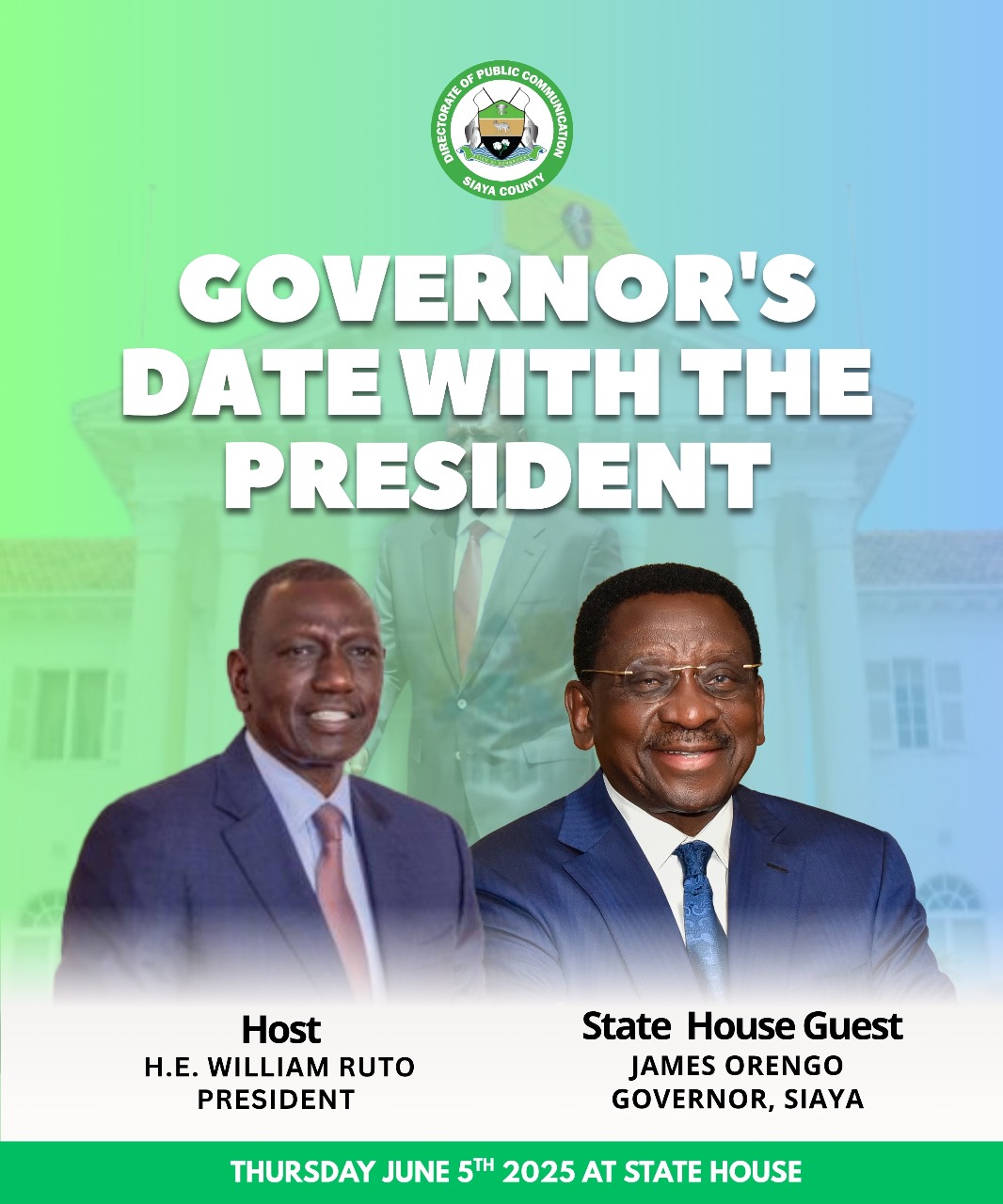
An X post from Siaya Today highlights a State House meeting on June 5, 2025, where Siaya County Governor James Orengo leads a delegation to meet President William Ruto in Nairobi, focusing on development issues for Siaya County, as indicated by the hashtag #OrengoForDevelopment and the “Nyalore” slogan tied to Orengo’s manifesto.
The entourage include key Siaya County officials like cabinet secretaries, permanent secretaries, senator, MPs, and county assembly members, reflecting a strategic effort to align local governance with national leadership for resource allocation or policy support, a common practice in Kenya’s devolved system.
James Orengo, a seasoned politician and former national figure, has been pushing a development-focused agenda in Siaya since his 2022 gubernatorial win, often leveraging his legal background and ODM party influence to challenge systemic governance issues, as noted in his campaign rhetoric about “speaking truth to power.”
Is Orengo’s State House visit going to bring development to Siaya?
Let’s break this down to assess whether Governor James Orengo’s State House visit on June 4, 2025, is likely to bring development to Siaya County. We’ll look at the context of the visit, Orengo’s track record, President Ruto’s history of engagement with Siaya, and the broader political dynamics at play.
Context of the Visit
Orengo’s State House meeting with President William Ruto was a significant event, as highlighted in the Siaya Today X post. The delegation included high-level Siaya leaders—cabinet secretaries, permanent secretaries, senators, MPs, and county assembly members—indicating a coordinated effort to push for development priorities. This meeting followed preparatory discussions with Treasury Cabinet Secretary John Mbadi, as noted in the People Daily and Daily Nation articles, where the focus was on firming up a list of projects for Siaya. Orengo’s social media framing of the meeting as a push for development, combined with the hashtag #OrengoForDevelopment, underscores his intent to secure tangible outcomes for Siaya.
Orengo’s Track Record and Approach
James Orengo, a veteran politician and lawyer, has been Siaya’s governor since 2022 and is known for his vocal criticism of the national government, particularly over the broad-based government formed by Ruto’s administration and ODM (Orengo’s party).
 ADVERT
Despite this, his decision to lead a delegation to State House shows pragmatism—he’s willing to engage with the national government to secure resources for Siaya, even if it means a perceived “climb down” from his earlier firebrand stance, as the Daily Nation put it. Orengo has a history of focusing on development in Siaya, such as his 2022 initiative to refurbish tractors for subsidized farming (noted in The Star article from 2023). His manifesto, often tied to the “Nyalore” slogan (meaning “together” in Luo, as seen in the X post), emphasizes grassroots development, particularly in agriculture, water, and infrastructure.
President Ruto’s History with Siaya
Ruto has previously made development commitments to Siaya, as seen in The Star article from January 2023. During a visit, he pledged:
Sh1.2 billion to complete the Ugunja-Ukwala-Sega water project.
Sh280 million to expand the Siaya-Bondo Water Project.
20 tractors to boost agricultural productivity.
These promises align with Siaya’s needs—water access and agriculture are critical in a region where many rely on farming. However, there’s no clear evidence from the provided data on whether these 2023 pledges were fulfilled by June 2025. Ruto’s track record on following through with such commitments varies across Kenya; while he has delivered on some projects (e.g., road infrastructure in other counties), delays or reallocations due to budget constraints are common, especially in opposition-leaning areas like Siaya, which has historically supported ODM.
Political Dynamics
The political context adds complexity. Orengo’s criticism of the broad-based government (where ODM joined Ruto’s administration) has caused friction, as noted in the People Daily article. Yet, his meeting with Mbadi—a fellow ODM member now in Ruto’s cabinet—and the State House visit suggest a thawing of tensions, at least temporarily. The Daily Nation mentions a “State-backed plot” to unseat Orengo, indicating political pressure, but his decision to engage with Ruto could be a strategic move to secure development while strengthening his local support base ahead of any challenges.
On Ruto’s side, engaging with Siaya leaders could be a way to build bridges in an ODM stronghold, especially with the 2027 elections on the horizon. Development projects are a common tool for Kenyan presidents to gain favor in opposition areas, but the actual delivery often depends on political goodwill and fiscal realities.
Likelihood of Development Outcomes
Here’s a structured analysis of the potential for development in Siaya following this visit:
Positive Indicators
High-Level Delegation: The inclusion of cabinet secretaries, MPs, and county officials in the meeting suggests serious intent. These leaders can lobby for Siaya’s priorities at both county and national levels.
Preparatory Work: Orengo’s meeting with Mbadi and the earlier Nairobi meeting to firm up a project list (Daily Nation) show a focused agenda, likely centered on water, agriculture, and infrastructure—areas Ruto has previously committed to.
Political Incentives: Ruto has an interest in delivering projects in Siaya to counter ODM’s influence. Orengo, meanwhile, can strengthen his governorship by securing national support, especially if he delivers on his “Nyalore” promises.
Past Promises as Leverage: Orengo can hold Ruto accountable for the 2023 pledges, using the State House platform to push for their fulfillment or new commitments.
Challenges and Risks
Historical Delivery Gaps: While Ruto made promises in 2023, there’s no confirmation in the provided data that these were fulfilled by 2025. National budget constraints, especially post-2024 economic challenges (e.g., Kenya’s debt burden), could delay or derail funding.
Political Tensions: Orengo’s criticism of the government might make Ruto hesitant to prioritize Siaya over more loyal regions. The “State-backed plot” to unseat Orengo could also lead to punitive delays in resource allocation.
Implementation Bottlenecks: Even if funds are allocated, Kenya’s devolved system often faces delays due to bureaucracy, corruption, or mismanagement at the county level. Siaya’s ability to execute projects efficiently will matter.
Election Cycle Dynamics: With 2027 approaching, Ruto might prioritize short-term, visible projects (e.g., roads) over long-term ones (e.g., water systems), potentially skewing Siaya’s development needs.
Probable Outcomes
Given the above, here’s what’s likely:
Short-Term Wins: The visit might yield quick wins, such as the release of funds for smaller projects (e.g., the Sh280 million for the Siaya-Bondo Water Project, if not already disbursed) or symbolic gestures like delivering the promised tractors. These would allow both Ruto and Orengo to claim political victories.
Long-Term Projects: Larger commitments, like the Sh1.2 billion Ugunja-Ukwala-Sega water project, might see renewed promises but face delays due to funding or logistical issues. Completion could stretch into 2026 or beyond.
Agricultural Support: Given Orengo’s focus on farming (e.g., his tractor initiative) and Ruto’s 2023 pledge, agricultural projects—subsidized inputs, tractors, or irrigation—stand a good chance of materializing, especially since they align with national food security goals.
Conclusion
Orengo’s State House visit has a moderate to high likelihood of bringing some development to Siaya, particularly in the form of short-term projects or partial fulfillment of past promises. The preparatory work, high-level engagement, and political incentives for both leaders suggest that Siaya could see tangible benefits, such as agricultural support or water project funding, within the next 6-12 months. However, larger infrastructure projects may face delays due to fiscal constraints or political dynamics, and the actual impact will depend on Siaya County’s ability to implement efficiently. Orengo’s pragmatic approach and Ruto’s strategic interests align here, but historical challenges in Kenyan governance temper the optimism.



