 ADVERT

 ADVERT
President Dr William Samoei Ruto’s planned trip to Siaya County over the coming weekend will look, on paper, like another presidential development tour: groundbreakings, handshakes and photo-ops. A deeper look, however, shows the visit is aiming to do more than open projects. It is a carefully calibrated mix of development politics, coalition management and election-era positioning aimed at one of Kenya’s most politically sensitive regions.
Below I lay out the likely, evidence-backed reasons driving the trip — and what they mean for Siaya, the Ruto presidency and the broader political map.
1) To deliver and showcase concrete development projects
One headline purpose is routine but important: commissioning and advancing county projects. In recent months the Presidency and Siaya leaders have publicly discussed a slate of infrastructure and economic projects for the county — from stadium upgrades and market/industrial interventions to energy and rice-value-chain investments — and State House has signalled willingness to support county priorities. The State House communications office itself has reported meetings with Siaya leaders to review ongoing development programmes.
Why it matters: presidents visibly delivering projects in a county creates immediate economic and political optics — jobs, contracts and local goodwill — especially valuable in areas that feel historically neglected.
 ADVERT
2) To consolidate a thaw (or test) in relations with Siaya political leadership and ODM
Siaya is the political heartland of the Orange Democratic Movement (ODM) and of Raila Odinga. Yet since Ruto’s inauguration there have been signs of managed rapprochement: Siaya leaders, led by Governor James Orengo, have met the President at State House to present local project lists and seek national support. Coverage of those engagements described them as signaling an easing of tensions between Ruto’s government and the Odinga/ODM camp — at least around development cooperation.
Why it matters: getting buy-in from high-profile local leaders reduces the risk of overt confrontation and can blunt opposition narratives that the national government is ignoring the region. The visit lets the President show he can work with local actors — or test how deep the thaw runs.
3) Coalition management and a bid to contain internal ODM fractures
Beyond optics, the trip has a clear political calculation. Recent reporting suggests strains inside the Odinga/ODM camp and friction between local factions; outside observers say the Ruto administration is keen to exploit those fault lines, or at least to prevent them solidifying into a unified, hostile front. Briefings and analysis in regional press and intelligence-type coverage indicate Ruto has been engaging with defectors and local powerbrokers to avert what some sources call “an implosion” in Odinga’s camp. A presidential visit to Siaya — where local loyalties matter — is a classic move to influence internal dynamics.
Why it matters: ahead of 2027 political cycles, winning or neutralising influence in opposition strongholds yields disproportionate strategic benefit. It can persuade undecided voters and encourage opposition members to consider cooperation or at least neutrality.
4) To harvest electoral and symbolic capital in a culturally important region
Luo Nyanza — and Siaya in particular — is symbolically potent in national politics. Public ceremonies, inaugurations and thanksgiving services draw large crowds and television coverage. Ruto’s earlier Luo-Nyanza tours involved launches of water, roads and energy projects and were covered as both development work and political theatre. When presidents visit politically significant regions they collect symbolic capital that resonates beyond the immediate beneficiaries. Past itineraries show the combination of project launches and attendance at local cultural or religious events.
Why it matters: the optics of a warmly received head of state in an opposition stronghold can undermine the narrative that the government is hostile to that region — and those images travel nationally.
5) To accelerate specific economic agenda items (blue economy, agri-value chains, energy)
Siaya’s economy is tied to Lake Victoria (fisheries/blue economy), rice cultivation and small-scale manufacturing. Government communications and regional reporting have flagged blue-economy initiatives, rice-mill projects and island/solar electrification as priority items in the area. Targeted interventions such as solar projects on Mageta Island and investments in rice processing can be presented as quick wins that deliver jobs and higher farmer returns. Earlier Presidential tours to Luo Nyanza, and State House meetings with Siaya leaders, specifically referenced such priorities.
Why it matters: economic projects tied to local livelihoods are the kind of tangible evidence politicians use to argue they’re improving citizens’ lives — and they’re harder for critics to dismiss as purely political theatre.
6) To capitalize on existing infrastructure milestones (Siaya stadium and other showpieces)
Siaya has invested heavily in marquee projects such as the county stadium (intended as a FIFA-standard facility) and other public works whose completion generates a natural moment for national leaders to appear. Media archives show several cycles of attention to the stadium project and other county flagship investments. A presidential appearance to inaugurate or inspect such facilities provides an easy, visually compelling narrative.
Why it matters: stadiums and big infrastructure create large, shareable visuals for national and social media; they also attract sporting and cultural events that have longer-term local economic impact.
7) Risk-management: quelling local grievances and pre-empting protests
When regions perceive neglect or unfair treatment, protests and reputational risks emerge. Meeting county executives and local opinion leaders — and making commitments on projects and funding — is a classic presidential risk-management strategy. State House meetings documented over the past months show Ruto engaging county delegations to head off grievances and present a co-operative front.
Why it matters: calming local anger reduces the chance of disruptive protests or politically damaging stories that could spread nationally.
How local actors view the visit
Local leaders — from the county executive to MPs and business chiefs — have publicly framed recent State House engagements as opportunities to accelerate county projects and attract investment. At the same time, some activists and opposition watchers remain sceptical: they say that high-profile weekends can be more about messaging than delivery and warn that promises must be followed by budgeted allocations and transparent procurement. Reporting from both local outlets and national coverage shows a mixture of cautious optimism and political scepticism.
Bottom line — development, politics and optics, all rolled into one.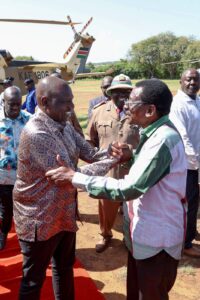
Taken together, the evidence points to a multipronged rationale for the visit: deliver and showcase projects, manage a sensitive political relationship with Siaya and ODM leaders, exploit the political symbolism of being welcomed in an opposition bastion, and advance concrete local economic initiatives that have immediate visibility. The trip is as much about policy as it is about power projection — a blend that’s become standard for national leaders preparing for intense political seasons.
If the President follows through with tangible funding commitments and timely project rollouts after this visit, the trip will be judged a substantive win for Siaya. If the visit produces mostly rhetoric and promises without budgeted follow-up, the goodwill will likely evaporate fast — and critics will use the weekend to argue the trip was largely political theatre.



