 ADVERT
The fate of the Yala Swamp — a vast 12,000-acre delta straddling Siaya and Busia Counties — has once again taken center stage after environmental conservationist Alfred Ayiro delivered a scathing critique of political interference, poor planning, and mismanagement during HARD TALK, Siaya County’s premier WhatsApp-based weekly talk show.
Held under the vibrant SIAYA TODAY platform, the discussion dissected the long-running tensions between investor interests, local community needs, and conservation imperatives that continue to plague the Yala Swamp. Ayiro anchored his arguments on history, culture, and science, urging that the swamp’s preservation be prioritized over short-term political gains.
Kenya’s Largest Freshwater Wetland
Yala Swamp is Kenya’s largest freshwater wetland, located on the northeast shore of Lake Victoria. It is not only a cultural and historical landmark but also a crucial ecosystem for biodiversity and human livelihoods.
Biodiversity hotspot: The swamp harbors a rich variety of wildlife, including the rare and elusive Sitatunga antelope, numerous bird species, and rare fish species in its associated lakes such as Kanyaboli, Namboyo, and Sare.
Ecological services: It filters river water, traps silt and agrochemicals, and acts as a significant carbon sink, helping regulate climate and safeguard Lake Victoria’s health.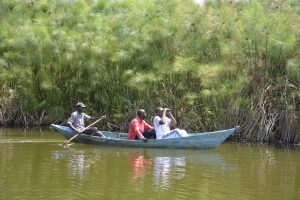
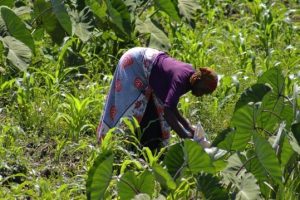
Livelihoods: More than 250,000 people rely on the swamp for clean water, fishing, papyrus harvesting for construction and crafts, and small-scale irrigation farming.
International recognition push: Faced with threats from agricultural expansion, pollution, and habitat destruction, community-led efforts are underway to list Yala Swamp as a Ramsar Site, giving it international protection and conservation support.
A Sacred Heritage Under Threat
Ayiro reminded listeners that Yala Swamp sits at the foot of Ramogi Hills, a landmark steeped in Luo migration history and spirituality. “This place is sacred,” he said, warning that reckless exploitation undermines both cultural heritage and environmental sustainability.
The conservationist accused Siaya’s political class, including the current county administration, of “paying lip service” to conservation while weaponizing swamp conflicts to amass political capital.
Historical Reports Point the Way Forward
Tracing the debate back to colonial times, Ayiro referenced the 1952 Briggs Report, which classified the swamp into distinct zones for conservation, agriculture, and settlement. Later, under Aggrey Onyango’s chairmanship, the Siaya County Council commissioned a survey that sowed the seeds of today’s land-use conflicts.

Ayiro lamented that critical blueprints such as the ILACO Report and the 2018 Siaya Land Use Plan remain shelved. “If these plans were implemented, no conflict would exist today. Every stakeholder would know their rightful space in the swamp,” he said.
Similar sentiments were expressed by Dr. Darell Onyango who said the lethargy in implementing the ILACO Report could be rooted in a plot to undermine development of the Swamp as well as specific development in Alego-Usonga Constituency.
Dominion Farms and the Question of Leadership
The discussion inevitably circled back to the controversial Dominion Farms project led by American investor Calvin Burgess, which collapsed under a cloud of political hostility and managerial disputes.
Ayiro argued that while politics played a role, Burgess’s poor management model was equally culpable. “He appointed people such as schoolteachers with minimal managerial orientation to head key scientific projects simply because of religious faith affiliations,” he revealed.
Ayiro trashed the perception that under Dominion Farms the Ratuoro-Kadenge area thrived in business wondering: “Why Ratuoro? Why not Daraja, Bar-Olengo, Hawinga, Sidundo or other areas which share equal or even larger chunks of the Swamp? This kind of selective development was a narrative driven for a purpose. In reality Dominion accounted for displacement not development. Hopefully this time they are coming back with a broader agenda.”
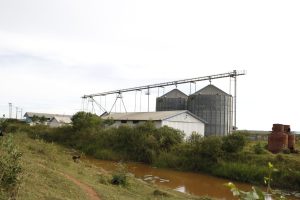
Despite Dominion’s collapse, whispers of a “Dominion Two” return have reignited debate, with Nairobi businessman Patrick Oluoch warning that local conservation groups are exploiting the swamp for personal enrichment. “For decades, individuals have turned conservation into a cash cow, milking donors and government without tangible results. Siaya professionals must be brought to the table before new ventures take off,” Oluoch said.
Politicians Fanning the Flames
Ayiro did not spare local politicians. He singled out two Members of the County Assembly — from Central Alego and Usonga — for exploiting swamp tensions to build political bases, thereby worsening community divisions.
“The animal-human-industrial-conservation conflict is not intractable. What is lacking is political will to implement scientific solutions already outlined in official reports,” Ayiro insisted.
The Untapped Tourism Goldmine
In what many saw as his most ambitious proposition, Ayiro urged Siaya County to prioritize conservation over agrarian exploitation. He revealed that the Lake Kanyaboli National Game Reserve was gazetted in 2010, but political inertia has stalled its development.
“Properly conserved, Yala could become Siaya’s answer to the Maasai Mara Game Reserve, a multi-million-shilling revenue stream that blends tourism with biodiversity preservation,” Ayiro said.
Ayiro also raised memories of a 1970 gazette notice that made provision for community settlement of Alego and Yimbo communities within the swampland. According to him these notices and gazettements failed to follow procedure as there was no community participation.
He referenced a 2006 notice that was contested in court by lawyer Dismus Wambola and found to be of no merit
on the grounds of lack of community participation.
Seeking Balance in Competing Interests
The conversation was broadened by Ayiro Lwala, Chairperson of the Yala Wetland Conservation Group, who posed the key question: How can Siaya balance conservation, human settlement, and socio-economic growth in the swamp?
Ayiro’s response was unequivocal: the answers already exist. “The Land Use Plan clearly balances these interests. Politicians must stop playing games and let science lead the way.”
A Call for Conservation-Driven Leadership
The HARD TALK session underscored a hard truth: Yala Swamp’s survival — and Siaya’s economic future — hinges less on resource scarcity and more on governance choices. With ecological, cultural, and economic stakes intertwined, the debate is no longer about whether to conserve, but how.
If implemented faithfully, the ILACO Report and the 2018 Land Use Plan could transform Yala Swamp from a theater of conflict into a model of science-driven conservation and sustainable development.
For now, though, Ayiro’s call remains clear: Siaya must choose between short-term political expediency and long-term prosperity rooted in conservation.


