 ADVERT

 ADVERT
On a chilly Monday morning in Kawangware, Mama Awis ladles hot mandazi from her wok as children in crisp uniforms hurry past her stall. She pauses, squints at the laughing schoolchildren, and says with a knowing smile: “Look at how they troop to class these days. Sakaja has done something right.”
For the first-term Governor of Nairobi, Johnson Arthur Sakaja—popularly christened Mbekse of the City—such street testimonials may be the most powerful endorsement of his two-year reign. In a city where politics often trumps delivery, Sakaja has built his story on a rare balance: visible action, policy reforms, and the daring to dream beyond the ordinary.
Feeding the Future
At the heart of Sakaja’s transformative politics is the Dishi na County programme, a school-feeding initiative that has touched more than 230,000 children in 213 public primary schools. Partnering with Wawira Njiru’s Food for Schools, Sakaja has not only curbed classroom hunger but spurred enrolment by 35%.
“Some children come to school just to eat,” one teacher at Ngara Primary confides. “But while they are here, they learn. That’s the brilliance of Dishi na County—it’s about dignity as much as it is about food.”
 ADVERT
Water in the Pipes, Hope in the Homes
For decades, water scarcity in Nairobi was a cruel constant. Sakaja’s administration has invested in a 14km water pipeline from Shauri Moyo through Bahati, Buruburu, and Kariobangi, supplying 140 million cubic litres of clean water.
“Unlike before, we rarely experience shortages now,” says Joseph, a jua kali artisan in Buruburu Phase Two. “It may not be perfect, but at least we see progress.”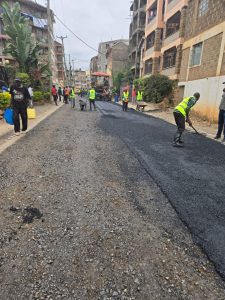
The Green City Awakens
If food fills stomachs and water restores health, then Sakaja’s 3,000-strong Green Army is restoring Nairobi’s soul. Hired to sweep, plant, and beautify the capital, this brigade has redefined urban pride. For the first time in years, flowerbeds on Moi Avenue bloom, Tom Mboya Street glistens after a morning sweep, and Kenyatta Avenue is lined with trimmed hedges and potted plants.
Critics initially questioned the legality of the hires, but Sakaja regularised their contracts, absorbing many into permanent terms. Beyond city beautification, the Green Army has become a symbol of job creation and youth empowerment, key promises of his 2022 campaign.
Housing, Order, and Urban Renewal
In a city whose population swells daily, Sakaja has unveiled county-backed housing schemes aimed at reducing Nairobi’s 12-million-unit housing deficit. Meanwhile, the hawker menace, long the bane of CBD order, is being addressed through a mix of new markets in Kahawa, relocation to refurbished pavements, and the installation of street lighting and surveillance cameras to improve safety.
City Hall, Rewired
But perhaps Sakaja’s quietest revolution is within City Hall itself. Once notorious for strikes, delayed salaries, and crumbling lifts, today’s county government is markedly different. Salaries are paid on time, customer service has been digitised, and all cash payments banned.
Even the lifts—once the most visible metaphor of dysfunction—now work consistently. “During past regimes, we climbed up to the 14th floor when lifts broke down,” recalls Erick Ludeya, a City Hall employee. “Now, that’s history. We feel like professionals again.”
Health Without Excuses
Under Chief Officer Godfrey Mosiria, Nairobi’s health centres—from Mutuini to Mbagathi to Mama Lucy—are rarely out of stock on essential medicines. Anti-theft measures and transparency drives have restored confidence in the public health system, once plagued by drug theft and ghost staff.
Garbage, Roads, and the Bigger Vision
Garbage collection remains an uphill task, but Sakaja has opened talks with development partners to establish recycling plants at Dandora. Meanwhile, cabro-paved roads and improved drainage across the CBD reflect a governor who prefers visible change to endless rhetoric.
The Political Undercurrent
Of course, Sakaja has not walked an unchallenged path. His critics accuse him of grandstanding, of over-promising, of hiring without due process. But political observers note that his blend of technocratic efficiency and street-level relatability makes him a formidable contender.
“Sakaja has positioned himself as the governor who listens to the mama mboga as much as the donor agency,” says political analyst Peter Ndubi. “That makes him hard to beat in a city where politics has often ignored ordinary people.”
A City in Transition
Two years may be too short to judge the long arc of a governor’s legacy. Yet in Nairobi, where broken promises pile faster than garbage heaps, Sakaja’s early record is hard to dismiss.
On the pavements of Tom Mboya Street, as the Green Army sweeps away yesterday’s dust, a sense of possibility lingers. In classrooms filled with the aroma of hot lunches, young children learn with full stomachs. In Buruburu, clean water flows where dry taps once mocked residents.
Governor Johnson Sakaja may still have battles ahead, but for now, Mbekse of the City has made Nairobians believe—if only cautiously—that their city can work again.


